Algeria
 Egypt
 Libya
 Morocco
 Tunisia
 Benin
 Burkina Faso
 Cabo Verde
 Côte d'Ivoire
 Ghana
 Guinea
 Guinea-Bissau
 Liberia
 Mali
 Mauritania
 Niger
 Nigeria
 Senegal
 Sierra Leone
 The Gambia
 Togo
 Cameroon
 Central African Republic
 Chad
 DR Congo
 Equatorial Guinea
 Gabon
 Republic of the Congo
 São Tomé and Príncipe
 Burundi
 Comoros
 Djibouti
 Eritrea
 Ethiopia
 Kenya
 Madagascar
 Malawi
 Mauritius
 Mozambique
 Rwanda
 Seychelles
 Somalia
 South Sudan
 Tanzania
 Uganda
 Angola
 Botswana
 Eswatini
 Lesotho
 Namibia
 South Africa
 Zambia
 Zimbabwe
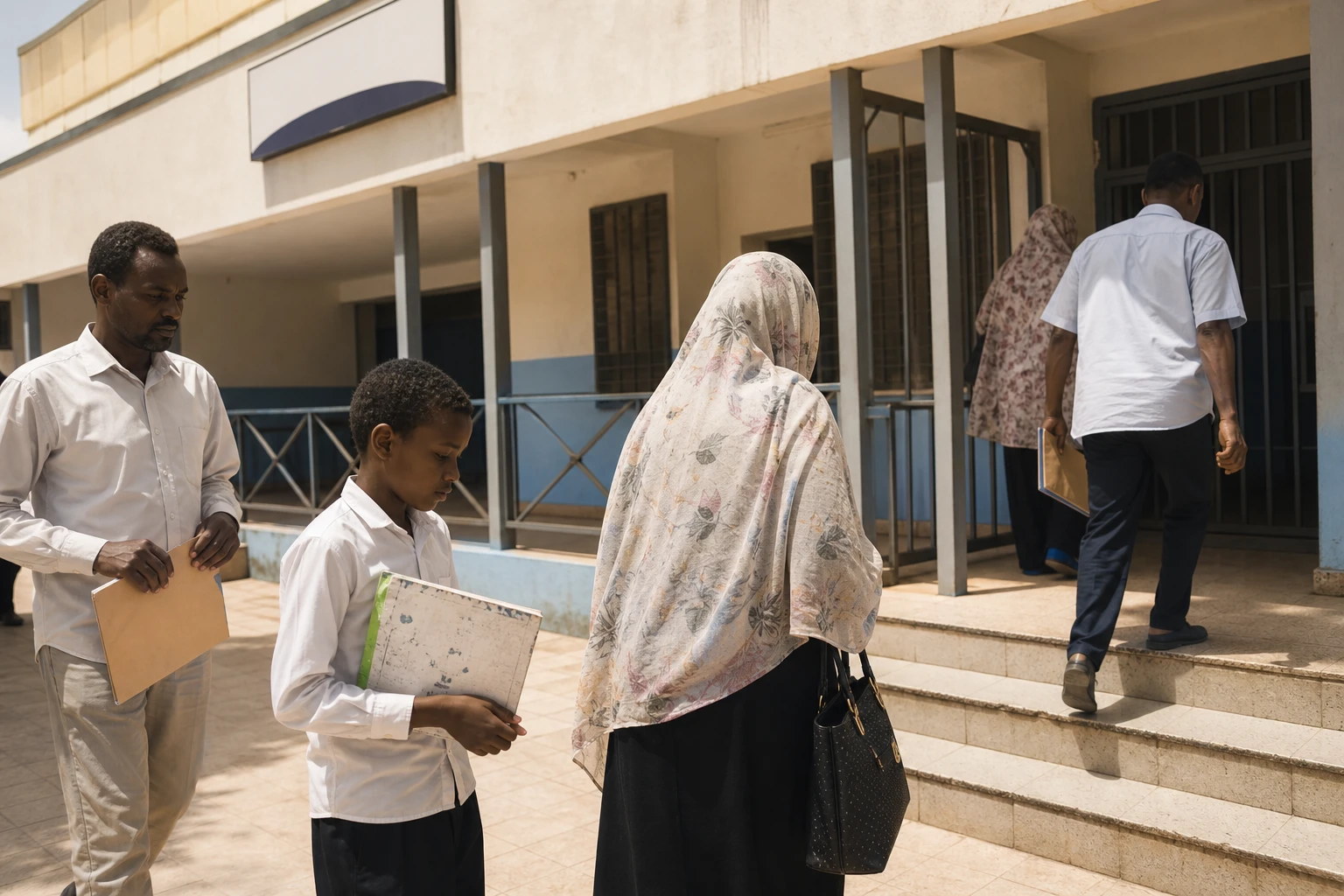
In Sudan, reopening a school can mean more than simply returning to class
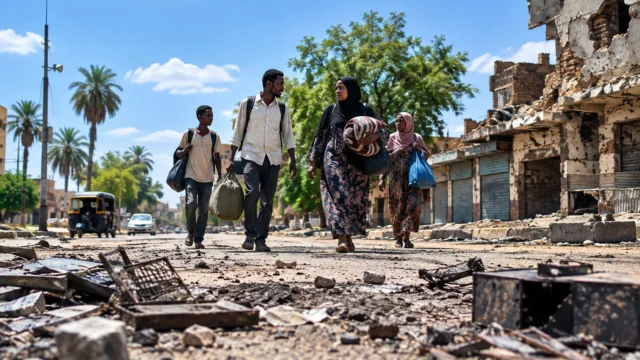
When a war lasts for years, security is not its only first casualty. Children’s time is too. In Sudan, millions of Sudanese have seen school disappear from their daily lives, replaced by exile, waiting and, all too often, the occupation of school buildings by displaced families. In a country where war has displaced millions of people, getting education back on its feet already means rebuilding a piece of normality.
This emergency is unfolding in a still highly unstable national environment. Since April 2023, the conflict between the Sudanese Armed Forces and the Rapid Support Forces has disrupted public services, emptied entire neighbourhoods and weakened health, water and education systems. Regionally, Sudan remains at the centre of mediation efforts by the African Union and IGAD, the East African organisation tasked with facilitating responses to crises in the Horn of Africa. This diplomacy matters, because schools cannot reopen sustainably without a security framework or administrative continuity.
$22 million in funding, but needs are far greater
On 24 August 2026, Education Cannot Wait announced a three-year, $22 million programme for Sudan. Its aim is to help nearly 200,000 children and adolescents return to safe learning spaces in the states of West Darfur, South Kordofan and Gedaref. The programme also provides psychosocial support, teacher training, learning materials and specific measures for girls and children with disabilities.
The choice of these areas is no accident. The three states account for some of the most severe displacement, service disruptions and school closures. The programme also has an explicitly local focus: nearly 48% of the budget is to go through national and local partners. In a country fractured by war, this approach reduces reliance on international organisations alone and supports Sudanese actors already working on the ground.
But the scale of the problem far exceeds this funding. According to UNICEF, around 8 million children are currently out of school in Sudan. In Darfur alone, more than 3 million school-age children are estimated to be affected. The UN agency also estimates that nearly half of school buildings are no longer operating as classrooms, with many damaged or requisitioned as temporary shelters.
Schools closed, children displaced, families under pressure
The humanitarian picture helps explain why the resumption of schooling remains so slow. In 2026, the World Health Organization estimated that 33.7 million people needed humanitarian assistance and that 11.5 million people had been forcibly displaced, either within the country or across borders. UNICEF, for its part, confirmed that conflict, displacement and the collapse of essential services continued to fuel a multidimensional crisis.
In the worst-affected areas, schools have become contested spaces. Some are sheltering displaced families. Others remain closed because of insecurity, a lack of available teachers or insufficient resources to restore classrooms. The consequences are tangible: children lose the rhythm of schooling, but also the protection that school provides. For girls, the risks increase further, with greater exposure to early marriage and violence linked to displacement. For children with disabilities, distance, insecurity and the lack of adaptations deepen exclusion still further.
Save the Children estimates that Sudanese children have already lost nearly 500 days of learning since the start of the war, making this one of the longest school closures in the world. This loss weighs on an entire generation. It undermines basic skills, slows the return to the classroom and ultimately threatens teacher training, social mobility and economic recovery. In other words, war does not just destroy buildings; it also breaks the chain through which skills are passed on.
Why schools are key to national reconstruction
In humanitarian discourse, education is often presented as a “return to normality”. In Sudan, it is more than that. It is a tool for protection, a marker of the state’s presence and a foundation for future reconstruction. Safe learning spaces, catch-up lessons and psychosocial support do more than make up for weeks of lost schooling. They also help prevent children’s education from being permanently disrupted, especially in displaced families weighing up whether to return to school or focus on day-to-day survival.
The challenge is also a financial one. The programme launched this week by Education Cannot Wait is only an initial contribution. Its total cost is estimated at $39 million, showing how much more funding needs to be raised. Across humanitarian aid, UNICEF had already reported in June 2026 that it had raised $351 million against its funding appeal, while still facing a significant shortfall. Sudan therefore remains in a crisis economy where every return to class depends on unstable budgets and secure access routes.
Finally, the issue’s continental significance extends beyond the walls of Khartoum. Rooted in the political geography of North Africa and linked to the dynamics of the Horn of Africa, Sudan is also a test of cooperation between the African Union, IGAD and UN agencies. If education can be sustained in areas of return, it may support families’ resettlement, the resumption of public services and, in time, social stability. If it collapses, the country risks creating a generation permanently deprived of schooling, with consequences that will be felt far beyond its borders.