Algeria
 Egypt
 Libya
 Morocco
 Sudan
 Tunisia
 Benin
 Burkina Faso
 Cabo Verde
 Côte d'Ivoire
 Ghana
 Guinea
 Guinea-Bissau
 Liberia
 Mali
 Mauritania
 Niger
 Nigeria
 Senegal
 Sierra Leone
 The Gambia
 Togo
 Cameroon
 Central African Republic
 Chad
 DR Congo
 Equatorial Guinea
 Gabon
 Republic of the Congo
 São Tomé and Príncipe
 Burundi
 Comoros
 Djibouti
 Eritrea
 Ethiopia
 Kenya
 Madagascar
 Malawi
 Mauritius
 Mozambique
 Rwanda
 Seychelles
 Somalia
 South Sudan
 Tanzania
 Uganda
 Angola
 Botswana
 Eswatini
 Lesotho
 Namibia
 South Africa
 Zimbabwe
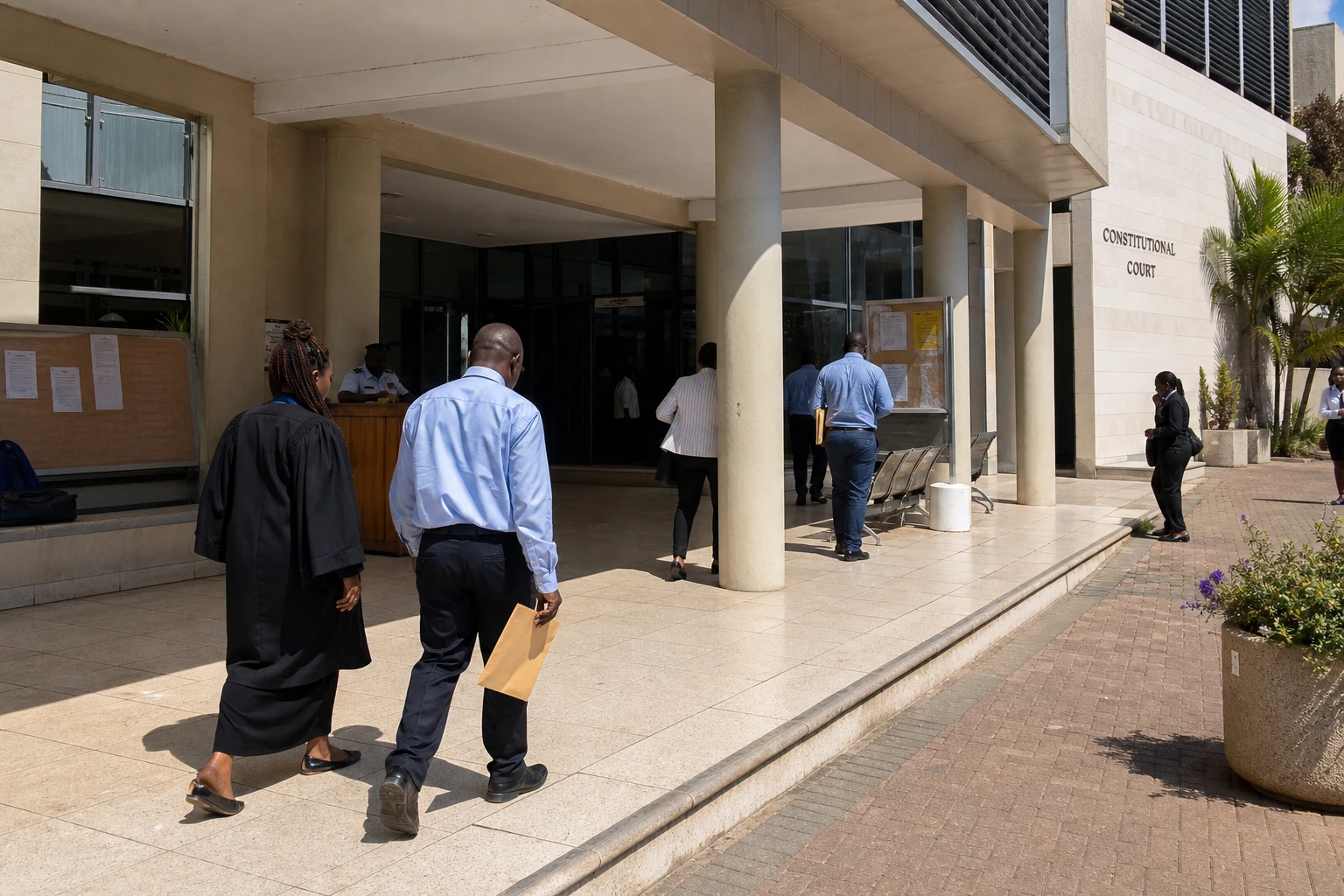
In Lusaka, the election battle moves from politics to the courts
In Zambia, an election is not decided only at the ballot box. It is also decided by deadlines, court registries and whether a side can actually bring a case before avenues for appeal close. This institutional impasse has reignited tensions in Lusaka, after the opposition said access to the courts had been obstructed just as it sought to challenge the 13 August 2026 presidential election. Reuters reported that the country’s highest courts were closed on 24 August, the final day for filing a petition, while Zambia’s Constitution sets strict deadlines for this type of challenge.
The episode has implications beyond the rivalry between Hakainde Hichilema and his main challenger, Brian Mundubile. It touches on the credibility of institutions, perceptions of judicial impartiality and the political stability of a country that remains a democratic reference point in southern Africa. Zambia is a member of SADC, which deployed an observation mission for the 2026 parliamentary and presidential elections in Lusaka. The regional mission planned to closely monitor voting, the tallying of results and their announcement.
The facts: results declared, legal challenge disputed and court deadline under strain
Zambians went to the polls on 13 August 2026 in a contested presidential election. The ECZ declared Hakainde Hichilema the winner on 18 August, with 2,965,326 votes, or 60.49% of the vote, against Brian Mundubile’s 1,856,217 votes and 37.87%, according to Reuters and several African media outlets that reported the official announcement. AP confirmed that the Electoral Commission had announced the incumbent’s victory for a second term.
The opposition, grouped around Tonse-Pamodzi, challenged this sequence of events. It says the tallying of results was suspended on 14 August, then resumed and announced without a detailed publication of results by polling station, which it argues prevents transparent scrutiny of the election. Zambian media have also reported this criticism, as well as a climate of suspicion surrounding the tabulation process. On 24 August, Reuters reported that the country’s main courts were closed at the very moment the opposition wanted to file its petition.
During the same period, the opposition wrote to the chairperson of the African Union Commission, led since 2025 by Mahmoud Ali Youssouf. In his letter of 25 August, Emmanuel Mwamba said armed security forces had sealed off court premises on 24 August and prevented a petition from being filed within the deadline. This allegation remains attributed to the opposition; the information available does not, at this stage, allow all the details to be independently established.
The judiciary gave a different account. Its spokesperson, Kalumba Slavin, said no official petition had been received by the time offices closed on 25 August. This divergence between the opposition’s account and that of the institutions has fuelled uncertainty over what happens next. Under Zambian law, a presidential election challenge is subject to a tight timetable. Case law and electoral procedure rules published on ZambiaLII note that proceedings are expected to be brought within a short time frame, explaining the strategic importance of the final filing day.
Why the African Union has been approached, and what this says about Zambia
Turning to the African Union is not a trivial step. During an election crisis, opposition groups often seek a third party able to exert political pressure without crossing the threshold into formal interference. Here, the aim is less to have the election retried in Addis Ababa than to flag concerns about access to a judge and the integrity of the contest. The AU, through its Commission and Peace and Security Council, then serves as a continental sounding board, particularly when a domestic dispute threatens to become a crisis of institutional confidence.
The move also comes at a sensitive regional moment. SADC launched its observation mission ahead of the election and urged all sides to reject violence and respect democratic rules. The fact that regional observers were still active when the challenge was made shows that Zambia is still seen as a test of electoral governance in southern Africa. A dispute handled through the law can strengthen the system. One perceived as stifled can instead deepen divisions and undermine the legitimacy of institutions, including among urban voters, young people and businesses seeking predictability above all.
The domestic context matters as much as diplomatic gestures. Zambia has emerged from an election marked by tensions over security, the circulation of electoral information and access to institutions. Reuters and AP reported incidents during the count, as well as arrests of opposition figures linked to the post-election period. In a country where Lusaka is the centre of political decision-making, the effects of a procedural crisis quickly spread to markets, public authorities, transport operators and small businesses that depend on a swift return to normality.
Continental implications: a Zambian case watched far beyond Lusaka
The continental significance comes down to a simple question: how far does the right to challenge a presidential election extend when deadlines are closing and institutions are disputed both in their actions and in their communications? For the African Union and SADC alike, the answer affects Zambia’s reputation, but also a broader regional standard: credible elections that are observed and can effectively be challenged in court. Regional missions had stressed the need for transparency in the process; the post-election crisis is now testing that promise.
What happens next will depend on two timetables. On one side is the judicial outcome, including whether a petition was validly registered and under what conditions. On the other is the political calendar, with the swearing-in announced for 1 September. If the case proceeds, the dispute may move to the Constitutional Court and turn on standards of evidence. If it does not, debate will shift to the political arena, regional statements and the battle for legitimacy. Either way, Zambia is a reminder that in southern Africa, the strength of an election is measured as much by the transparency of the vote as by effective access to a judge.