Algeria
 Egypt
 Libya
 Morocco
 Sudan
 Tunisia
 Benin
 Burkina Faso
 Cabo Verde
 Côte d'Ivoire
 Ghana
 Guinea
 Guinea-Bissau
 Liberia
 Mali
 Mauritania
 Niger
 Nigeria
 Senegal
 Sierra Leone
 The Gambia
 Togo
 Cameroon
 Central African Republic
 Chad
 DR Congo
 Equatorial Guinea
 Gabon
 Republic of the Congo
 São Tomé and Príncipe
 Burundi
 Comoros
 Djibouti
 Eritrea
 Ethiopia
 Kenya
 Madagascar
 Malawi
 Mauritius
 Mozambique
 Rwanda
 Seychelles
 Somalia
 South Sudan
 Tanzania
 Uganda
 Angola
 Eswatini
 Lesotho
 Namibia
 South Africa
 Zambia
 Zimbabwe
In Niger, uranium remains both a strategic lever and a battleground
In Niamey, the uranium dispute is about more than a legal battle between a state and a mining group. It also raises a broader question: who controls the resources in Niger that can influence public finances, local jobs and the country’s place in global energy supply chains? Since the break with Orano, the equation has become more difficult, but it has not gone away. It has shifted elsewhere.
Niger, a landlocked Sahelian country and member of the Alliance of Sahel States since leaving ECOWAS, has regarded uranium as a matter of sovereignty for decades. At the same time, Orano is seeking new footholds in southern Africa. This dual dynamic is less a simple industrial relocation than a reshaping of the balance of power around a raw material that has become more political than ever.
Niger’s shift has opened a gap that the French group is seeking to fill elsewhere
At the heart of the crisis are several specific facts. In June 2025, Niger’s authorities announced the nationalisation of SOMAÏR, the company that operated the country’s only uranium mine still in production, in which Orano held a 63.4% stake. The French company says it lost operational control of its assets in Niger in 2024 and has initiated arbitration proceedings.
The break did not happen overnight. In 2024, Niamey had already revoked the permit for the Imouraren project, one of the country’s best-known uranium deposits. The following year, Niger’s government hardened its rhetoric, saying it wanted to take back control of resources it considers strategic. The blow to Orano is significant. Niger had long been one of the group’s most useful supply bases on the continent.
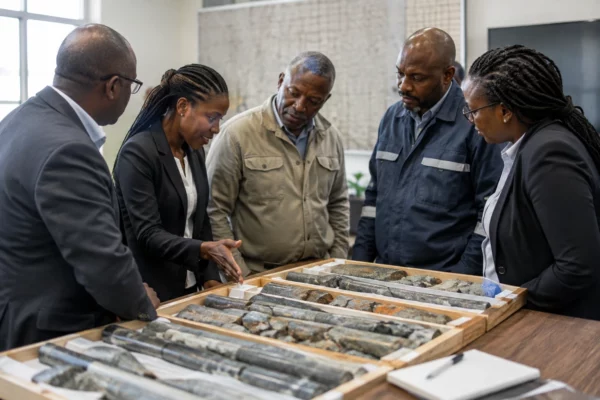
Against this backdrop, the group has accelerated its diversification. In Botswana, it now holds 18 uranium exploration permits, following the award of three new licences in 2026, adding to the 15 already held by its subsidiary Compagnie Française de Mines et Métaux. Two of the new permits are valid until March 2029, and the third until December 2028. The previous 15 permits run until September 2028.
Botswana is moving cautiously, but has a clear line on diversification
Botswana’s signal is clear. Gaborone wants to reduce its dependence on diamonds amid a less favourable market. The country is therefore looking to other minerals, including copper and uranium. The authorities have opened the door to companies capable of exploring quickly, funding studies and taking on the initial geological risk. In this context, prospecting licences are not yet a promise of mining, but they mark a tangible step in the country’s strategy.
Botswana’s administrative framework remains strict. A prospecting licence allows exploration in specific areas, while large-scale mining subsequently requires further permits, technical approvals and land agreements. In other words, the ground is open, but nothing is automatic. This cautious approach explains why Orano’s presence remains, for now, at the exploration stage.
Another factor is the diplomatic context. Botswana’s president, Duma Boko, visited France in early April 2026 on an official trip, during which he also discussed his country’s economic opportunities with French counterparts. Shortly afterwards, Orano registered a local subsidiary in Gaborone. The timing is significant. It shows that in Botswana, mining is now part of an overt economic diplomacy.
For Niamey, the stakes go beyond a single mine; for Africa, they concern control of resources
For Niger, the central challenge remains turning a sovereign decision into tangible gains. Nationalising a mining asset does not automatically generate immediate revenue. It also means managing marketing, logistics, the possible resumption of investment and the risk of litigation. In mining areas, such as around Arlit in the Agadez region, the effects are measured first in jobs, subcontracting and local economic activity. If volumes dwindle or sales stall, the impact quickly spreads to the informal economy and families dependent on the mine.
For Orano, diversification into Botswana reduces a dependence that had become too great on a single country. But it does not yet replace the lost volumes from Niger. The permits secured in Gaborone open up an area for exploration, not immediate production. The group is therefore building a more diversified African portfolio, with the aim of better spreading political and operational risk. This is a familiar lesson in the mining sector, made more visible by the crisis in Niger.
Across the continent, the case is a reminder of a simple reality: critical minerals are not secured only underground, but also through the quality of institutions, mining cadastres, contracts and political decisions. In both West and southern Africa, states are seeking to capture more value from their resources. Mining groups, meanwhile, are expanding their presence to secure supplies. The next stage to watch will be twofold: the outcome of disputes over assets in Niger and the pace at which exploration in Botswana moves into production.