Algeria
 Egypt
 Libya
 Morocco
 Sudan
 Tunisia
 Benin
 Burkina Faso
 Cabo Verde
 Côte d'Ivoire
 Ghana
 Guinea
 Guinea-Bissau
 Liberia
 Mali
 Mauritania
 Niger
 Nigeria
 Senegal
 Sierra Leone
 The Gambia
 Togo
 Cameroon
 Central African Republic
 Chad
 DR Congo
 Equatorial Guinea
 Gabon
 Republic of the Congo
 São Tomé and Príncipe
 Burundi
 Comoros
 Djibouti
 Eritrea
 Ethiopia
 Madagascar
 Malawi
 Mauritius
 Mozambique
 Rwanda
 Seychelles
 Somalia
 South Sudan
 Tanzania
 Uganda
 Angola
 Botswana
 Eswatini
 Lesotho
 Namibia
 South Africa
 Zambia
 Zimbabwe
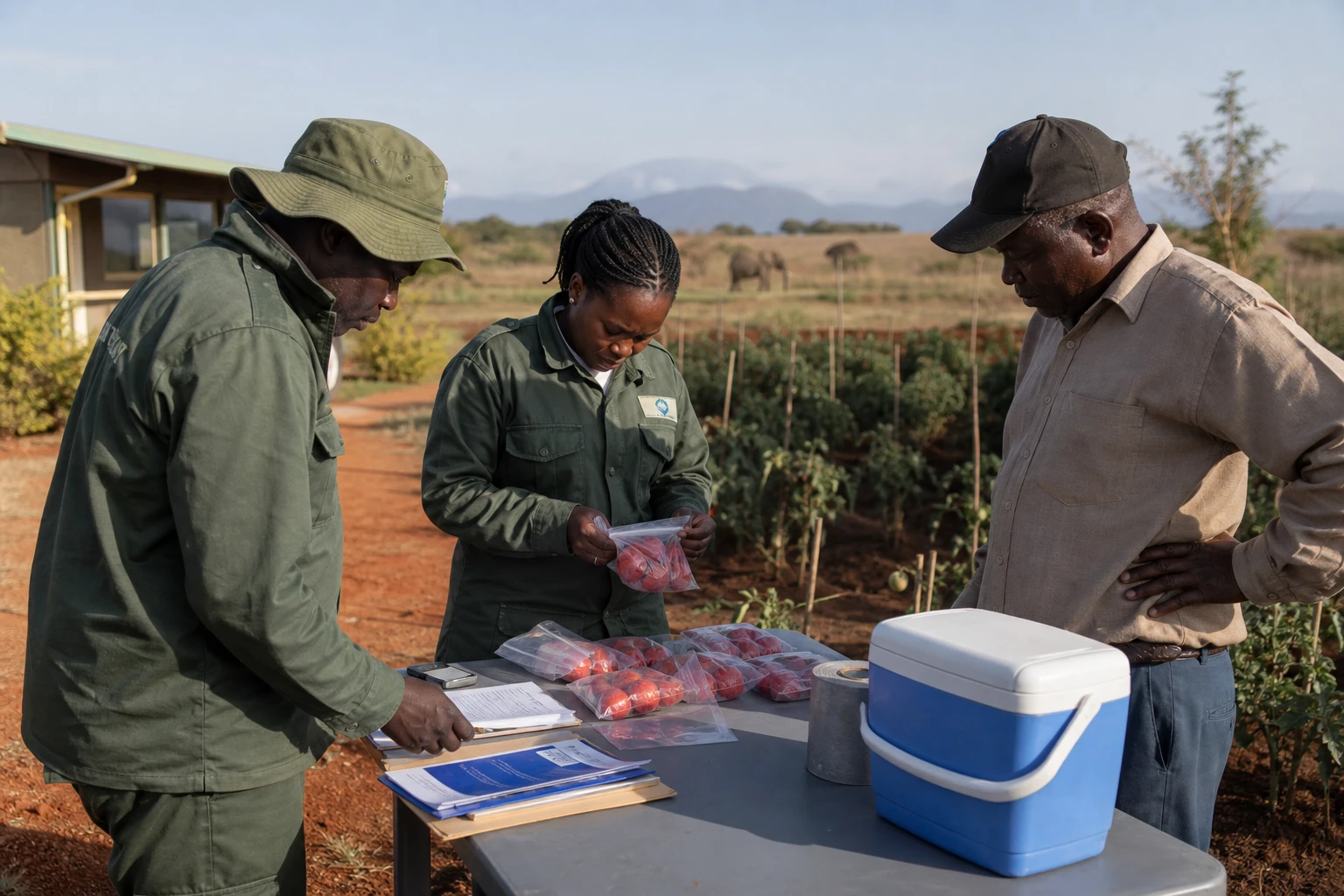
Pressure between crops and wildlife rises in the Amboseli corridor
At Kimana, in southern Kenya, the boundary between farmland and elephant routes is more than a line on a map. It is a fragile space of coexistence, where the survival of crops, the movement of herds and the protection of wildlife depend on a precarious balance. When that balance breaks, the crisis quickly extends beyond wildlife. It affects the local economy, tourism and the safety of nearby communities.
Kenya is familiar with this kind of tension. The country is home to one of East Africa’s largest elephant populations, with 36,280 recorded in the last major national census in 2021, followed by more recent estimates exceeding 42,000, according to KWS in August 2026. Amboseli remains one of the flagship sites for conservation, but also one of the areas most exposed to competing land uses. Within the ecosystem, farming, livestock rearing and migration corridors overlap. This is precisely where Kenyan authorities say they are looking for the cause of the elephant deaths.
What investigators say so far
The central fact is now established: 18 elephants were found dead in the Amboseli ecosystem between 24 June and 24 July 2026. According to the Kenya Wildlife Service, seven cases were recorded in Amboseli National Park, seven at Kimana Sanctuary, three at Kitenden and one at Motikanju Kuku Ranch. Four people have been arrested as part of a joint investigation involving the criminal investigation department, intelligence services and scientific institutions. A fifth person is being sought.
The initial hypotheses point to poisoning. Authorities cite preliminary results indicating a toxic substance, with cyanide suspected in connection with the ingestion of tomatoes contaminated by pesticides from farms near wildlife habitats. But investigators stress one point: these are still provisional findings, subject to further scientific checks. At this stage, the arrests or seizures alone do not establish anyone’s criminal responsibility.
During an operation in Tikondo, in the Kimana area, investigators seized unlabelled substances and other chemicals considered potentially toxic. Samples were sent to laboratories for analysis. KWS has also asked the Pest Control Products Board to conduct a technical assessment of the use, storage and disposal of crop protection products in the area. This dimension matters because it takes the case beyond a simple wildlife incident and places it within the broader question of managing hazardous substances near places where people live.
Why the case goes beyond Amboseli National Park
Amboseli is not an isolated sanctuary. The ecosystem is crossed by migration routes, pastoral areas and farmland. The 2020-2030 ecosystem management plan already highlights that land subdivision, the expansion of cultivation and the fragmentation of corridors threaten the viability of elephants as well as local pastoralism. In short, wildlife and people’s livelihoods often depend on the same spaces, while the rules for coexistence remain incomplete.
For residents of Kimana, Kuku Ranch and Kitenden, the stakes are immediate. Agricultural losses, particularly to tomatoes and other market-garden crops, have long fuelled frustration over damage caused by elephants. For tourism operators, the issue is different: Amboseli remains one of the biggest names in Kenyan safari tourism, and therefore a symbol of economic value and international image. A rise in wildlife deaths threatens conservation revenues, tourism-related jobs and confidence in the safety of the ecosystem.
The case also brings renewed attention to another sensitive issue in Kenya: the movement of pesticides and chemicals through agricultural areas near reserves. Authorities say they are examining the possibility of illegal use, poor storage or careless disposal of these substances. The implications are serious because the threat is not limited to elephants. Livestock, soil, water and, ultimately, the health of rural populations could also be at risk if contamination is confirmed.
What Kenya is watching now, and what the region is watching too
At national level, the case tests the ability of Kenyan institutions to protect a wildlife asset that has contributed significantly to the country’s progress in tackling poaching. After falling to about 16,000 by the end of the 1980s, the elephant population was recorded at 36,280 in 2021, reflecting a genuine conservation effort. The authorities therefore know that each new mass mortality event puts years of public policy, monitoring and co-operation with local communities at stake.
The case also has regional significance. Amboseli lies in a sensitive part of East Africa, near ecological routes shared with transboundary landscapes linked to Kilimanjaro and corridors into southern Kenya. The case is therefore of interest to the East African Community, protected-area managers and veterinary services across the region. Above all, it is a reminder that in East Africa, conservation does not take place only in parks. It happens in fields, along transhumance routes, in agricultural markets and through the regulation of chemicals.
The next point to watch will be confirmation of the toxicology results and clarification of the exposure pathway. If cyanide or another poison is confirmed, the question will become one of concrete responsibility: the origin of the products, their use on crops, the movement of the substances and local controls. If that line of inquiry is ruled out, other possible causes, including environmental ones, will need to be reconsidered. Either way, the challenge for Nairobi will remain the same: to prevent a corridor of coexistence from becoming a corridor of loss for wildlife, communities and the conservation economy.