Algeria
 Egypt
 Libya
 Morocco
 Sudan
 Tunisia
 Benin
 Burkina Faso
 Cabo Verde
 Côte d'Ivoire
 Ghana
 Guinea
 Guinea-Bissau
 Liberia
 Mali
 Mauritania
 Niger
 Nigeria
 Senegal
 Sierra Leone
 The Gambia
 Togo
 Central African Republic
 Chad
 DR Congo
 Equatorial Guinea
 Gabon
 Republic of the Congo
 São Tomé and Príncipe
 Burundi
 Comoros
 Djibouti
 Eritrea
 Ethiopia
 Kenya
 Madagascar
 Malawi
 Mauritius
 Mozambique
 Rwanda
 Seychelles
 Somalia
 South Sudan
 Tanzania
 Uganda
 Angola
 Botswana
 Eswatini
 Lesotho
 Namibia
 South Africa
 Zambia
 Zimbabwe
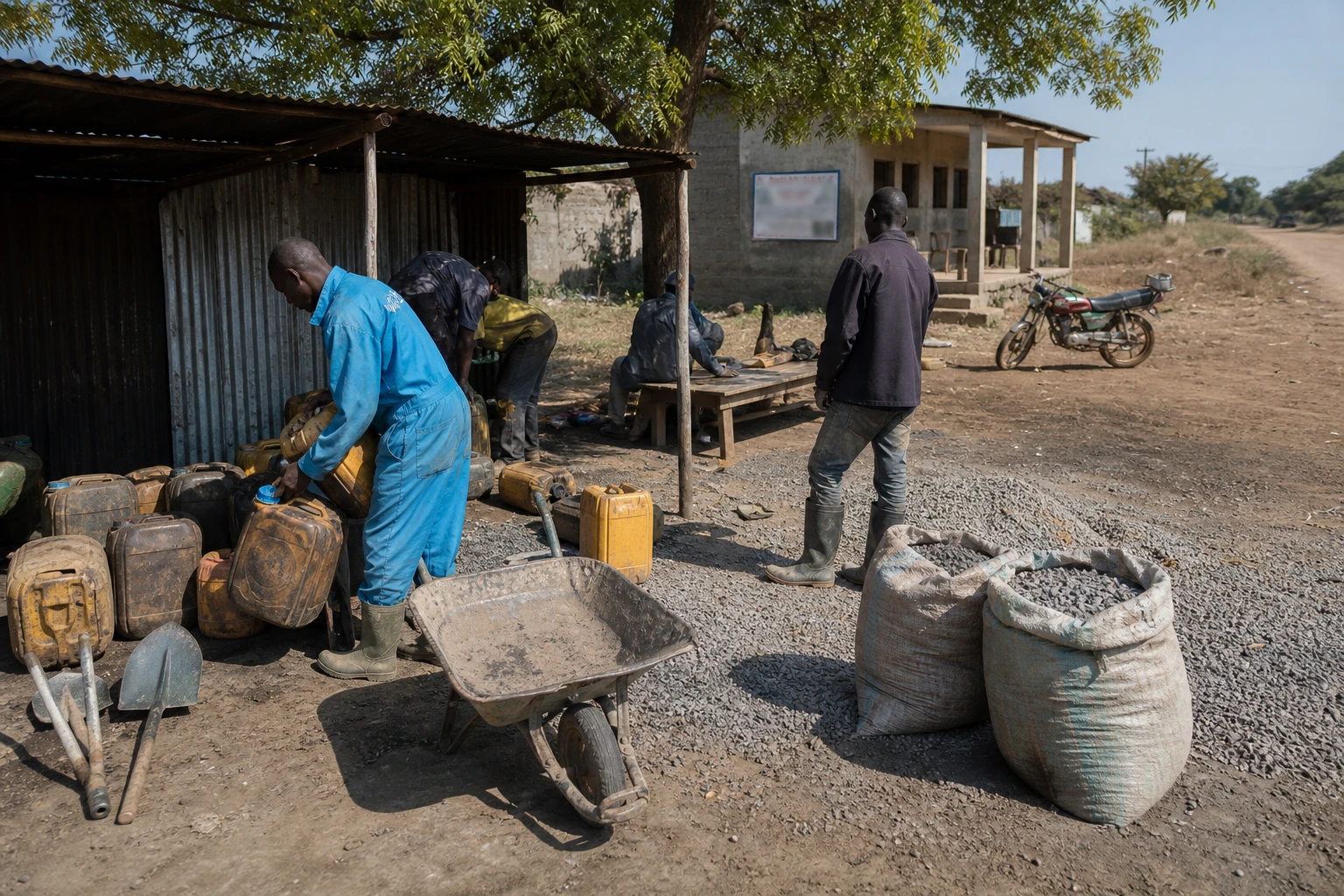
An artisanal mine, a porous border and families still waiting
In the Zamboye area, on the border between the Central African Republic and Cameroon, gold offers hope as well as posing risks. A single site can provide a livelihood for hundreds of people, but one downpour, an unstable slope or a poorly supported tunnel can turn daily work into tragedy. The collapse on Tuesday 18 August 2026 brought this reality into sharp focus: in artisanal gold mining, the line between a vital activity and mortal danger is often all too thin.
The affected site is on the Central African side, in the village of Zamboye, close to Garoua-Boulaï in Cameroon, along the Kadéï, a river that marks part of the border between the two countries. This location explains the constant movement of workers, traders and families between the two banks. It also explains why a local mining accident can quickly become a cross-border affair, with victims, injured people and rescue teams mobilised on both sides.
What we know about the disaster
Initial casualty figures were quickly overtaken by the scale of the damage. On 18 August, authorities and residents first reported at least 30 deaths as rescue operations continued. Two days later, the toll had risen to more than 100 in several international news reports and African media outlets, while the Central African Ministry of Mines subsequently gave an official total of 49 dead, including 34 Central Africans, 13 Cameroonians and two Chadians. The discrepancy shows that the count remains incomplete and that several bodies may still be buried or unidentified.
The Zamboye site has been temporarily closed by the Central African authorities. The decision comes as searches have been hampered by rain and unstable ground. In the Cameroonian press, administrative officials in the East Region said that four Cameroonians had already died and that their bodies had been transferred to Garoua-Boulaï. Other local sources later reported a much higher toll on the Cameroonian side, though no definitive figure has yet been established.
The Central African Ministry of Mines has also described the artisanal nature of the operation. In its assessment, the danger is structural: mining on slopes, a lack of tunnel reinforcement and economic pressure that pushes miners to work quickly, often with rudimentary equipment. The ministry presented the accident as a further warning to speed up the formalisation of artisanal gold mining, strengthen oversight of high-risk sites and better support municipalities responsible for certain local management tasks.
Why the disaster’s impact goes beyond Zamboye
In the Central African Republic, artisanal gold mining supports many households, in a context where the formal economy employs little labour. The country is seeking to make better use of its mineral resources, but conditions on the ground remain fragmented: informal sites, opaque collection networks, limited oversight and recurring accidents. The Ministry of Mines nevertheless sees the sector as a driver of growth, provided traceability, safety and governance are strengthened.
On the Cameroonian side, the collapse has also reignited debate about oversight of gold-mining sites in the East Region, where the border with the CAR is long and porous. Local authorities have spoken of Cameroonian victims, as well as an urgent need for better control of areas where workers from Cameroon, the CAR and sometimes Chad move around. In this border area, the problem is not only mining-related. It also concerns civil registration, cross-border movement, care for the injured and administrative coordination between Bangui and Yaoundé.
The disaster also highlights a fundamental issue: the value of gold does not protect those who extract it. When the sector remains largely artisanal, immediate income often takes precedence over prevention. This creates a stark imbalance between the profits captured by buying networks, intermediaries and smugglers, and the risks borne by the miners themselves. Their families pay the heaviest price when the ground gives way.
A warning for Central Africa
Zamboye is not an isolated accident but a warning. In several countries in Central and West Africa, artisanal mines play a real economic role while remaining among the most dangerous sectors. The recent disaster at Zamboye, the site’s closure and the conflicting casualty figures show that, when disaster strikes, the immediate priorities remain the same: rescue whoever can be saved, identify the victims and secure the area. But the next steps will be decisive: investigations, accountability, follow-up care for the injured and sustained oversight of sites.
For Bangui and Yaoundé alike, what happens next will show whether this disaster prompts only a brief wave of emotion or a genuine regulatory response. The border area along the Kadéï already concentrates issues of security, trade and daily survival. If oversight remains weak, gold will continue to circulate. If nothing changes, the same slopes will continue to swallow the same lives.