Algeria
 Egypt
 Libya
 Morocco
 Sudan
 Tunisia
 Benin
 Burkina Faso
 Cabo Verde
 Côte d'Ivoire
 Ghana
 Guinea
 Guinea-Bissau
 Liberia
 Mali
 Mauritania
 Niger
 Nigeria
 Senegal
 Sierra Leone
 The Gambia
 Togo
 Cameroon
 Central African Republic
 Chad
 DR Congo
 Equatorial Guinea
 Gabon
 Republic of the Congo
 São Tomé and Príncipe
 Burundi
 Comoros
 Djibouti
 Eritrea
 Ethiopia
 Kenya
 Madagascar
 Malawi
 Mauritius
 Mozambique
 Rwanda
 Seychelles
 Somalia
 South Sudan
 Tanzania
 Uganda
 Angola
 Botswana
 Eswatini
 Lesotho
 Namibia
 South Africa
 Zimbabwe
A disputed victory amid institutional tensions
In Lusaka, the electoral battle has not ended with the count. Zambia’s presidential election on 13 August 2026 has opened a new political chapter: one of figures, but also of their credibility. Incumbent President Hakainde Hichilema was declared the winner of a second term, while opposition leader Brian Mundubile has announced a legal challenge. In a country where political stability matters as much to markets as to voters, the dispute over the result is already weighing on the post-election period.
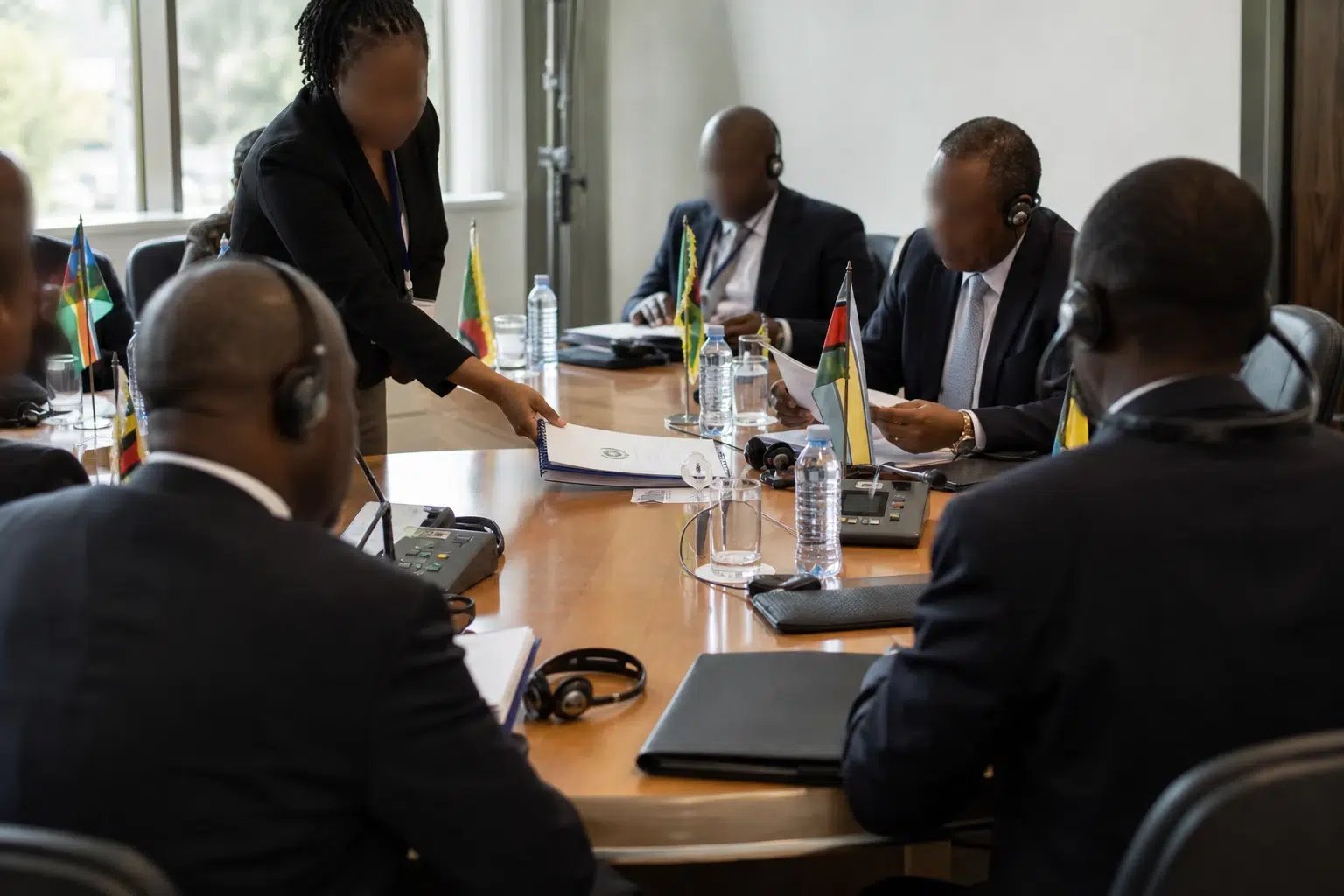
The institutional framework is clear. The Electoral Commission of Zambia, based in Lusaka, consolidates the results and declares the winner of the presidential election when more than 50% of valid votes have been secured. The Constitution also provides that a candidate may petition the Constitutional Court within seven days of the official declaration to challenge the election. This is the mechanism Brian Mundubile intends to activate.
The facts: results, grievances and procedural battle
According to results published by the Electoral Commission, Hakainde Hichilema won just over 60% of the vote, ahead of Brian Mundubile, who was credited with about 38%. The opposition is not challenging only the final margin. It says it has identified irregularities at several stages: the campaign, voting, counting, transmission and declaration. The courts will therefore have to arbitrate not only a political duel, but also a dispute over the chain of trust in the electoral process.
The tension did not emerge after polling stations closed. The 13 August election took place in an already fraught atmosphere. AP reported that the vote was followed by incidents and arrests involving opposition figures. On the same day, the Electoral Commission stressed that results had to be relayed according to a strict procedure, from polling stations through to national publication. It is precisely this chain of transmission that is now at the centre of suspicions.
Caution is warranted over the most serious allegations. The European Union election observation mission did raise concerns about transparency, particularly when polling station officials did not record results on the results sheet as they were announced, as required by regulations. But this observation describes a procedural shortcoming; on its own, it is not enough to establish systemic fraud. Meanwhile, the SADC and African Union missions, together with COMESA, also raised questions about transparency in the verification and custody of electoral materials, while noting an overall orderly atmosphere at several polling stations.
What this challenge means for Zambia
The case goes beyond rivalry between two men. Hakainde Hichilema built his campaign around the idea of economic continuity, after inheriting in 2021 a country burdened by debt and cost-of-living pressures. Brian Mundubile, meanwhile, capitalised on frustration over inflation, jobs and the perceived slow pace at which the recovery was reaching people. In this kind of context, an electoral dispute quickly becomes a test of confidence in institutions, as well as a test of discipline for political camps.
The implications differ for each group. For the government, the challenge is to secure recognition of a clear victory and bring the electoral period to a swift close in order to preserve the country’s financial and diplomatic stability. For the opposition, it is to turn an expected defeat into a demonstration of democratic vigilance without tipping into unrest. For Zambians, the question is more concrete: whether the rules were applied consistently, whether polling station results were properly documented, and whether the legal challenge can still serve as an institutional safety valve.
The SADC mission identified the most sensitive issue: transparency in the verification of materials and results. This is not a technical detail. In an electoral system, it is often where final legitimacy is decided. If results forms do not circulate clearly, if copies are not given to agents, and if the consolidation stages are not visible, a victory may be legally valid but politically contested. That is precisely what is fuelling the dispute in Zambia between the official verdict and the opposition’s account.
A Zambian case, but a regional signal
This crisis of confidence resonates beyond Zambia’s borders. Through SADC, the African Union and COMESA, African observers have reiterated a simple expectation: credible, transparent and accepted elections. In southern Africa, where peaceful transfers of power remain important political benchmarks, the Zambian case will serve as a reference point, either as an example of the institutional handling of an electoral dispute or as a warning about the process’s weaknesses.
The timetable is now judicial and political. The first milestone is the full publication and consolidation of the official results. The second is a possible petition to the Constitutional Court, within the time limits set by the Constitution. The third will be the institutions’ ability to deal with the challenge without prolonging uncertainty. For a country such as Zambia, often presented as a pillar of stability in southern Africa, the task is not simply to declare a winner. It is to prove that the rules of the game remain stronger than the bitterness of election night.