Algeria
 Egypt
 Libya
 Morocco
 Tunisia
 Benin
 Burkina Faso
 Cabo Verde
 Côte d'Ivoire
 Ghana
 Guinea
 Guinea-Bissau
 Liberia
 Mali
 Mauritania
 Niger
 Nigeria
 Senegal
 Sierra Leone
 The Gambia
 Togo
 Cameroon
 Central African Republic
 Chad
 DR Congo
 Equatorial Guinea
 Gabon
 Republic of the Congo
 São Tomé and Príncipe
 Burundi
 Comoros
 Djibouti
 Eritrea
 Ethiopia
 Kenya
 Madagascar
 Malawi
 Mauritius
 Mozambique
 Rwanda
 Seychelles
 Somalia
 South Sudan
 Tanzania
 Uganda
 Angola
 Botswana
 Eswatini
 Lesotho
 Namibia
 South Africa
 Zambia
 Zimbabwe
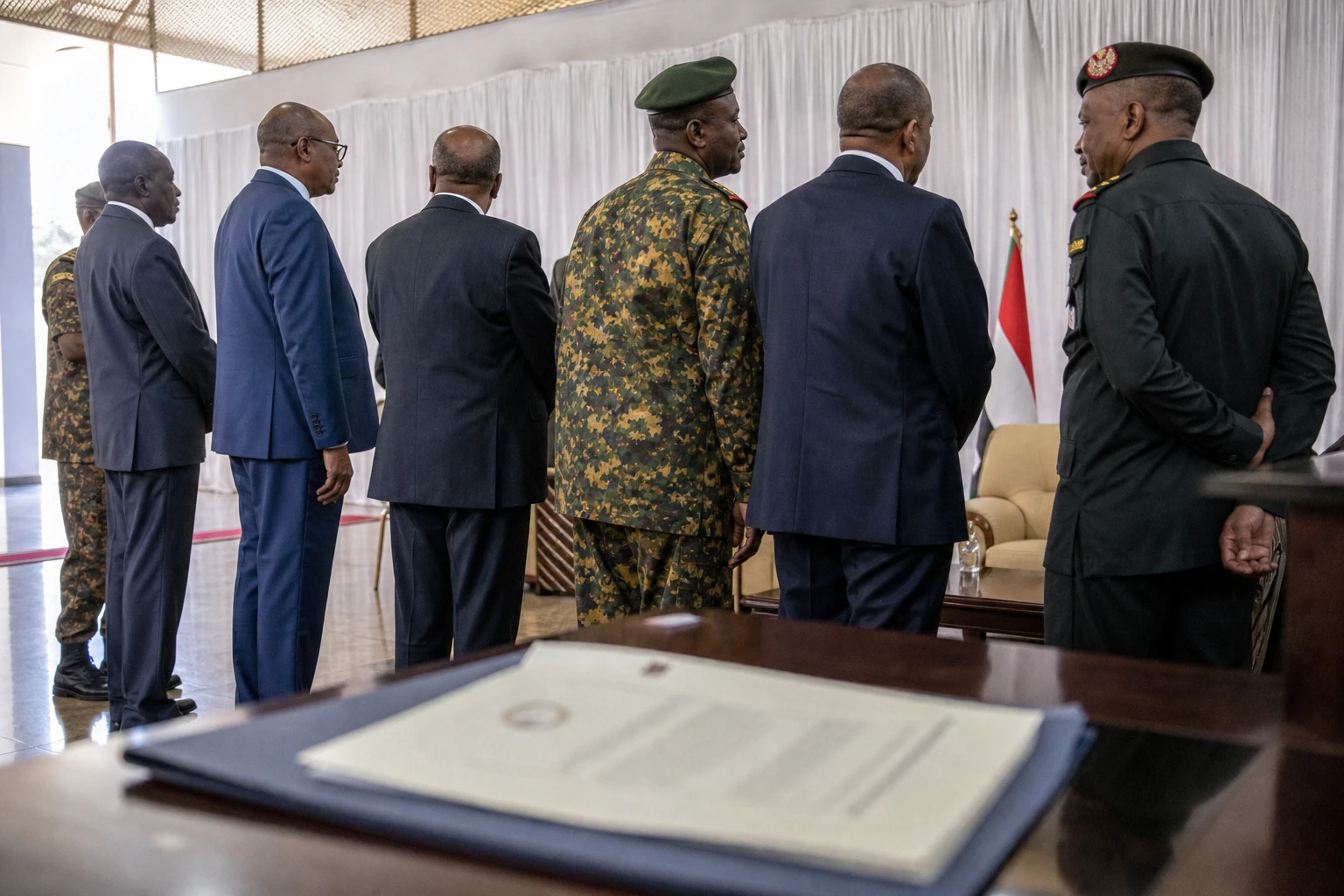
When front lines shift, it is often a sign that the balance of power is changing
In Sudan, war is not measured only through fighting. It is also measured in moments when armed men change sides, taking weapons, vehicles and sometimes information about opposing positions with them. In Omdurman, the twin city of Khartoum on the other bank of the Nile, such shifts speak as much to the strain on the front as to the fragility of loyalties in a protracted war.
Since April 2023, the Sudanese army of General Abdel Fattah al-Burhan and the Rapid Support Forces (RSF), led by General Mohamed Hamdan Dagalo, known as Hemedti, have been fighting for control of the country. The conflict first erupted in Khartoum before spreading to several regions, including Darfur and Kordofan. Three years on, the African Union, IGAD and the UN continue to call for de-escalation, without yet securing a lasting political settlement.
Defections also serve as a political signal
The new development, reported by military sources and carried by the international press, is the arrival in the army’s camp of fighters from the RSF. In another recent and better-documented episode, a senior paramilitary officer, General al-Nour Ahmed Adam, joined the army with dozens of fighters and equipment after leaving RSF-controlled Darfur. The military authorities presented the defection as a rallying to “national reconstruction”, while the RSF did not respond publicly.
For the military authorities based in Khartoum, these defections have immediate strategic value. They reinforce the narrative of an army regaining the upper hand, as it seeks to consolidate its presence in the capital and along the Omdurman-Khartoum axis. They also show that the war is not a conflict between two perfectly united blocs, but between shifting coalitions riven by local rivalries, survival calculations, and tribal or regional dynamics.
For the RSF, every departure by a commander or unit is a double blow. It weakens military capabilities on the ground and fuels the perception of a fragmented organisation. Several recent analyses speak of an erosion of the paramilitary fighting core, accelerated by losses, internal tensions and setbacks in contested areas such as Darfur and Kordofan. Defections to the army do not, by themselves, prove the RSF is collapsing, but they reveal real pressure on its chain of command.
In Omdurman, the stakes go beyond the battle between uniforms
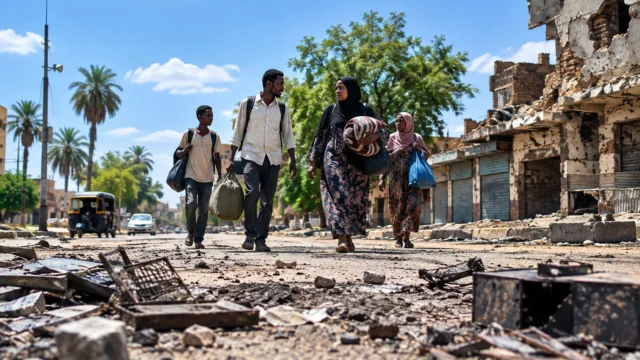
Omdurman is not a sideshow. It is a major military, urban and logistical hub in the Khartoum metropolitan area. When fighters arrive or defect there, the message is aimed as much at barracks as at civilians. In a city already scarred by fighting, raids and forced displacement, every armed movement affects markets, transport, working-class neighbourhoods and areas where the return to ordinary life remains highly uneven.
The war has left a deep mark. In 2026, the World Health Organization estimates that 33.7 million people in Sudan need assistance, while the UN puts the number of people in humanitarian need at about 34 million, nearly two-thirds of the population. The country also remains the world’s largest displacement crisis, with millions of internally displaced people and continued flows into neighbouring countries. The problem is therefore not only military: it is also health-related, food-related and economic.
In this context, defections can have mixed effects on the population. They may make it easier for the army to absorb fighters and reduce pressure in some areas. But they may also prolong the war if they are used to rebuild allied militias, redistribute weapons or prepare new offensives. The army itself has said it wants to integrate and reorganise the groups fighting alongside it, evidence that Sudan’s front now rests on an assemblage of regular and irregular forces.
What this says about Sudan and the region
Sudan is not isolated. The conflict has direct effects on Egypt, Chad, South Sudan, Ethiopia and, more broadly, the Horn of Africa. IGAD reaffirmed Sudan’s return to its institutional framework in 2026, a sign that regional states want to keep a diplomatic channel open despite the war. The African Union, for its part, stresses Sudan’s sovereignty, an end to the violence and a political solution led by Sudanese themselves.
The issue’s continental significance is clear. Sudan is now at the centre of questions that extend beyond its borders: coexistence between a national army and parallel forces, the cross-border movement of weapons and fighters, civilian protection, the collapse of public services, and the role of African mediation in the face of external influence. Every major defection from the RSF or rallying to the army therefore becomes an indicator to watch, not only in Khartoum, but also in Addis Ababa, Djibouti, Port Sudan and neighbouring capitals.
What happens next will depend mainly on two factors. On the one hand, the army’s ability to turn these defections into lasting gains without triggering a new cycle of militia formation. On the other, the RSF’s resilience: it still has territorial footholds, recruitment networks and external support that has been disputed in several recent investigations. Until these balances shift, defections will remain useful signals, but not proof that the fighting is nearing an end.