Algeria
 Egypt
 Libya
 Morocco
 Sudan
 Tunisia
 Benin
 Burkina Faso
 Cabo Verde
 Côte d'Ivoire
 Ghana
 Guinea
 Guinea-Bissau
 Liberia
 Mali
 Mauritania
 Niger
 Nigeria
 Senegal
 Sierra Leone
 The Gambia
 Togo
 Cameroon
 Central African Republic
 Chad
 DR Congo
 Equatorial Guinea
 Gabon
 Republic of the Congo
 São Tomé and Príncipe
 Burundi
 Comoros
 Djibouti
 Eritrea
 Kenya
 Madagascar
 Malawi
 Mauritius
 Mozambique
 Rwanda
 Seychelles
 Somalia
 South Sudan
 Tanzania
 Uganda
 Angola
 Botswana
 Eswatini
 Lesotho
 Namibia
 South Africa
 Zambia
 Zimbabwe
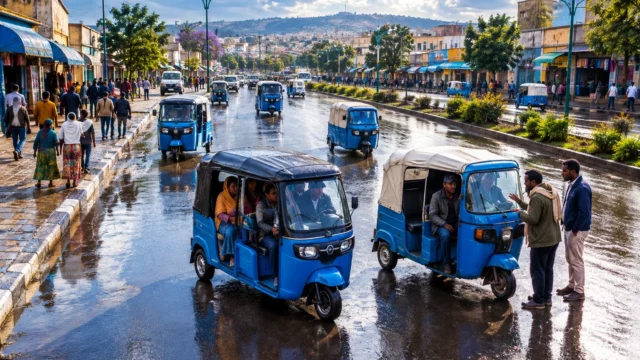
In Tigray, the line between calm and a return to arms remains thin
In northern Ethiopia, a single shot can reignite months of mistrust. In Tigray, residents live with a simple but weighty question: does the peace signed in Pretoria still hold, or is it merely a ceasefire under strain? The allegation of a drone strike near Mekele, the regional capital, comes amid an atmosphere in which every military movement is read as a political signal.
This fragility is not confined to Tigray. It also concerns Addis Ababa, where the federal government is seeking to maintain control of the security narrative, and the wider Horn of Africa, already shaken by shifting fronts in Sudan and Somalia. The African Union, which spearheaded the peace process, continues to closely monitor implementation of the cessation of hostilities agreement signed in Pretoria on 2 November 2022, with the support of IGAD, the East African regional organisation.
What the two sides say happened
According to Tigrayan officials, a drone strike allegedly targeted an agricultural training centre in the village of Dandera, about 15 kilometres from Mekele. The officials say there were no injuries. A priest, quoted anonymously, said, however, that one person had been killed. The federal government had not publicly responded to the allegations at the time of the initial exchanges.
The important point here is not only the alleged strike. It is that it took place in a region where drones have become a central instrument of military pressure since the previous conflict. Organisations monitoring violence and field investigations have documented numerous air and drone strikes in Tigray during the 2020–2022 war, with civilian casualties in several locations, including around Mekele.
The figures from the previous war remain sensitive in their own right. An estimate attributed to an African Union envoy put the death toll at up to 600,000 over two years, a scale of loss cited by several international media outlets and corroborated by specialist analyses, but still presented as an estimate, not a definitive toll. Tigray also bore a heavy burden of mass displacement and infrastructure destruction.
Why the allegation carries such weight on the ground
In Tigray, the stakes are not only military. They are institutional too. Since the Pretoria agreement, the regional authorities, the federal government and African mediators have been walking a narrow line: disarmament, the return of displaced people, restoration of public services and clarification of control over disputed areas. Yet the process remains unfinished, particularly in the contested territories of western Tigray, where hundreds of thousands of people are still awaiting a safe return, according to humanitarian agencies.
The fragility has been heightened by clashes that have resumed intermittently since late 2025 and early 2026. In early August 2026, several media outlets and analysts reported new fighting between federal forces and Tigrayan fighters in western Tigray, near the Sudanese border, with artillery exchanges and mutual accusations over who started the hostilities. In this context, a drone strike, even one not confirmed by Addis Ababa, immediately fuels fears of a wider escalation.
For the population, renewed tensions have a direct and tangible impact. Roads become more uncertain, travel becomes more difficult, the informal economy slows and families hesitate to send children to school or resume normal agricultural activities. For the regional authorities, however, the stakes are also political: to show that they remain capable of protecting the territory without completely breaking with the peace framework. For Addis Ababa, finally, every unacknowledged strike allegation weighs on the credibility of the post-war trajectory.
Tigray, a reflection of an unfinished peace in East Africa
The Tigray case extends beyond northern Ethiopia. It is a reminder that in East Africa, agreements to end a crisis are only as good as the verifiable actions that follow: the withdrawal of heavy weapons, monitoring mechanisms, reparations for victims and the resumption of essential services. IGAD and the African Union have played a useful role in mediation, but on-the-ground monitoring remains decisive. Without it, peace remains vulnerable to rumours from the front, factional calculations and opportunistic strikes.
Tigray is also a test for Addis Ababa. The Ethiopian government wants to project a return to stability while facing other sources of tension in the country. But lasting peace cannot be decreed from the Ethiopian capital. It must be proved locally, in Mekele as well as in rural areas, where traders, farmers, displaced people and those trying to rebuild an ordinary life after a war that has deeply damaged the social fabric live.
The question now is whether this strike allegation will remain one more episode in a series of isolated incidents, or mark the beginning of a new escalation. In a region already battered by conflict, the answer depends less on statements than on the two sides’ ability to restrain their forces, establish the facts and prevent one shot too many from closing the window opened in Pretoria.