Algeria
 Egypt
 Libya
 Morocco
 Sudan
 Tunisia
 Benin
 Burkina Faso
 Cabo Verde
 Côte d'Ivoire
 Ghana
 Guinea
 Guinea-Bissau
 Liberia
 Mali
 Mauritania
 Niger
 Senegal
 Sierra Leone
 The Gambia
 Togo
 Cameroon
 Central African Republic
 Chad
 DR Congo
 Equatorial Guinea
 Gabon
 Republic of the Congo
 São Tomé and Príncipe
 Burundi
 Comoros
 Djibouti
 Eritrea
 Ethiopia
 Kenya
 Madagascar
 Malawi
 Mauritius
 Mozambique
 Rwanda
 Seychelles
 Somalia
 South Sudan
 Tanzania
 Uganda
 Angola
 Botswana
 Eswatini
 Lesotho
 Namibia
 South Africa
 Zambia
 Zimbabwe
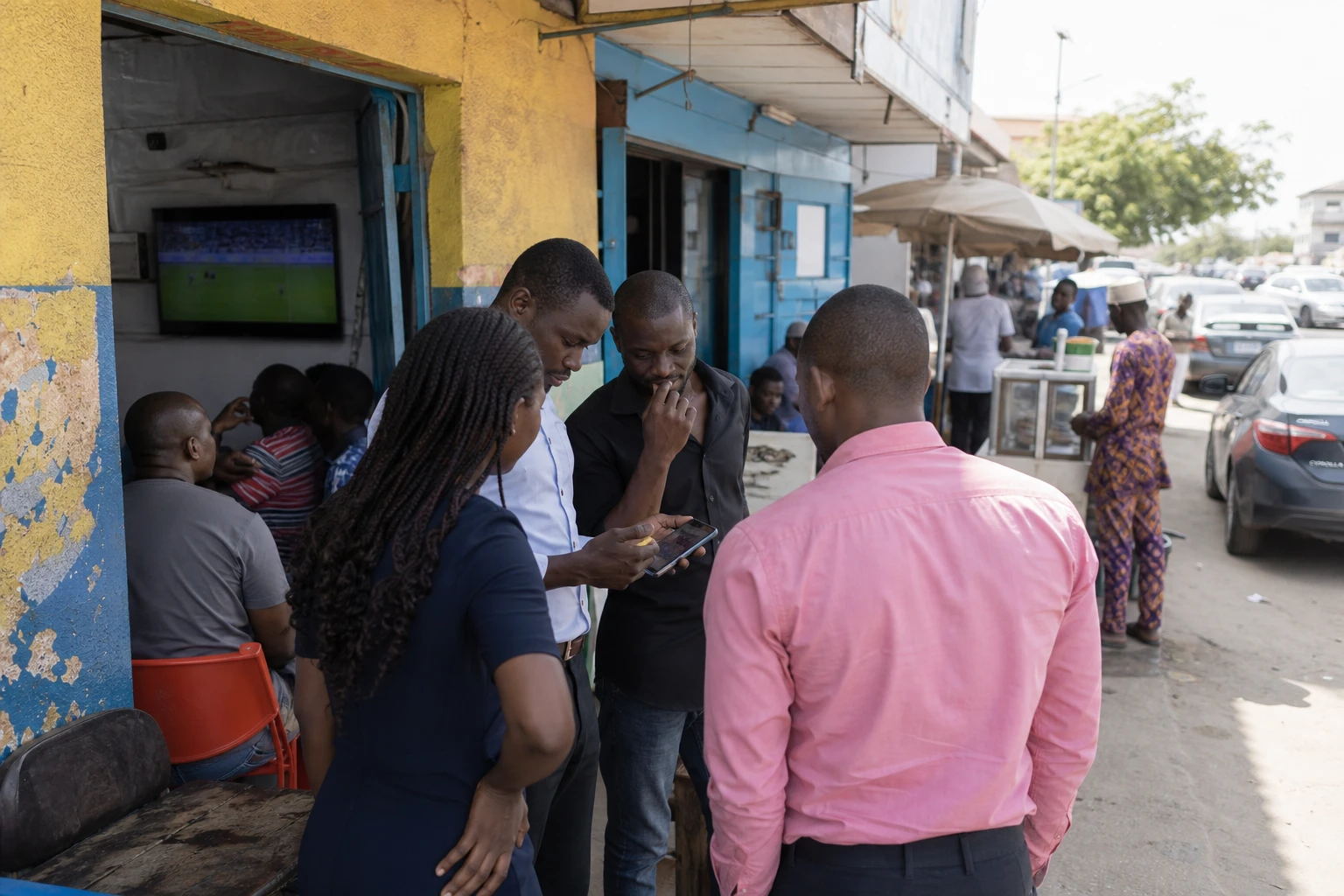
In Rabat, Nigerian football is playing for more than a tournament
When a team that has long dominated the continent stumbles, the disappointment extends beyond the dressing room. In Nigeria, the Super Falcons’ campaign has become a test of the approach taken by Abuja and the Nigeria Football Federation, and of a public that expects the same high standards from its women’s team as from the Super Eagles. The debate is therefore not just about a result. It touches on football governance, the place of women’s football in Nigerian sport and the country’s ability to remain at the top in West Africa.
The context is clear. The 2026 Women’s Africa Cup of Nations, hosted by Morocco, also serves as a qualifying tournament for the 2027 FIFA Women’s World Cup in Brazil. Under CAF’s official format, the four quarter-final winners earn direct qualification, while the four losing teams retain a route through the global play-off. For the Super Falcons, every match therefore carries double weight.
Momentum shaken after the first setback
Nigeria arrived in Morocco with a particular status. The Super Falcons were defending their continental title, won in 2025, and remained the most successful team in the competition’s history. CAF recently reiterated that Justin Madugu, named tournament coach during the victorious campaign, was to lead the team in defending its crown and on the road to the 2027 World Cup.
But the start of the campaign immediately made things more difficult. On 28 July 2026, Nigeria lost 3-2 to Malawi in their opening match in Rabat, according to several media outlets and the tournament’s official schedule. The defeat immediately put the team under pressure, as it reduced their margin for error ahead of their remaining Group C matches against Zambia, Egypt and other direct rivals.
In this context, rumours that the coaching staff would be sacked should be treated with caution. At this stage, official sources and available reports do not confirm any immediate sanction against the entire Super Falcons bench. However, tensions around head coach Justine Madugu and his staff are real, because Nigeria is never judged by the standard of mere participation. It is judged by the standard of dominance.
This expectation is rooted in recent history. Nigerian women’s football has long served as a benchmark on the continent. By contrast, an early exit from a qualifying tournament for the 2027 World Cup would be seen as a sign of decline. CAF and FIFA have both shown that African women’s competition is now part of a tighter international calendar, leaving less room for errors.
What this crisis says about Nigerian football
In Nigeria, the debate does not stop at the head coach. Criticism is also directed at the Nigeria Football Federation, which is regularly accused of managing national teams in crisis mode, amid frequent changes, preparation problems and enormous expectations. This is not a new issue. In recent years, dialogue between the NFF, coaching staffs and players has often revolved around the same topics: stability, working conditions, planning and sporting continuity.
The Super Falcons case is particularly sensitive because it goes beyond the pitch. The country’s most visible women’s team is a showcase for the entire local football ecosystem. A poor performance therefore has a knock-on effect. It reflects on training centres, the national women’s league, perceptions of local talent and confidence in Nigerian coaches. When results decline, the discussion quickly turns to governance.
There is also a question of representation. Nigeria has long been one of the few African countries to keep its women’s team consistently present at major global competitions. FIFA notes that the Super Falcons have made several appearances at the Women’s World Cup and are among the continent’s historic teams. Failure in the race to Brazil 2027 would not close the door for good, but it would break a valuable symbolic continuity for Nigerian sport.
For the players, the stakes are tangible. World Cup qualification brings prospects of greater visibility, contracts and development in an expanding women’s football market. For supporters, it fuels a collective pride that extends beyond Abuja or Lagos. For the NFF, it means choosing between tactical adjustments, managerial stability and a possible overhaul of the coaching staff. In football, these decisions often come at an immediate cost, but they also shape a generation’s trajectory.
A Nigerian issue, but an African question
The Super Falcons’ situation resonates beyond Nigeria. In West Africa, the sporting strength of the major national teams remains a benchmark for neighbouring federations. When a leading side falters, comparisons are inevitable. ECOWAS is not directly involved here, but the regional competition for talent, coaches and infrastructure certainly is.
More broadly, this campaign is a reminder that African women’s football is moving up a level. Morocco is hosting the tournament, qualification for the 2027 World Cup is governed by clearer mechanisms, and the gap in standards is narrowing. Nigeria can no longer rely solely on its past prestige. It must still prove that it can build for the long term. That is where the continental significance of the issue lies: less in the shock of a poor result than in the ability of a major African football nation to reorganise its high-performance programme without improvisation.
What happens next will show whether the pressure leads to a reshuffle or a sporting recovery. What is already certain is that Nigeria is entering a phase in which every NFF decision will be seen as a choice of approach as much as a response to an urgent situation. In Abuja, as in Rabat, the Super Falcons issue goes beyond a single defeat. It raises questions about the future of a model.