Algeria
 Egypt
 Libya
 Morocco
 Sudan
 Tunisia
 Benin
 Burkina Faso
 Cabo Verde
 Côte d'Ivoire
 Ghana
 Guinea
 Guinea-Bissau
 Liberia
 Mali
 Mauritania
 Niger
 Nigeria
 Senegal
 Sierra Leone
 The Gambia
 Togo
 Cameroon
 Central African Republic
 Chad
 DR Congo
 Equatorial Guinea
 Gabon
 Republic of the Congo
 São Tomé and Príncipe
 Burundi
 Comoros
 Djibouti
 Eritrea
 Ethiopia
 Kenya
 Madagascar
 Malawi
 Mauritius
 Mozambique
 Rwanda
 Seychelles
 Somalia
 South Sudan
 Tanzania
 Uganda
 Angola
 Botswana
 Eswatini
 Lesotho
 Namibia
 Zambia
 Zimbabwe
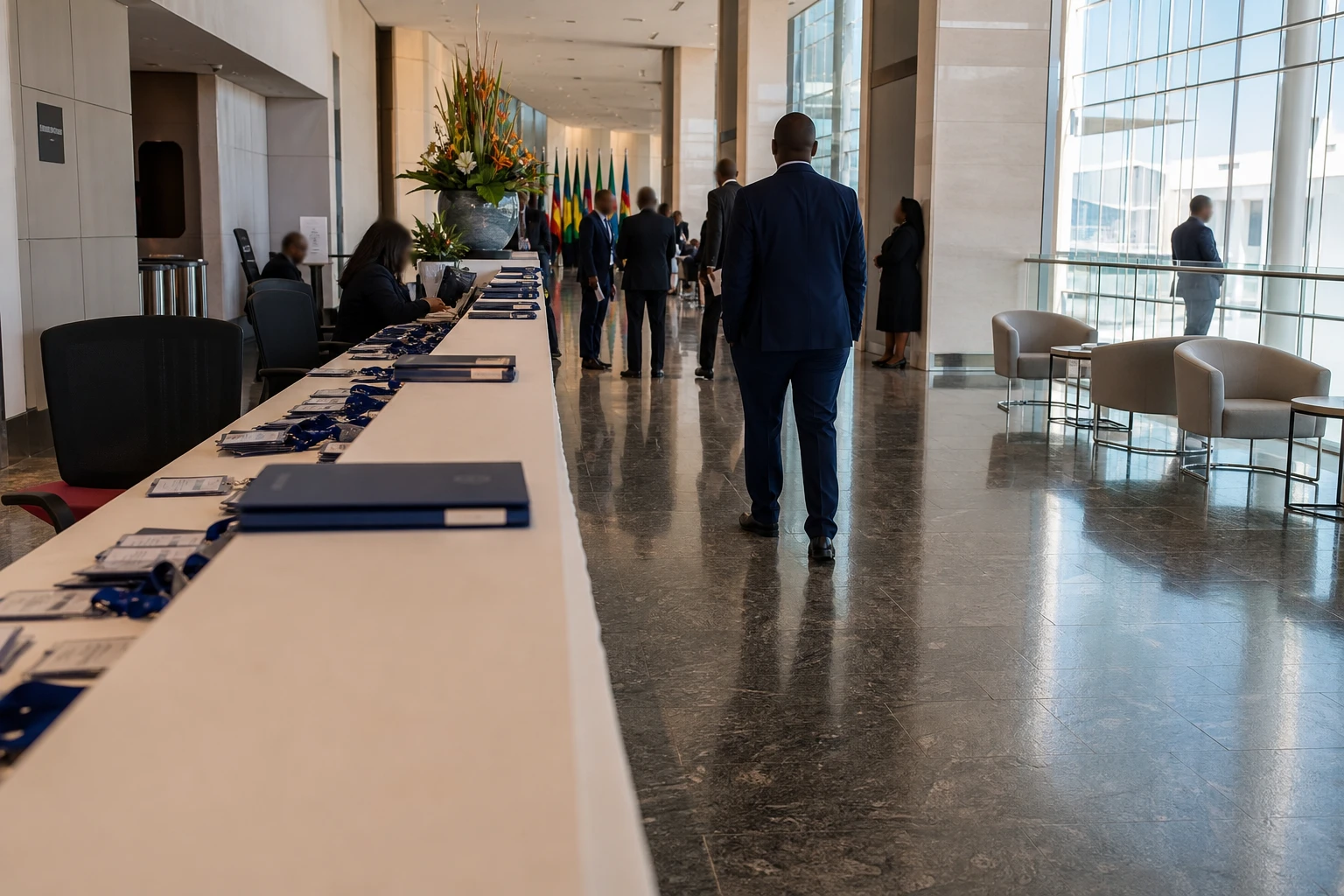
In Durban, Pretoria seeks to regain control of a region gripped by fears
In Southern Africa, free movement often runs up against a harsher reality: borders shift quickly for workers, but much more slowly for public policy. On the eve of the 46th ordinary summit of the Southern African Development Community, South Africa is therefore seeking to turn a sensitive crisis into an acknowledged regional issue, without letting migration tensions alone define Pretoria’s agenda. The meeting is scheduled for 17 August 2026 at the Durban International Convention Centre in Durban, in KwaZulu-Natal province.
The summit comes at a particular moment for the region. SADC entrusted South Africa with an interim presidency until August 2026 after Madagascar withdrew from the planned rotation, then confirmed that Pretoria would take over the organisation’s presidency at that time. For South Africa, this sequence matters twice over: it concludes an institutional transition and prepares a new phase of regional leadership.
Migration, from South African streets to the Council of Heads of State
The most visible issue remains migration. Since June, anti-immigration marches have shaken several South African cities, with a clear target: undocumented foreigners, but also, more broadly, people from other Southern African countries. The South African government has acknowledged the seriousness of the climate and said it wants to act against xenophobia, Afrophobia and violence targeting migrants. At the same time, Pretoria has highlighted a more regulated approach to migration, through an interministerial committee and stricter management measures.
The point of tension is longstanding, but it has taken on a more political form this year. Protests have prompted thousands of people to leave South Africa or seek repatriation. According to recent reports, those departing have included migrants from Zimbabwe, Malawi and other countries in the sub-region in particular. The scale of the phenomenon is a source of shared concern among neighbouring states, since their citizens often work in the informal sector, on construction sites, in street trading and in some urban services within the South African economy.
President Cyril Ramaphosa has publicly taken up the issue ahead of the summit. At a public conference in Durban, he expressed shame over the discrimination suffered by foreign nationals and called on regional leaders to build “a region where people move by choice, not out of desperation”. The phrase sums up the underlying challenge: regional mobility cannot rely solely on the informal economy and police decisions. It requires common rules, clearer legal routes and credible protection mechanisms.
Beyond borders, SADC tests its ability to manage several emergencies at once
The summit is not limited to migration. SADC must also examine the situation in the eastern Democratic Republic of the Congo, where it has pledged to support the continental response to the Ebola outbreak confirmed in 2026. The regional bloc has already said it is monitoring the outbreak and strengthening member states’ preparedness. The issue is not secondary in the region: mobility, border markets and health systems are interconnected, especially when infrastructure remains uneven from one country to another.
Leaders are also expected to keep an eye on Madagascar, whose political transition continues to weigh on the regional organisation, as well as Zambia, where SADC is closely monitoring the electoral process. The organisation deployed an observation mission for Zambia’s general election on 13 August 2026, even before the summit. This timetable shows that SADC remains a forum for political management as much as an economic framework. It works on institutional stability, elections and balances of power, not only on roads or customs.
This connection matters for South Africa itself. Pretoria needs a more stable region for its supply chains, mineral exports, industry and cross-border workforce. But neighbouring countries also expect the zone’s largest economy not to treat migration as a mere domestic security issue. In a bloc of 16 members, pressure on one country always spills over into others, through remittances, expulsions, separated families and diplomatic tensions.
The debate therefore extends far beyond Durban. It concerns the credibility of SADC, which wants to demonstrate more concrete integration in line with its Vision 2050 and industrialisation agenda. It also concerns the African Union, since intra-African movement, the protection of people on the move and coordinated crisis management are tests of continental coherence. If heads of state manage to formulate common responses, the meeting could be seen as a step towards a more organised Southern Africa, less reactive and less vulnerable to outbursts of anger. Otherwise, the region will remain trapped in a familiar cycle: social crisis, political closure, then diplomatic improvisation.