Algeria
 Egypt
 Libya
 Morocco
 Sudan
 Tunisia
 Benin
 Burkina Faso
 Cabo Verde
 Côte d'Ivoire
 Ghana
 Guinea
 Guinea-Bissau
 Liberia
 Mali
 Mauritania
 Niger
 Nigeria
 Senegal
 Sierra Leone
 The Gambia
 Togo
 Cameroon
 Central African Republic
 Chad
 DR Congo
 Equatorial Guinea
 Gabon
 Republic of the Congo
 São Tomé and Príncipe
 Burundi
 Comoros
 Djibouti
 Eritrea
 Ethiopia
 Kenya
 Madagascar
 Malawi
 Mauritius
 Mozambique
 Rwanda
 Seychelles
 Somalia
 South Sudan
 Tanzania
 Uganda
 Angola
 Botswana
 Eswatini
 Lesotho
 Namibia
 Zambia
 Zimbabwe
When a migration crisis becomes a diplomatic bill
In Pretoria, the handling of African nationals’ departures has taken a sensitive turn. What was initially presented as a response to security and the movement of people has now become a debate about costs, responsibilities and how states communicate as African partners. In this case, Ghana has drawn a clear line: Accra says its citizens who returned from South African territory did so at the expense of the Ghanaian state and its partners, without seeking financial assistance from Pretoria.
The timing matters. Since June 2026, South Africa has stepped up operations targeting irregular migration, while insisting that the country could not become a place of permanent encampment for people awaiting return. In the same move, South African authorities acknowledged coordinated repatriations with several African states, including Nigeria, Ghana and Malawi. In the continental debate, this sequence quickly moved beyond a strictly administrative matter to touch on the dignity of African migrants and solidarity between African capitals.
What Accra says, and Pretoria’s response
The point of friction crystallised around a report circulated in recent days: South Africa had allegedly asked several African countries to reimburse nearly $18 million in repatriation costs. On this point, the Associated Press confirmed that South Africa’s Department of Home Affairs had cited almost $18 million spent on housing and transporting migrants who had asked to return home, and that the foreign ministry had sent written compensation requests to Malawi, Ethiopia and Nigeria. Ghana, for its part, has publicly said it is not among the countries targeted.
The distinction is not incidental. Accra says it financed the entire evacuation of its nationals from South Africa, with support from Ghanaian partners, and says it sought neither financial nor material assistance from South African authorities. Ghana’s foreign ministry also reiterated that protecting citizens abroad remains a national priority, even when an operation weighs on the public budget. The clarification is intended to avoid confusion with the countries to which Pretoria has reportedly sent reimbursement requests.
Repatriations in succession, and a wider unease
The available figures indicate the scale of the issue. According to Ghanaian authorities, more than 1,600 Ghanaians have been evacuated from South Africa since May 2026. Ghana’s national agency had already said that a first group of around 300 people arrived in Accra in late May, followed by further flights organised in June and July. Pretoria, for its part, has said its repatriation operations also involved other African nationalities, with returns to Nigeria, Uganda, Kenya and the Republic of the Congo.
This process reveals a familiar reality that is rarely acknowledged calmly: South Africa remains a major economic draw in southern Africa, but it is also a focal point for tensions over jobs, urbanisation and unemployment. South African authorities describe their actions as an effort to regulate irregular migration. Several countries of origin, meanwhile, see a pattern of stigmatising African foreigners. This is where the issue becomes political. It is no longer just about border control. The question is whether solutions will be developed within the framework of the Southern African Development Community, SADC, or whether each crisis will continue to be managed country by country, at the cost of repeated diplomatic incidents.
For those affected, the gap is stark. For governments, the debate concerns budgets, public order and sovereignty. For families, it means hurried departures, lost belongings, interrupted incomes and often precarious resettlement. On arrival in Ghana, returnees do not simply go home: they also receive reintegration support, including transport assistance and support funds. This shows that return is not the end of the story, but the start of another cost, borne by the country of origin and sometimes by private or voluntary-sector partners.
A test for the African Union and SADC
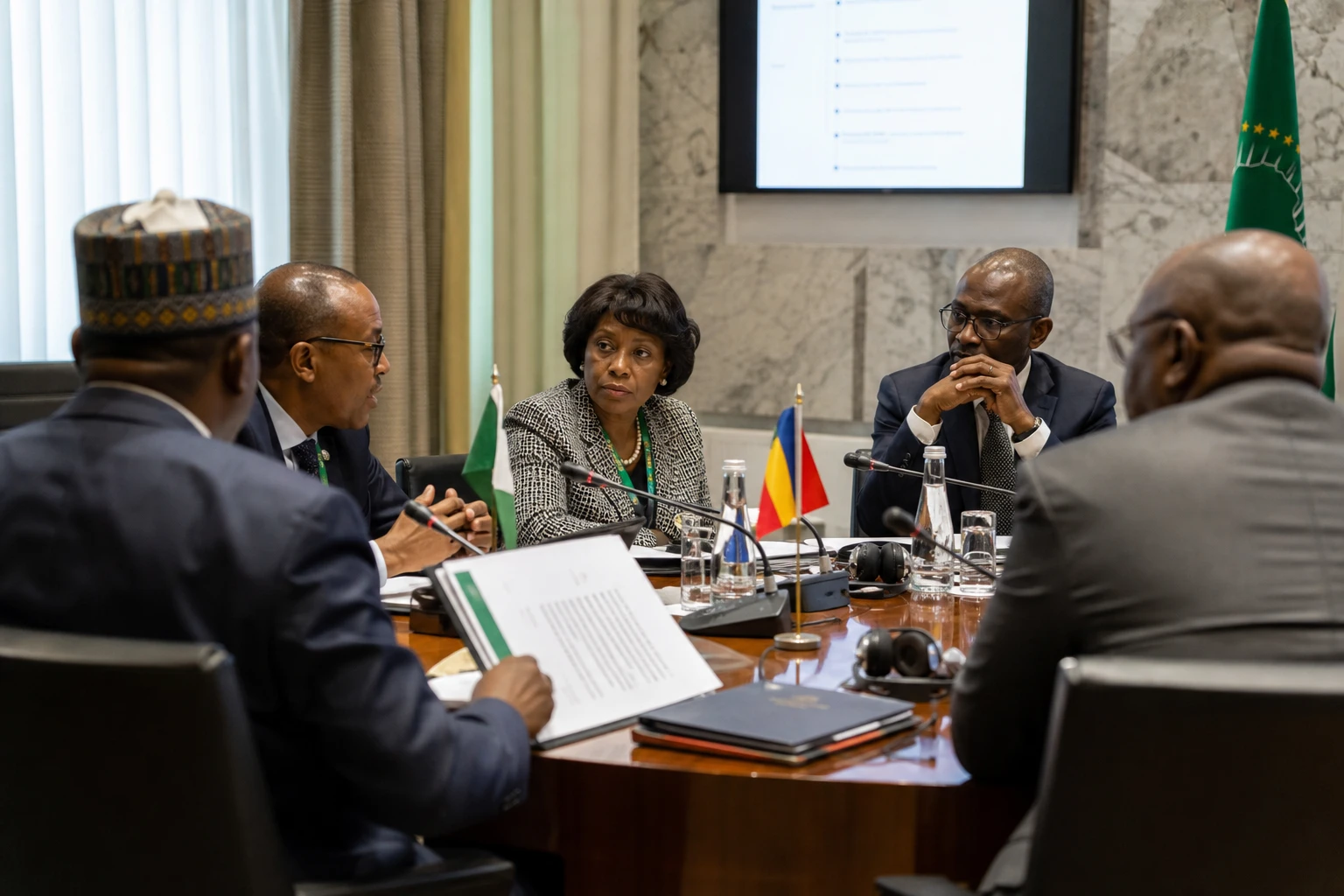
The implications extend well beyond the Accra-Pretoria dispute. Ghana, alongside Nigeria, has pushed for the issue to be discussed at African Union level, arguing that anti-migrant violence in South Africa strikes at the heart of the pan-African project. According to several African and international sources, the subject has already been raised in continental forums, amid disagreements over the agenda and how to prevent a debate about migrants from turning into a confrontation between states.
What happens next will depend on African capitals’ ability to address three connected issues together: protecting nationals, the cost of repatriations and the underlying reasons for people’s departure for South Africa. This is a regional challenge, but also a continental one. If SADC and the African Union cannot establish a framework for these situations, each episode risks leading to special flights, diplomatic notes and public counter-accusations. Conversely, a common framework for returns, documentation and consular protection could prevent African migration from continuing to be managed in an emergency, under pressure from the streets and social media.