Algeria
 Egypt
 Libya
 Morocco
 Sudan
 Tunisia
 Benin
 Burkina Faso
 Cabo Verde
 Côte d'Ivoire
 Ghana
 Guinea
 Guinea-Bissau
 Liberia
 Mali
 Mauritania
 Niger
 Nigeria
 Senegal
 Sierra Leone
 The Gambia
 Togo
 Cameroon
 Central African Republic
 Chad
 DR Congo
 Equatorial Guinea
 Gabon
 Republic of the Congo
 São Tomé and Príncipe
 Burundi
 Comoros
 Djibouti
 Eritrea
 Ethiopia
 Kenya
 Madagascar
 Malawi
 Mauritius
 Mozambique
 Rwanda
 Seychelles
 Somalia
 South Sudan
 Tanzania
 Uganda
 Angola
 Botswana
 Eswatini
 Lesotho
 Namibia
 South Africa
 Zimbabwe
An election about more than the winner’s name
In Lusaka, the 13 August vote is not just about who secures a majority. It also measures the gap between improving macroeconomic indicators and the daily experience of Zambian households, which still face the cost of living, scarce jobs and overstretched public services. In a country that remains one of Africa’s major copper producers, the campaign has taken on the air of a verdict on whether, and how, the economic recovery has reached households.
The election is taking place within an institutional framework set by the Electoral Commission of Zambia, which has scheduled the presidential and parliamentary vote for Thursday 13 August 2026, from 06:00 to 18:00. The official timetable provides for the verification of results through 17 August, when they are due to be announced. Parliament is also to be renewed in its new configuration, with 226 seats elected by direct suffrage, up from 156, giving the election significance beyond the presidency alone.
In this contest, Hakainde Hichilema, elected in 2021 after several attempts, is seeking a second term. He faces 13 other contenders, including Brian Mundubile, presented as the most serious challenger and leader of an opposition coalition. The electoral authorities and public communications services have confirmed the presence of this rival bloc in a race the opposition describes as uneven.
Hichilema’s economic record: solid figures and social impatience
The incumbent president is claiming credit for a recovery following the 2020 default and the debt crisis that followed. The International Monetary Fund notes that public external debt has been largely restructured, international reserves have strengthened and growth has resumed. In its latest review, the institution even projected gross domestic product growth of 5.8% in 2026, while its country profile cites 4.3% for the same year, based on another estimate published on its platform.
The government also points to the stabilisation of the kwacha, rising reserves and a revival in mining investment. These results have reassured lenders and some investors. But the political downside is clear: the recovery remains too slow for many Zambians, while poverty remains high and households continue to bear the rising cost of food, transport and energy. The electoral balance of power therefore rests on a contradiction familiar in many African commodity-producing countries: growth is taking place, but it is not enough to create an immediate sense of improved living standards.
The social debate goes beyond aggregate figures. The IMF notes that poverty and inequality remain high. The World Bank, for its part, says Zambia still needs to strengthen inclusive growth and resilience, particularly against climate shocks affecting agriculture, informal employment and rural incomes. In other words, the challenge is not only to stabilise public finances. It is also to determine whether reforms can reach markets, workshops, peri-urban neighbourhoods and rural areas.
A closely monitored campaign in a country keen to remain a regional benchmark
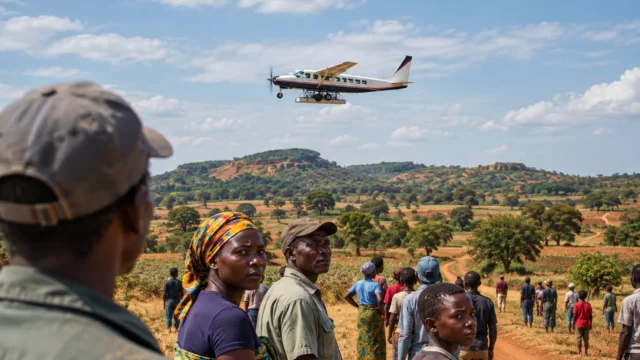
Brian Mundubile is trying to capitalise on this frustration. He accuses the authorities of hindering his campaign through police interventions, violence by supporters of the president and flight cancellations that allegedly disrupted some trips to the provinces. The opposition says it sees these episodes as proof of an uneven playing field. At the same time, observer missions from the Southern African Development Community, the European Union and the Electoral Commission of Zambia have been deployed, showing that the vote is being closely watched at regional level.
This vigilance is no trivial matter. Zambia occupies a particular place in Southern Africa. The country underwent a peaceful transition in 2021, often held up as a benchmark in a region marked by more fraught changes of government. But criticism of political space, competition between government duties and the incumbent’s campaign, and debate over the fairness of the process are reminders that institutional stability does not rule out tensions over the rules of the game. For SADC, the election is also a test of its revised electoral principles.
Zambia’s electoral map also follows regional lines. The South and West remain strongholds for Hichilema’s UPND, while the North and the Copperbelt, the country’s mining heartland, remain more open to the opposition that inherited the Patriotic Front. This political geography matters in a country where the distribution of mining revenues, jobs linked to the copper supply chain and access to infrastructure are viewed differently depending on whether people live in the capital, mining areas or rural zones.
At continental level, the Zambian vote says something broader. It is a reminder that the democratic credibility of African elections is not decided on polling day alone, but over the entire process surrounding it: campaign rules, access to the media, candidates’ freedom of movement, independent observation and, finally, the publication of results. In a Southern Africa where mining, debt and redistribution remain central issues, Lusaka offers a textbook case: an executive may be praised abroad for its macroeconomic discipline yet still face electoral punishment if it fails to turn the recovery into tangible improvements for families.