Algeria
 Egypt
 Libya
 Morocco
 Sudan
 Tunisia
 Benin
 Burkina Faso
 Cabo Verde
 Côte d'Ivoire
 Ghana
 Guinea
 Guinea-Bissau
 Liberia
 Mali
 Mauritania
 Niger
 Nigeria
 Senegal
 Sierra Leone
 The Gambia
 Togo
 Cameroon
 Central African Republic
 Chad
 DR Congo
 Equatorial Guinea
 Gabon
 Republic of the Congo
 São Tomé and Príncipe
 Burundi
 Comoros
 Djibouti
 Eritrea
 Kenya
 Madagascar
 Malawi
 Mauritius
 Mozambique
 Rwanda
 Seychelles
 Somalia
 South Sudan
 Tanzania
 Uganda
 Angola
 Botswana
 Eswatini
 Lesotho
 Namibia
 South Africa
 Zambia
 Zimbabwe
A fragile ceasefire in northern Ethiopia
In northern Ethiopia, peace has never quite returned to its original form. Since Pretoria, the guns have fallen silent, but mistrust, dormant front lines and internal rivalries in Tigray remain. In this region bordering Eritrea and Amhara, every military movement revives the same concern: a local escalation can quickly become a national crisis.
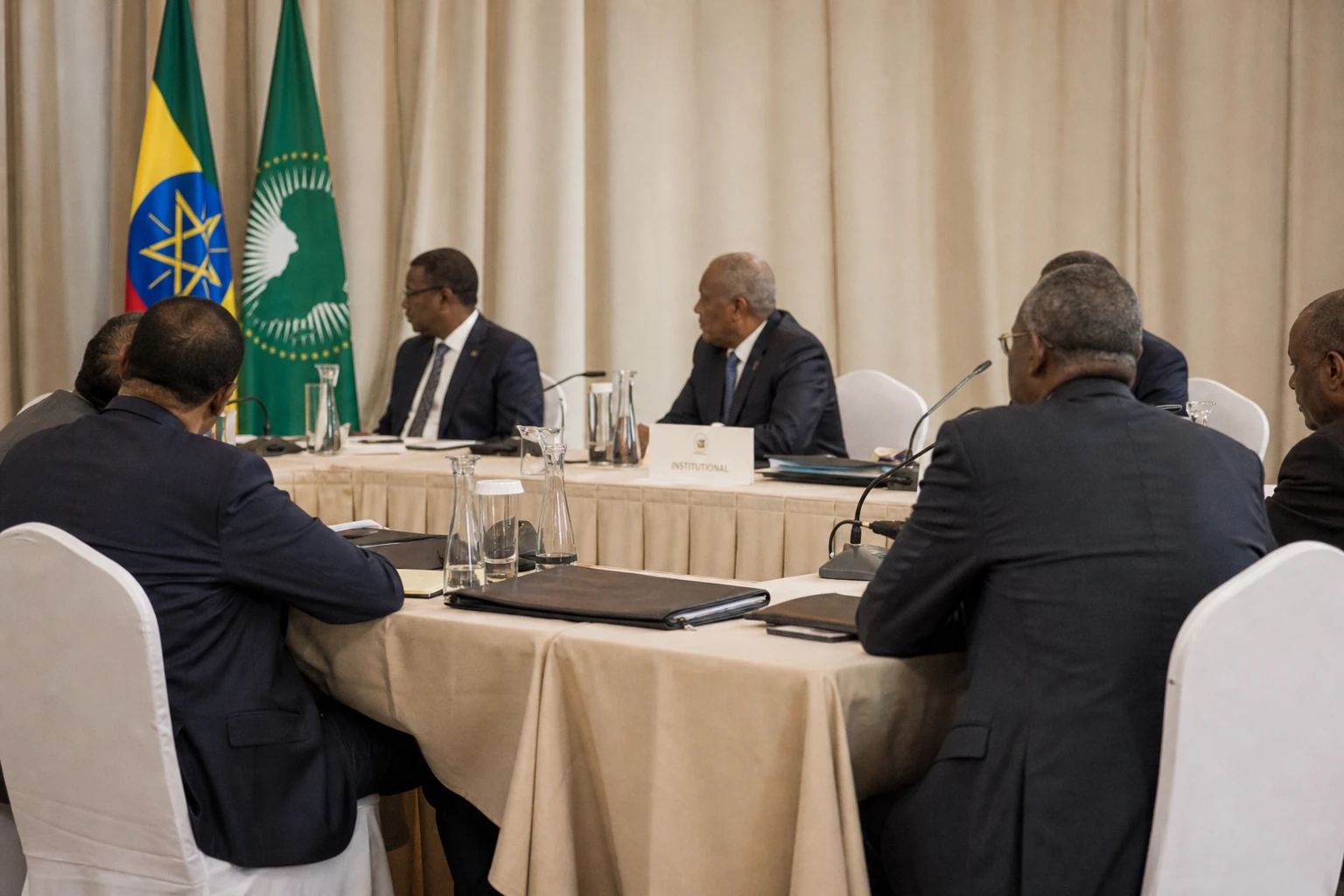
Tigray remains one of the most sensitive points in the Ethiopian federation. The November 2022 ceasefire agreement, concluded under the auspices of the African Union in Pretoria, halted open warfare between Addis Ababa and Tigrayan forces. But several provisions have not been fully implemented, including full disarmament, the return of displaced people and the normalisation of the regional administration. The AU itself again called on the parties to honour their commitments in March 2025.
What Tigrayan authorities say
On Tuesday, Tigrayan officials accused the federal government of carrying out a drone strike in Merewa, in southern Tigray, near the border with Amhara. They described it as a “serious escalation” and said the attack targeted Tigrayan fighters. A medical source cited locally reported at least four wounded, including a woman, but could not give details of their condition. The federal army spokesperson had not publicly responded to the accusations by the time they were reported.
Caution remains essential. The death toll, exact targets and extent of the damage have not been confirmed by a second independent source so far. The incident itself, however, fits a pattern already seen this year: suspended air links, security alerts, and fresh exchanges of fire or strikes in the north of the country. Reuters reported fighting and drone strikes in late January 2026 after renewed tensions between federal and Tigrayan forces.
Why Tigray remains volatile
Tigray, a region of about six million people, is emerging from a two-year war that devastated infrastructure, displaced hundreds of thousands of people and shattered already fragile family economies. The AU put the conflict’s death toll at about 600,000, a figure often cited but difficult to verify precisely, as the destruction has made the data hard to establish. Several humanitarian reports published since 2025 also show that hundreds of thousands of displaced people have still been unable to return home.
The heart of the problem is not only military; it is also political. Since 2025, the AU and humanitarian actors alike have stressed the fragility of the Pretoria agreement and the need for genuine dialogue. At the same time, the Ethiopian government has taken a tougher line on security, accusing some Tigrayan factions of drawing closer to Eritrea and Amhara militias, while Tigrayan officials denounce what they describe as financial and administrative strangulation.
Local tensions, regional consequences
Tigray cannot be viewed in isolation. It is caught in a regional tangle linking Ethiopia with Eritrea, Sudan and the wider Horn of Africa, under the watch of IGAD and the African Union. Relations between Addis Ababa and Asmara have become tense again, and accusations traded between the capitals are fuelling a climate in which every border could become a potential stage for a show of force.
This latest episode also weighs on the country internally. Ethiopia is already facing other centres of violence, notably in Amhara and Oromia. Economic pressure, debt, internal displacement and reconstruction needs add to the strain. For the people of Tigray, this means public services remain unstable, schools and hospitals are weakened, and the local economy is struggling to recover. For the federal government, it complicates a strategy already stretched between security control, political reform and maintaining central authority.
What to watch next
The significance of this episode extends beyond the hills of Tigray. Ethiopia remains one of East Africa’s pivotal states, with Addis Ababa serving as the continent’s diplomatic centre and the seat of the African Union. If current tensions are confirmed, they could affect implementation of the Pretoria ceasefire, revive debate over African mediation and further undermine stability in the Horn of Africa. The next signs to watch will be Addis Ababa’s official response, the AU’s position and troop movements near the border with Amhara.
In this case, the issue is not only who struck whom. It is whether de-escalation mechanisms are still holding, or whether northern Ethiopia is gradually returning to the logic of arms. In a country where internal conflicts have already affected the entire region, the answer will say far more than the Merewa incident alone.