Algeria
 Egypt
 Libya
 Morocco
 Sudan
 Tunisia
 Benin
 Burkina Faso
 Cabo Verde
 Côte d'Ivoire
 Ghana
 Guinea
 Guinea-Bissau
 Liberia
 Mali
 Mauritania
 Niger
 Nigeria
 Senegal
 Sierra Leone
 The Gambia
 Togo
 Cameroon
 Central African Republic
 Chad
 DR Congo
 Equatorial Guinea
 Gabon
 Republic of the Congo
 São Tomé and Príncipe
 Burundi
 Comoros
 Djibouti
 Eritrea
 Ethiopia
 Kenya
 Madagascar
 Malawi
 Mauritius
 Mozambique
 Rwanda
 Seychelles
 Somalia
 South Sudan
 Tanzania
 Uganda
 Angola
 Botswana
 Eswatini
 Lesotho
 South Africa
 Zambia
 Zimbabwe
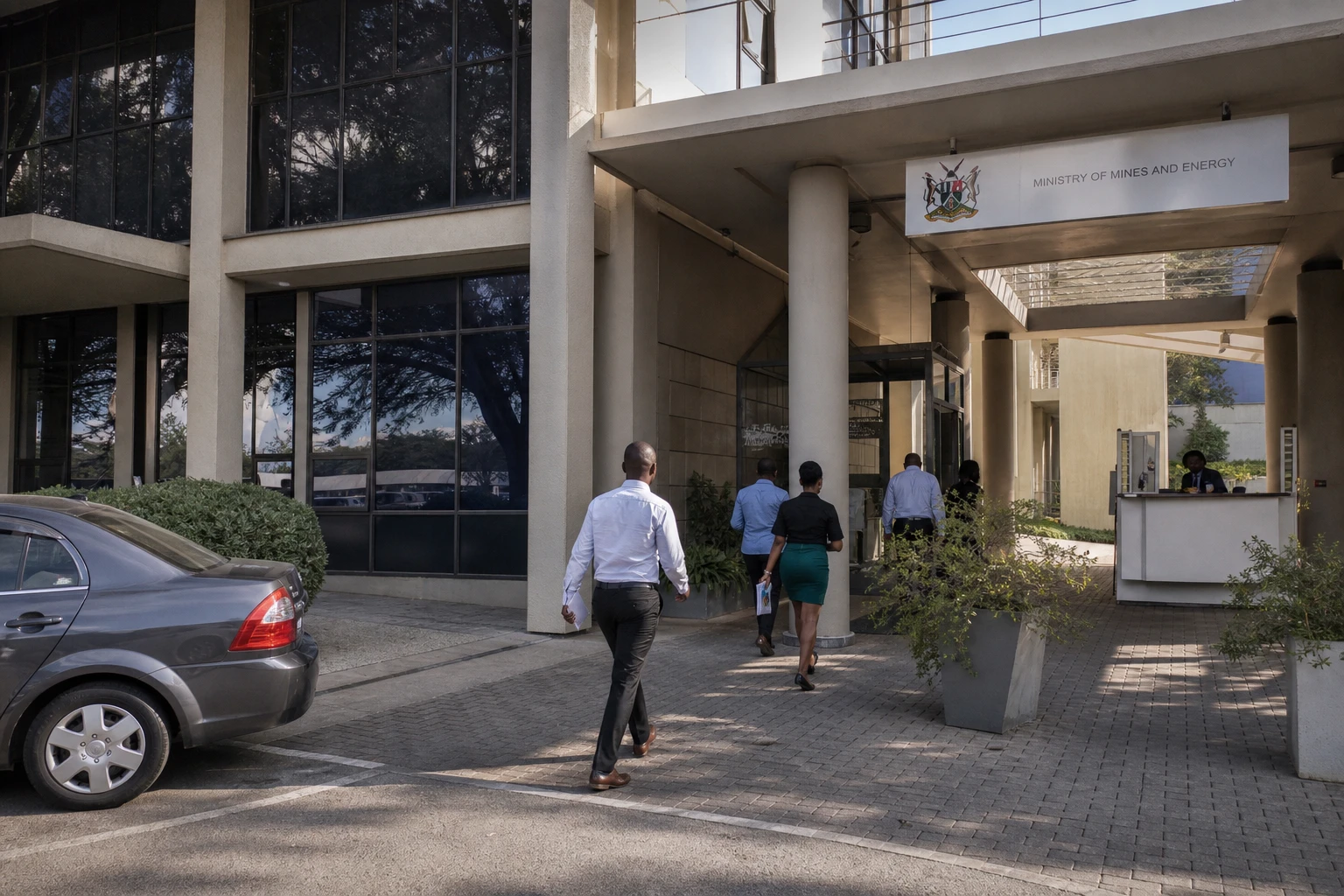
Minerals fill the coffers, but not yet the whole economy
In Namibia, mining is about more than trucks and global prices. The sector already has a bearing on public accounts, employment and the country’s ability to finance its next phase of development. It remains powerful, but must now prove that it can also create more wealth locally, rather than allowing most of the added value to leave the country in the form of raw ore.
The country is part of the Southern African Development Community, SADC, which brings together 16 member states and sees regional integration as a driver of growth. Within this framework, Namibia is seeking to reconcile mineral exports, industrialisation and jobs for a young population, as the new national development plan, NDP6, covers the 2025/2026-2029/2030 period and places wealth creation, equality and employment at the heart of public priorities.
A strong year, driven by gold and uranium
In 2025, Namibia’s mining sector paid 7.8 billion Namibian dollars into the Treasury, or about US$434 million, according to figures released by the authorities and reported in the national press. That was a 39% increase on the 5.6 billion Namibian dollars recorded in 2024. At the same time, the sector accounted for about 14% of gross domestic product, confirming its status as a backbone of the real economy.
The increase was not uniform. Tax revenue from mining royalties rose by about 9%, to nearly 2.5 billion Namibian dollars, while export duties jumped by 90%, to 685 million Namibian dollars. This performance owed much to gold, supported by robust production and favourable international prices. It also reflected uranium’s strong resurgence. Namibia ranks among the world’s top three producers of the strategic mineral, behind Kazakhstan and Canada.
The picture nevertheless remains mixed. The industry’s professional chamber reported a contraction in mining value added in 2025, owing to declines in diamonds and some metal mines, despite a marked increase in uranium production. In other words, tax revenue rose while activity itself was hit by sector-specific shocks. This is an important nuance for Windhoek: public revenue improved, but dependence on a few commodities remains high.
Windhoek wants more than a boom: investment, jobs and local processing
The Namibian government makes no secret of its ambition. Through NDP6, it wants to make mining a broader engine of growth, capable of supporting industry, training and employment. At the Namibia Public-Private Forum, industry players discussed projects that could mobilise nearly $2.865 billion in investment and create more than 18,000 jobs, provided administrative and regulatory obstacles are removed. This puts mining at the intersection of industrial and social policy.
The presidency is also pressing for more value to be added locally. The idea is simple: export less raw material and capture more value in the country through refining, processing or local mining services. This approach is consistent with NDP6’s ambitions, which emphasise diversification, structural transformation and the development of natural resources. For companies, this will require more investment. For the state, it means more local content, higher tax revenue over the medium term and less vulnerability to global commodity cycles.
Uranium projects in the pipeline offer an indication of the shift being sought. The industry already relies on Rössing, Husab and Langer Heinrich, which resumed commercial production in 2024. Further along the pipeline, Etango, Tumas and Norasa are presented as sources of growth that could strengthen Namibia’s position in uranium in the second half of the 2020s and beyond. This is where part of the debate lies: the country can consolidate its place in a resurgent global market, but it must turn this window of opportunity into sustainable jobs and local value chains.
A Namibian issue, but also a regional and African one
Namibia is not alone in facing this challenge. Its mining sector operates in a Southern Africa marked by competition for capital, infrastructure and markets. SADC is specifically seeking to strengthen regional economic integration. In this context, a more industrialised Namibia could play a greater role in regional supply chains for energy, transport and mineral processing. Windhoek could then serve as a foothold for a broader African industrialisation strategy.
The continental significance is clear. Across Africa, Namibia’s experience is a reminder that strategic resources alone are not enough to create prosperity unless they are linked to coherent public policy, reliable infrastructure and credible local processing. It is also a test for the African Continental Free Trade Area, which is intended to facilitate the regional flow of processed goods rather than just raw materials. What happens next will depend on Windhoek’s ability to turn mining revenue into jobs, skills and an industrial base, while maintaining fiscal discipline.