Algeria
 Egypt
 Libya
 Morocco
 Sudan
 Tunisia
 Benin
 Burkina Faso
 Cabo Verde
 Côte d'Ivoire
 Ghana
 Guinea
 Guinea-Bissau
 Liberia
 Mali
 Mauritania
 Niger
 Nigeria
 Senegal
 Sierra Leone
 The Gambia
 Togo
 Cameroon
 Central African Republic
 Chad
 DR Congo
 Equatorial Guinea
 Gabon
 Republic of the Congo
 São Tomé and Príncipe
 Burundi
 Comoros
 Djibouti
 Eritrea
 Ethiopia
 Kenya
 Madagascar
 Malawi
 Mauritius
 Mozambique
 Rwanda
 Seychelles
 South Sudan
 Tanzania
 Uganda
 Angola
 Botswana
 Eswatini
 Lesotho
 Namibia
 South Africa
 Zambia
 Zimbabwe
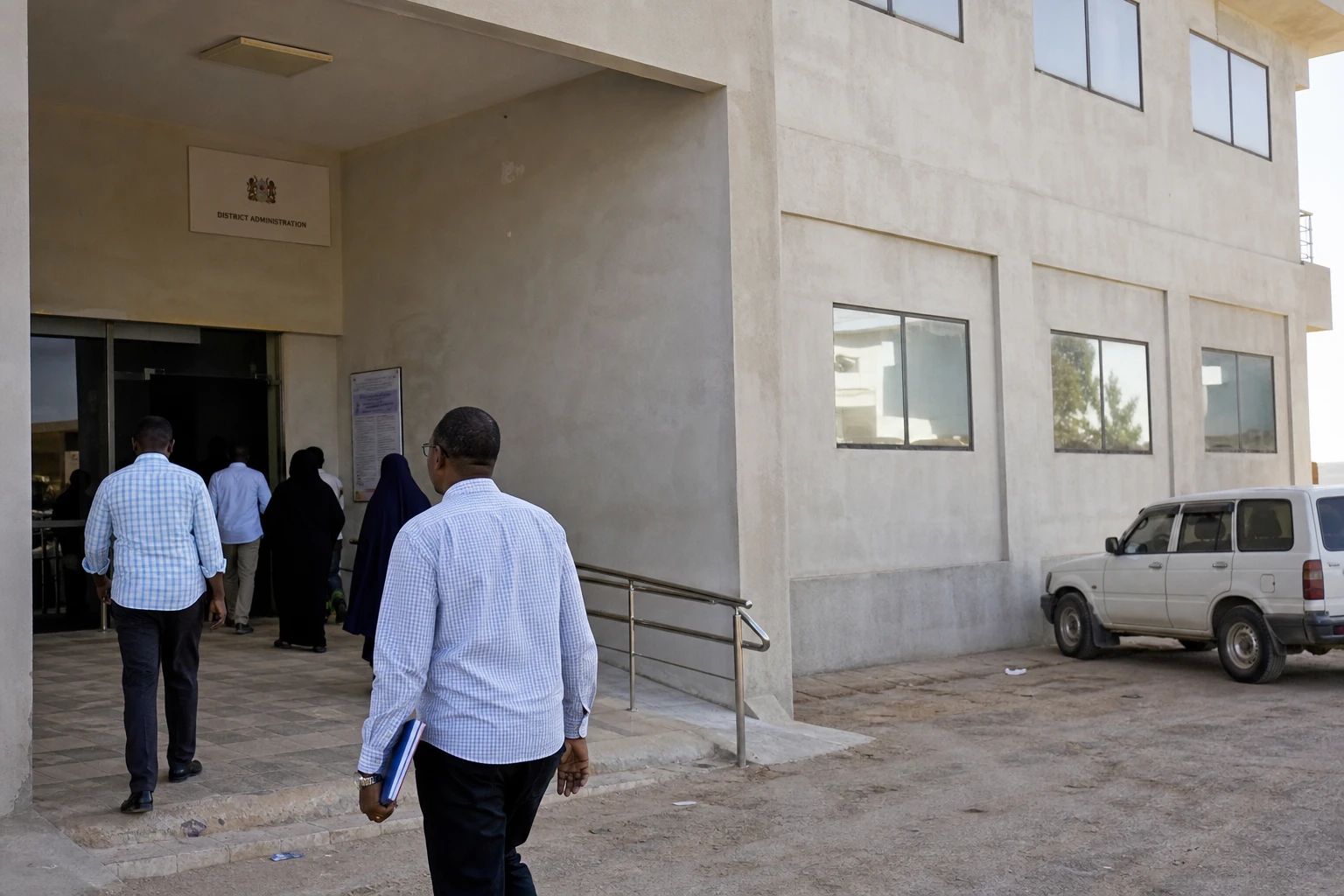
In Galkayo, a long-standing fault line
In Galkayo, a city divided between two Somali authorities, a military camp can become a test of political strength within hours. On Wednesday 5 August 2026, gunfire and loud explosions once again underscored that, in central Somalia, local security depends as much on weapons as on the balance between Mogadishu and the federal member states.
The city lies in the Mudug region, where Puntland lies to the north and Galmudug to the south. For years, Galkayo has served as both a point of contact and a point of friction between the two federal administrations. United Nations programmes still target North Galkayo and South Galkayo separately, evidence that the dividing line remains a concrete part of daily life.
At the same time, the institutional crisis between the federal government and several states has deepened in 2026. Somalia’s presidency secured approval in March for a revision of the Constitution, while Puntland rejected the changes as unilateral. The dispute concerns power-sharing, the electoral timetable and how to move on from the transitional arrangements inherited from 2012.
What is known about the operation
According to information corroborated so far, Puntland forces launched an operation on the morning of 5 August against a camp in Galkayo occupied by soldiers allied to the federal government. After several hours of fighting, Puntland authorities said they had taken control of the site and announced more than 100 arrests. No precise casualty figure had been independently confirmed at the time the first reports became available.
Puntland President Said Abdullahi Deni described the action as a security operation aimed at protecting regional stability. He also accused Mogadishu of sending weapons and reinforcements to Galkayo. The federal government, for its part, did not immediately comment publicly on the allegations.
The episode is part of a pattern that has been visible for several weeks. In late July, Puntland security forces had already withdrawn from Galkayo and then reorganised their presence there, showing how fluid the military situation in the city is. In June, Somali media also reported troop movements around Galkayo and Garowe, amid tensions between the federal presidency and Puntland authorities.
Why Galkayo matters
Galkayo is more than a point on a map. It is also a route for transport, trade and pastoral mobility in the heart of central Somalia. Numerous infrastructure projects are under way there, particularly on the Galkayo-Xarfo road, underscoring the area’s economic importance for domestic trade. When public order falters here, transport operators, markets and basic services feel the effects immediately.
For the population, the risk is twofold. First, there is the danger posed by the fighting itself, in a city with a heavy military presence. Then there is the disruption to daily life caused by checkpoints, arrests and mutual suspicion. For the authorities, by contrast, every show of force also serves to assert political legitimacy. In a still-fragile federal system, controlling a camp often means controlling a message.
The country’s centre also faces pressing humanitarian challenges. In 2024, UN agencies launched a joint programme for North Galkayo, South Galkayo and Galdogob, with goals covering education, health, water and economic resilience. This is a reminder that, beyond institutional rivalries, the area remains exposed to climate shocks, population displacement and gaps in public services.
A warning for Somali federalism as a whole
The incident’s significance extends well beyond Mudug. Since the 2024 constitutional reform and the amendments approved in March 2026, relations between Mogadishu and several federal member states have become strained. Puntland broke with the central government after the initial revisions and then hardened its position over the new text. The Galkayo case illustrates how the dispute has shifted from legal debate to security confrontation.
In the region, IGAD has long followed mediation efforts around Galkayo and between Puntland and Galmudug. The African Union, for its part, regularly calls on Somali actors to show restraint, engage in dialogue and respect constitutional mechanisms. These appeals cannot resolve matters on their own, but they point to a simple fact: Somalia’s stability is also at stake in its pivotal cities, where local authorities, federal forces and civilian communities overlap without always trusting one another.
For now, the most pressing question is this: will the confrontation in Galkayo remain a localised episode, or will it become a symptom of a wider rupture between Mogadishu and the federal member states? The next signals will come from official statements, regional mediation efforts and how security forces redeploy in the area.