Algeria
 Egypt
 Libya
 Morocco
 Sudan
 Tunisia
 Benin
 Burkina Faso
 Cabo Verde
 Côte d'Ivoire
 Ghana
 Guinea
 Guinea-Bissau
 Liberia
 Mali
 Mauritania
 Niger
 Nigeria
 Senegal
 Sierra Leone
 The Gambia
 Togo
 Cameroon
 Central African Republic
 Chad
 DR Congo
 Equatorial Guinea
 Gabon
 Republic of the Congo
 São Tomé and Príncipe
 Burundi
 Comoros
 Djibouti
 Eritrea
 Ethiopia
 Madagascar
 Malawi
 Mauritius
 Mozambique
 Rwanda
 Seychelles
 Somalia
 South Sudan
 Tanzania
 Uganda
 Angola
 Botswana
 Eswatini
 Lesotho
 Namibia
 South Africa
 Zambia
 Zimbabwe

In Nairobi, carbon becomes a matter of economic sovereignty
In Kenya, the climate debate is no longer limited to reducing emissions. It now touches on a very practical question: who decides the value of a carbon credit, and how far is the country willing to sell it abroad without undermining its own climate trajectory? At a time when droughts, agricultural shocks and pressure on public finances are converging, this discussion weighs as heavily on villages as it does on the state’s accounts.
The latest development comes from Nairobi, where the Kenyan government wants to regulate international carbon credit transfers more strictly. The aim is straightforward in principle, but complex to implement: attract climate finance while preserving enough room to meet the country’s nationally determined contribution under the Paris Agreement. Kenya is also part of the East African Community, a bloc of eight partner states, giving its climate choices immediate regional significance.
A framework already well advanced, but still taking shape
The country is not starting from scratch. The Climate Change (Carbon Markets) Regulations, 2024 have already laid the legal foundations for authorisations, corresponding adjustments and a national carbon registry. Kenyan law even defines a “carbon budget” as an approved quantity of greenhouse gas emissions, designed to guide the allocation of emissions reductions and prevent double counting. In other words, the country has begun turning a market that is still difficult to navigate into a more tightly regulated system.
Working documents published by the authorities point in the same direction. They state that the carbon budget for international trade must remain aligned with national objectives, with published criteria, transfers recorded in the national registry and clearer public oversight. This framework addresses a central concern: preventing a project sold abroad from depriving Kenya of emissions reductions it needs to meet its own climate target.
The figure in circulation is telling. According to the available background information in UN documentation, Kenya estimates that its emissions-reduction needs through 2030 will cost $17.7bn, of which it intends to cover $3.725bn from domestic resources. The remainder must come from international support, technology transfers and capacity-building. This imbalance explains the role carbon plays in the country’s financial strategy.
Why the cap changes how Kenya’s carbon market is viewed
Kenya has established itself as one of Africa’s most active countries in the carbon market, with projects linked to renewable energy, clean cooking, mangrove restoration and forest conservation. But the appeal of investment does not eliminate the risk of an overly permissive market. Without a clear cap, a country may sell too quickly emissions reductions it needs to retain for its own climate accounting. That is precisely what the carbon budget is intended to prevent.
The signal to investors is significant. By setting more predictable rules, Nairobi wants to reduce the administrative uncertainty that often holds back transactions. At the same time, the state is seeking to protect the environmental integrity of projects. This dual approach is strategic: it reassures international buyers while giving the government a tool to reject projects that serve neither the national transition nor the interests of the communities concerned.
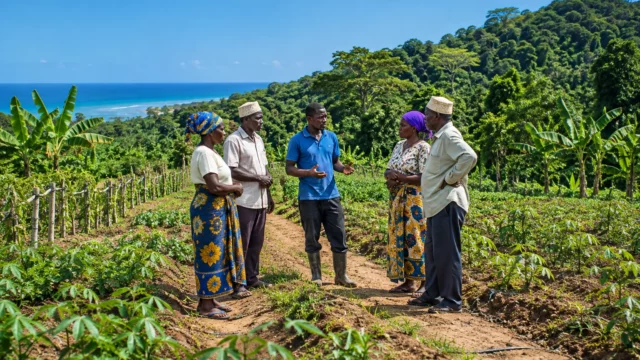
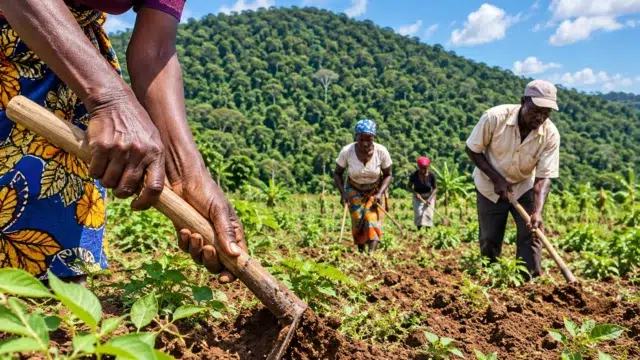
The choice also has a social dimension. In a country where a substantial share of households remains exposed to the effects of climate change, the carbon market cannot be seen simply as a source of foreign currency. The debate also concerns how benefits are shared: who receives the revenue, who bears the restrictions, and how to ensure local people do not become mere extras in projects sold in the name of the green transition. Kenyan regulations specifically emphasise transparency, corresponding adjustments and the official registration of transfers.
There is also an important energy backdrop. According to the Energy and Petroleum Regulatory Authority, renewables accounted for 79.89% of Kenya’s installed capacity as of June 2024, with geothermal power the country’s leading source of electricity generation. The country therefore has a real foundation on which to claim a low-carbon transition. But this lead in electricity does not erase its climate vulnerability or the costs of adapting and transforming the real economy.
A signal for East Africa and, more broadly, for African climate governance
At regional level, the reform matters beyond Kenya. East Africa is seeking to attract green investment, strengthen its infrastructure and secure its natural resources. When a major player such as Nairobi formalises a carbon budget for international trade, it sends a message to other East African Community capitals: the carbon market is entering a more political, more regulated and less improvised phase.
For the African Union and the continent’s climate institutions, the challenge is the same: prevent carbon markets from reproducing old imbalances in which value is captured far from the communities hosting the projects. A robust framework can instead strengthen African states’ position in international negotiations. It is a way of underscoring that the climate transition is not limited to funding from elsewhere; it also depends on African countries’ ability to set their own rules.
The next point to watch will be how this principle is translated into concrete decisions: which sectors will be prioritised, what volumes can be sold abroad, and how the authorities will balance quick revenue against preserving national headroom. That is where the system’s credibility will be determined. If Nairobi manages to strike that balance, Kenya could become an African test case: a country able to monetise its climate potential without selling off its own decarbonisation pathway.