
 Algeria
 Egypt
 Libya
 Morocco
 Sudan
 Tunisia
 Benin
 Burkina Faso
 Cabo Verde
 Côte d'Ivoire
 Ghana
 Guinea
 Guinea-Bissau
 Liberia
 Mali
 Mauritania
 Niger
 Nigeria
 Senegal
 Sierra Leone
 The Gambia
 Togo
 Central African Republic
 Chad
 DR Congo
 Equatorial Guinea
 Gabon
 Republic of the Congo
 São Tomé and Príncipe
 Burundi
 Comoros
 Djibouti
 Eritrea
 Ethiopia
 Kenya
 Madagascar
 Malawi
 Mauritius
 Mozambique
 Rwanda
 Seychelles
 Somalia
 South Sudan
 Tanzania
 Uganda
 Angola
 Botswana
 Eswatini
 Lesotho
 Namibia
 South Africa
 Zambia
 Zimbabwe
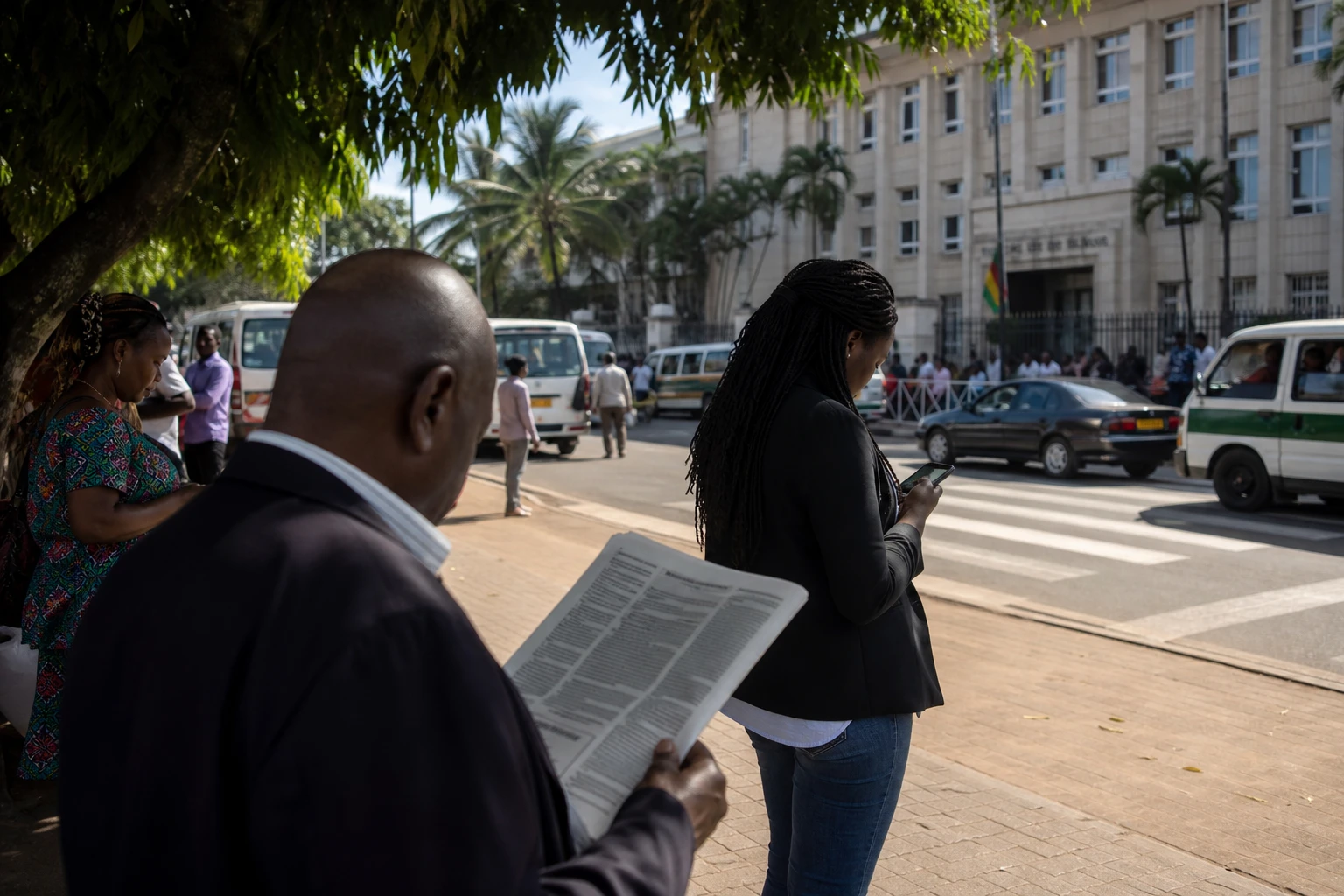
In Yaoundé, the head of state’s silence raises questions
In Cameroon, President Paul Biya’s prolonged absence has shifted the debate beyond health concerns to a broader question: who is really making decisions, and at what pace, when the country’s top office falls quiet? The head of state left Yaoundé on 7 June 2026 for a “short private stay in Europe”, according to an official statement from the presidency. Several weeks later, no public date for his return had been announced, fuelling speculation as presidential acts continued to be issued.
The situation takes on particular significance in a country where power remains highly concentrated and succession mechanisms have long been unclear. In April 2026, Cameroon’s parliament adopted a constitutional revision reinstating the office of vice-president, a change interpreted by several observers as a direct response to the question of continuity of the state. Cameroon belongs to CEMAC, the Central African economic and monetary community, where institutional stability in the zone’s largest country weighs on regional balances.
Decrees show the chain of command is working
In response to the questions, Paul Biya has chosen a familiar instrument of power in Cameroon: the decree. In late July 2026, the presidency signed a text authorising the economy minister to finalise agreements with the Islamic Development Bank, for an amount put at around 28 billion CFA francs. On 11 May 2026, another decree had already authorised the same ministry to conclude financing with the International Islamic Trade Finance Corporation, a subsidiary of the Islamic Development Bank Group, for imports of petroleum products for SONARA, the national refinery. The presidency also published a decree on 4 May 2026 ratifying a loan agreement linked to the Basic Education Support Project in Cameroon.
A reshuffle in the military hierarchy on 3 August 2026 completed the picture. The presidency promoted five colonels to the rank of brigadier-general and appointed Major-General Ebaka Hypolite as army chief of staff, according to acts published by the presidency. This kind of decision is not merely administrative. It is a reminder that, in Cameroon’s system, control of the defence forces remains one of the most sensitive levers of presidential authority.
Taken together, these acts point to a clear strategy: maintain the head of state’s institutional visibility despite his physical absence. The presidency is showing that the signing process continues to function. But it also reveals a highly centralised form of governance, in which continuity depends above all on the occasional activation of the top office, rather than on a stable, formalised political handover.
What the absence means for power, the administration and the opposition
For the government, the priority is simple: avoid any wording that might suggest a vacancy. The communications ministry has denied any deterioration in the president’s health and said he would return soon. But this defensive messaging has not been enough to dispel political unease. In Yaoundé and across the regions, many Cameroonians are watching less for signs about the president’s health than for the state apparatus’s ability to make decisions without visible uncertainty.
For the economy, continuity is even more tangible. The decrees relating to external financing concern highly sensitive sectors: basic education, oil imports and, more broadly, the implementation of public projects. In July 2026, the African Development Bank recalled that significant financing remained suspended pending faster agreements and disbursements. The regularity of signatures is no small matter: it determines projects, purchases and, ultimately, services delivered to households.
For the opposition, the episode confirms a longstanding problem: the Cameroonian state functions, but often through a highly personalised centre of power. The Cameroon Democratic Union and other critical voices have called for a clearer framework to govern prolonged absences by the head of state. The debate is less about rumour than about rules. As long as the Constitution and appointment practices remain subject to an ultra-presidential system, every prolonged trip will raise the same question: how can continuity be guaranteed without turning the silence at the top into a source of national uncertainty?
A Cameroonian issue, but also a regional test
Cameroon is more than this episode. The country remains a pivotal force in Central Africa, because of its size, economic weight and role in CEMAC. That is precisely why signals about succession, security and governance are closely watched across the region. When the presidency issues a succession of decrees during a prolonged absence, it is not speaking only to domestic public opinion. It is also sending a message to financial partners, neighbouring countries and African institutions: the state is holding its course, even as the political stage remains suspended on the question of the head of state’s return.
The continental significance is clear. In several African countries, the question of institutional continuity is returning to the fore as ageing leaders remain in office for long periods, sometimes beyond the succession frameworks originally envisaged. The Cameroon case is a reminder that constitutional reform does not solve everything if the practices of power remain opaque. In Yaoundé, what happens next will depend less on a dramatic announcement than on three very concrete benchmarks: the president’s actual return, the real establishment of the vice-presidency provided for in the April 2026 revision, and the executive’s ability to govern without grey areas.



