Algeria
 Egypt
 Libya
 Morocco
 Sudan
 Tunisia
 Benin
 Burkina Faso
 Cabo Verde
 Côte d'Ivoire
 Ghana
 Guinea
 Guinea-Bissau
 Liberia
 Mali
 Mauritania
 Niger
 Nigeria
 Senegal
 Sierra Leone
 The Gambia
 Togo
 Cameroon
 Central African Republic
 Chad
 DR Congo
 Equatorial Guinea
 Gabon
 Republic of the Congo
 São Tomé and Príncipe
 Burundi
 Comoros
 Djibouti
 Eritrea
 Ethiopia
 Kenya
 Madagascar
 Malawi
 Mauritius
 Mozambique
 Rwanda
 Seychelles
 South Sudan
 Tanzania
 Uganda
 Angola
 Botswana
 Eswatini
 Lesotho
 Namibia
 South Africa
 Zambia
 Zimbabwe
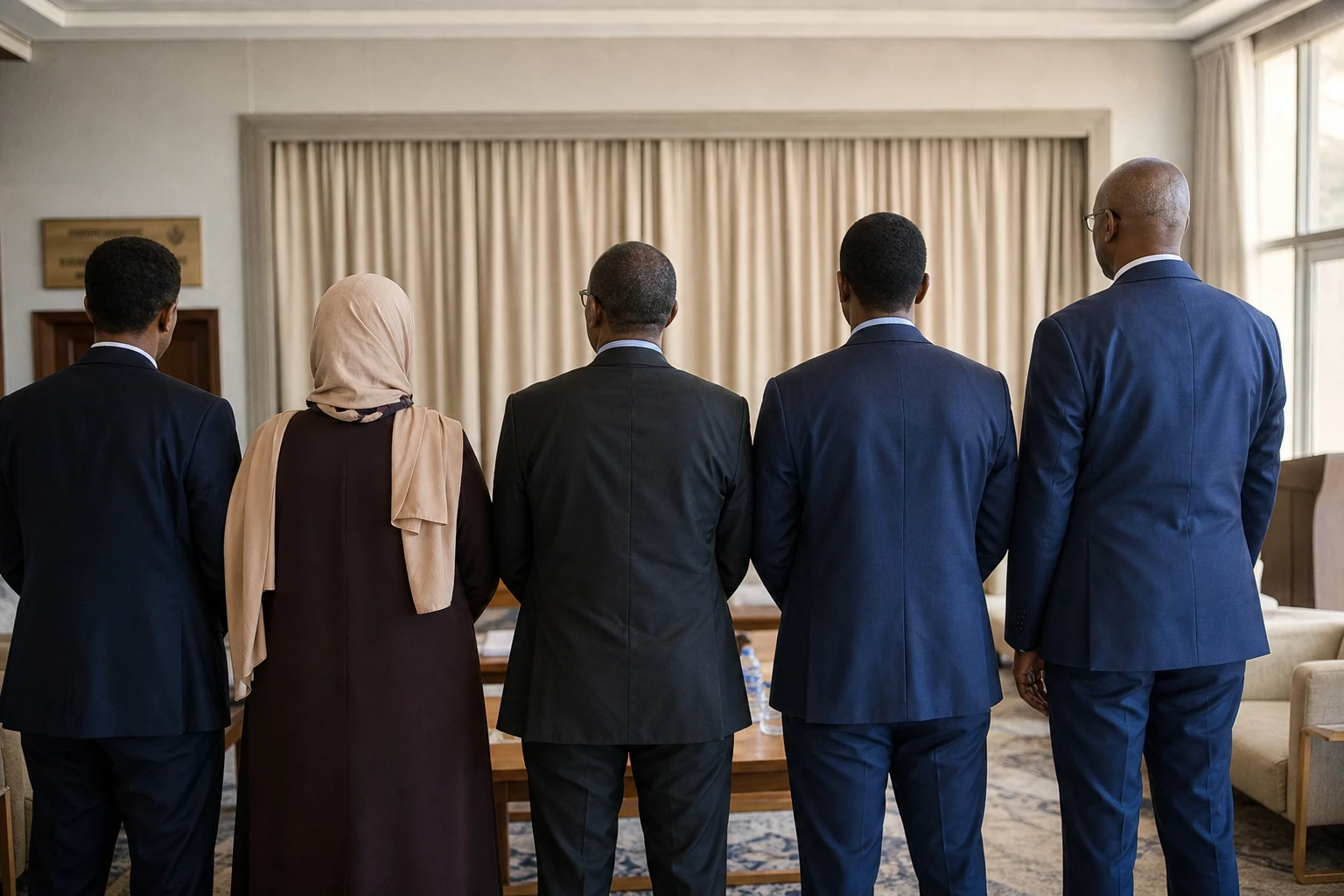
On the Hiiraan route, a crossing point is more than a name on a map
In Somalia, the war is not fought only around major cities. It is also decided in modest localities situated on a road, a bridge or a crossroads. This is where movement, informal taxes and, often, the military initiative are won.
Teedaan, in Hiiraan region, fits this pattern. The locality lies on a route linking several areas in the centre of the country. Its control therefore affects movement between the west, east and north of this part of Somalia. Fighting reported on Sunday 2 August put this crossing point back at the heart of a longstanding balance of power between Mogadishu and the al-Shabaab insurgents.
In this area, every territorial gain has military as well as economic value. An armed group holding a road can impose levies there, hinder army movements and complicate supplies to nearby villages. This has been one of the drivers of the Somali war for years.
What the established facts show
According to reports corroborated by residents of nearby localities and Somali media, al-Shabaab claimed to have captured Teedaan after about 24 hours of fighting. The group said it had seized weapons, vehicles and military equipment. At this stage, Somalia’s federal authorities had issued no immediate public response, leaving uncertainty about the exact scale of the capture and who effectively controlled the site when the first reports emerged.
This kind of claim follows a familiar pattern in central Somalia: a rapid attack, pressure on local garrisons, then a battle of communication over who actually holds the ground. In the days beforehand, Somali forces had also carried out operations in the same area. Somali state media reported in particular that an area south of Teedaan was targeted in an air strike on 21 July, as part of operations against al-Shabaab in Hiiraan.
President Hassan Sheikh Mohamoud has nevertheless offered a more optimistic assessment of the military campaign. On 2 August, he told Parliament that, in his view, the Shabaab were going through the most difficult period in their history and that their influence was declining. The statement highlights the gap between the official narrative and the shifting reality on the ground.
Hiiraan, a testing ground for a war of attrition
Hiiraan is one of the most sensitive fronts in central Somalia. Since the major offensive launched in 2022 by the federal government, backed by local forces and international partners, the map there has changed considerably. But the gains remain fragile. Whenever a position weakens, al-Shabaab tries to regain a foothold, often in rural areas where the state’s presence is intermittent.
For residents, this means above all unstable roads and increased security risks. For traders, transporters and families travelling between markets and villages, one more or one fewer checkpoint changes the cost of a journey, the price of goods and the ability to access services. In an economy where the informal sector carries considerable weight, the security of a road is no abstract issue. It is a condition of everyday life.
The federal government, meanwhile, has to manage a double front. Militarily, it is seeking to contain an insurgency capable of retreating, returning and striking where surveillance is weaker. Politically, it must convince African and international partners that a security transition remains possible, while Somali institutions continue to work to extend their authority beyond Mogadishu.
AUSSOM, logistical support and a wager still open
This setback comes at a delicate moment for the African Union Support and Stabilization Mission in Somalia, known as AUSSOM. The Security Council has authorised the new mission until 31 December 2026, continuing the African Union’s previous arrangements. The UN and the African Union nevertheless stress the central role of United Nations logistical support in keeping this framework operational.
At the continental level, the situation in Somalia therefore remains a test for African security cooperation. The African Union continues to express its support for Mogadishu, while the UN system stresses that the country’s stability depends both on the strengthening of Somali forces and on international backing that remains indispensable. An internal UN note and several public documents also recall that the support framework for AUSSOM remains central to budgetary and operational discussions.
The significance of the episode therefore extends beyond Teedaan. It says something about the positional war continuing in Somalia, but also about the difficulty of turning isolated military successes into lasting control of territory. Finally, it is a reminder that in East Africa, the security of a few kilometres of road can affect an entire regional balance, from Hiiraan to the cooperation corridors of IGAD, the intergovernmental organisation of the Horn of Africa.