Algeria
 Egypt
 Libya
 Morocco
 Sudan
 Tunisia
 Benin
 Burkina Faso
 Cabo Verde
 Côte d'Ivoire
 Ghana
 Guinea
 Guinea-Bissau
 Liberia
 Mali
 Mauritania
 Niger
 Nigeria
 Senegal
 Sierra Leone
 The Gambia
 Togo
 Cameroon
 Central African Republic
 Chad
 DR Congo
 Equatorial Guinea
 Gabon
 Republic of the Congo
 São Tomé and Príncipe
 Burundi
 Comoros
 Djibouti
 Eritrea
 Ethiopia
 Kenya
 Madagascar
 Malawi
 Mozambique
 Rwanda
 Seychelles
 Somalia
 South Sudan
 Tanzania
 Uganda
 Angola
 Botswana
 Eswatini
 Lesotho
 Namibia
 South Africa
 Zambia
 Zimbabwe
A family affair that goes beyond the courts
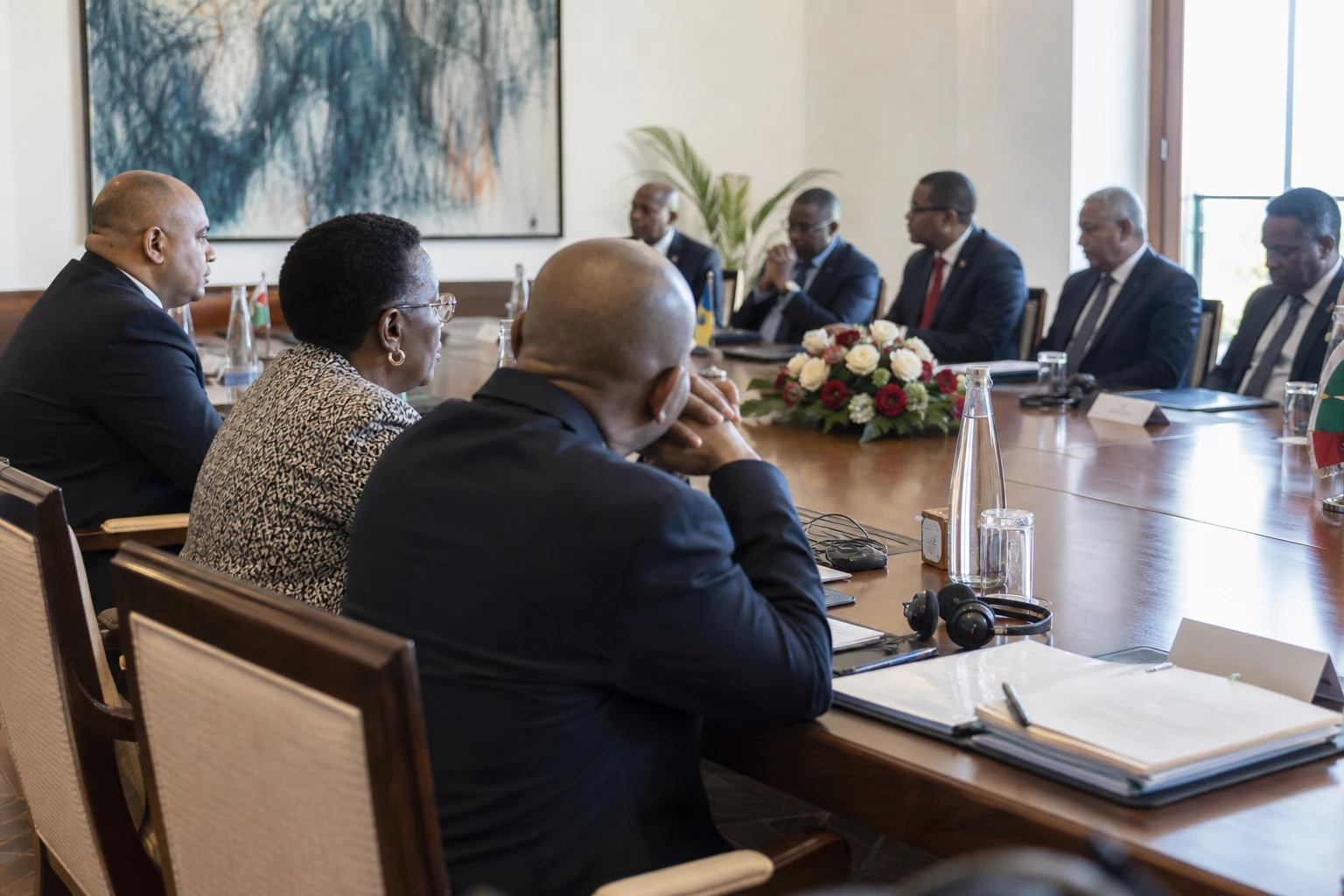
In Port Louis, an investigation into suspected cannabis trafficking is a reminder of a reality familiar to the Mauritian authorities: on an island, sea routes and social ties can quickly become channels for criminal networks. When a public official’s relative is named in a drug case, the issue is not merely a legal one. It also touches on the credibility of the state, government discipline and the ability of institutions to handle the case without favouritism.
This comes as Mauritius continues to strengthen its anti-drug framework. In spring 2026, Prime Minister Navin Ramgoolam chaired the first meeting of the National Drug Control Commission, presented as a national response to rising trafficking and pressure on police services. At the same time, Mauritian services have continued to step up seizures and joint operations against narcotics networks.
What the established facts show
The case gained momentum after about 100 kilos of cannabis were seized in Réunion on 26 July 2025, according to information reported by Réunionnais and Mauritian media. Investigators suspect a trafficking route between the neighbouring islands. Following the operation, two men were arrested in Mauritius on 31 July 2025, including Gulshan Govind, identified as the husband of Véronique Leu-Govind, then Minister Delegate for Culture. A search of the family home led to the discovery of four cannabis plants, and both suspects were placed in police custody.
Véronique Leu-Govind’s name had already featured in Mauritian political debate. During the 2024 campaign, the opposition had raised previous legal issues involving members of her family, though these do not constitute evidence in the current case. The new element is the intersection of the justice system, police and political life, in a country where the fight against drugs remains a central public security issue.
The Prime Minister, for his part, has defended a policy of institutional restraint. He said that no one was above the law and that the investigation was proceeding without political interference. He also invoked the presumption of innocence to keep Véronique Leu-Govind in office, stressing that no public evidence directly implicated her at this stage. Her party, Nouveaux Démocrates, said it was monitoring developments before making any decision. The opposition, meanwhile, called for her resignation.
Why the case matters to Mauritius
Politically, the case tests the promise to separate private life from public responsibility. Keeping the minister delegate in office despite her husband’s arrest puts the executive in a difficult position: preserving the presumption of innocence without creating the impression of a double standard. In Mauritius, where scandals involving leaders’ relatives have often fuelled mistrust, this kind of case can quickly go beyond the usual crime story.
In terms of security, the case also confirms a broader trend: trafficking no longer moves only through major ports or airports, but along flexible regional routes, particularly in the Indian Ocean. Réunion and Mauritius are connected not only by tourism and family ties. They are also caught up in smuggling flows that police, customs and specialist units are trying to contain. France has itself strengthened its anti-narcotics tools in Réunion in 2025, a sign that the problem is now being treated as a structural threat in the region.
The case also says something about the economics of drugs in Mauritius. A seizure of 100 kilos is not just a striking figure. It is also evidence of a profitable market, driven by geographical proximity, price differences and the rapid movement of boats in the region. For the authorities, the challenge is therefore not just to confiscate shipments. They must also dismantle the logistical, financial and family links that make these networks sustainable.
Across East Africa and the Indian Ocean, this case is part of a wider issue: the rise of cross-border trafficking in island states, often seen as protected by their remoteness but exposed by their position at a crossroads. For the African Union and regional organisations, Mauritius remains a strategic hub, financially, maritime and diplomatically. If the investigation proceeds without interference, it will say as much about the strength of the Mauritian justice system as about the country’s ability to uphold its regional standing in the fight against narcotics trafficking.