Algeria
 Egypt
 Libya
 Morocco
 Sudan
 Tunisia
 Benin
 Burkina Faso
 Cabo Verde
 Côte d'Ivoire
 Ghana
 Guinea
 Guinea-Bissau
 Liberia
 Mali
 Mauritania
 Niger
 Senegal
 Sierra Leone
 The Gambia
 Togo
 Cameroon
 Central African Republic
 Chad
 DR Congo
 Equatorial Guinea
 Gabon
 Republic of the Congo
 São Tomé and Príncipe
 Burundi
 Comoros
 Djibouti
 Eritrea
 Ethiopia
 Kenya
 Madagascar
 Malawi
 Mauritius
 Mozambique
 Rwanda
 Seychelles
 Somalia
 South Sudan
 Tanzania
 Uganda
 Angola
 Botswana
 Eswatini
 Lesotho
 Namibia
 South Africa
 Zambia
 Zimbabwe
Roads to link farms, markets and towns
In a state as vast as Bauchi, the condition of the roads often says more than a budget speech. It tells you whether harvests arrive on time, whether ambulances can get through, whether buses are running, and whether traders gain or lose a day’s work.
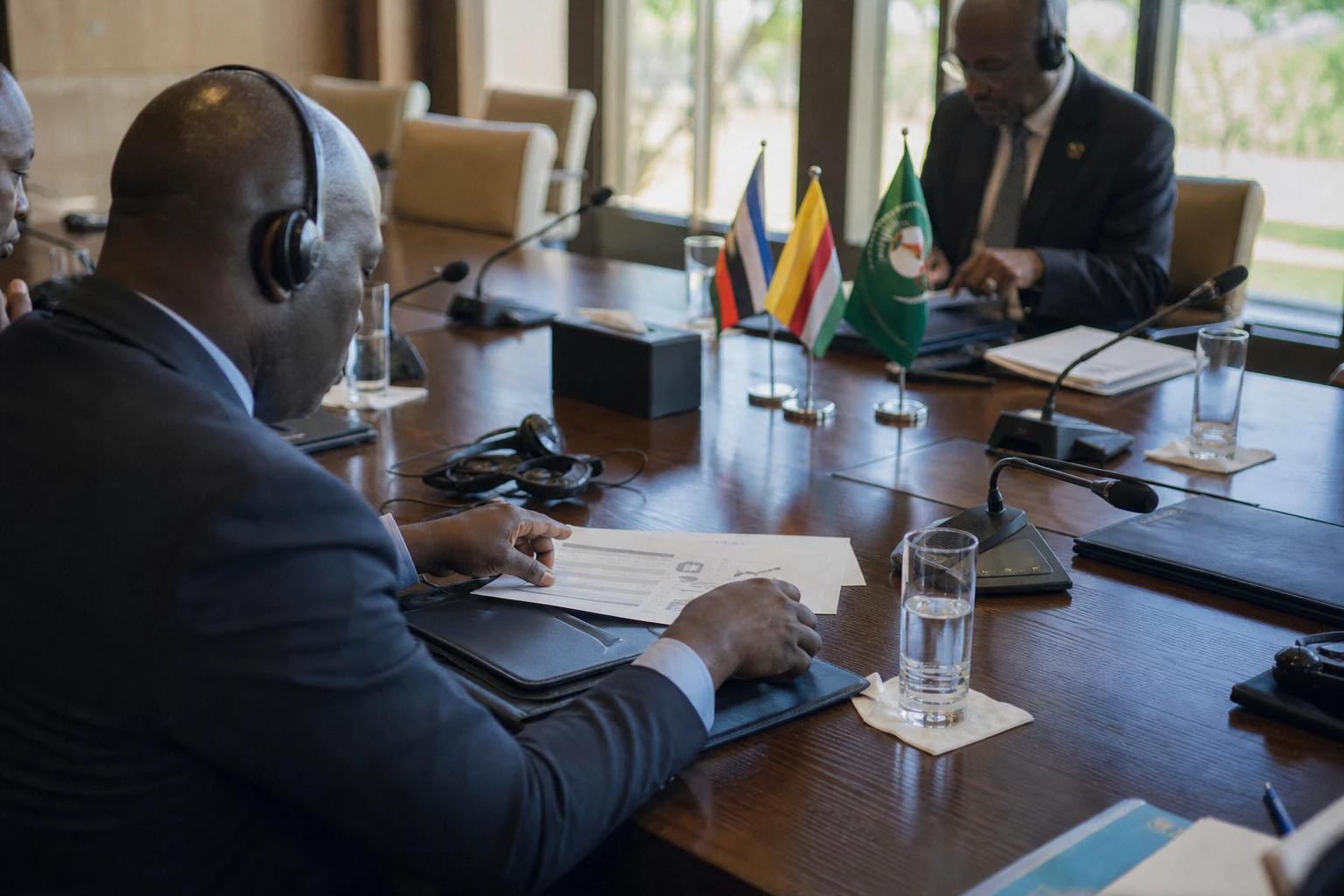
It is against this backdrop that the ECOWAS Bank for Investment and Development has approved $91.63 million in funding for transport infrastructure in Bauchi State, Nigeria. The operation aims to build and rehabilitate 24 roads and structures on urban, rural and inter-zonal routes.
The message is clear: in West Africa today, development is no longer taking place only in capital cities. It is also happening along secondary corridors, where roads determine the cost of transport, goods and time.
Bauchi, an inland hub in Nigeria’s trajectory
Bauchi is one of Nigeria’s north-eastern states. Its capital is Bauchi, and the local government is led by Governor Bala Abdulkadir Mohammed. The state describes itself as agricultural and has significant land potential, with an economy in which the movement of goods and people remains crucial to daily incomes.
Nigeria, meanwhile, remains ECOWAS’s centre of gravity. The West African regional economic community was established in Lagos in 1975 and is headquartered in Abuja. In this context, the roads of a Nigerian state are not just a matter of local policy. They also affect internal circulation that underpins regional trade.
The EBID funding is therefore part of a broader effort to reduce bottlenecks that hamper the movement of agricultural products, services and labour. It is also a political signal. The regional bank continues to back concrete, visible and measurable projects.
What exactly the loan will fund
According to the decision made public by the EBID, the programme is intended to upgrade road infrastructure, reduce logistics costs, improve access to essential services and open up agricultural areas. The institution also says it aims to incorporate climate-resilient construction techniques, an important consideration in a region where rainfall, road deterioration and maintenance costs can quickly affect the lifespan of infrastructure.
The bank has also put forward economic projections: about 5,000 jobs during construction and 2,000 permanent jobs once the work is complete. It also cites an annual return of between 14% and 16%, as well as projected traffic of 9,354 vehicles a day by 2055, compared with about 4,800 today.
These figures should be read as project estimates, not automatic promises. Everything will depend on the actual pace of work, construction costs, the quality of materials and the state’s ability to maintain the roads after completion.
A bet on agriculture, and on local incomes
The key issue is agriculture. Bauchi is among the areas where food production and livestock farming underpin a significant part of the local economy. When roads are poor, losses mount: transport delays, spoilage, higher prices, more difficult access to wholesale markets and squeezed margins for small-scale producers.
International organisations have long warned that post-harvest losses remain high in sub-Saharan Africa. The World Bank cites estimates of up to 37% of food being lost between production and consumption in the region, with storage and handling losses still significant. In practice, this means a passable road can sometimes be worth as much as direct support for production.
For households in Bauchi, the expected impact is easy to understand. A better road often means shorter journeys, lower fuel costs, less wear and tear on vehicles, and better access to markets, schools and health centres. For traders, it also means lower hidden costs from delays.
What the agreement says about the EBID’s strategy
The funding was approved at the EBID’s 95th board meeting, held on 30 March 2026. It adds to other recent operations by the bank in Nigeria, including $100 million in support for the second section of the Lagos-Calabar motorway. The rationale is the same: to fund infrastructure that structures the domestic market and prepares the way for smoother trade across the ECOWAS area.
The institution links this type of intervention to its GRO 2026-2030 strategy, focused on growth, resilience and optimisation. Behind the phrase is a straightforward priority: to support projects capable of withstanding shocks, whether climatic, budgetary or logistical.
The approach is also part of the momentum behind the African Continental Free Trade Area (AfCFTA), which aims to facilitate trade between African countries. But a free-trade area cannot operate on declarations alone. It needs roads, bridges, corridors, warehouses, efficient border posts and greater predictability in transport costs.
A regional development to watch closely
The choice of Bauchi has implications beyond Nigeria alone. The state is in a country whose economic and demographic size carries weight across West Africa. When Abuja accelerates a road project in an inland state, the effects can be felt well beyond national borders, particularly across supply chains, trade between states and the smooth flow of commercial corridors.
Across West Africa, the central question remains the same: how can growth be turned into real mobility for people and businesses? ECOWAS regional projections point to a resilient economy in the coming years, but that resilience will also depend on very tangible investment in infrastructure.
The Bauchi project will therefore reveal much about the approach. If work progresses quickly, stays on schedule and is followed by maintenance, the project could serve as a model. Otherwise, it will join the long list of infrastructure promises held back by cost overruns, inflation and administrative delays.
For now, the EBID and Bauchi State have laid another stone in a much larger project: West African integration measured not only in treaties, but also in kilometres of roads that are genuinely passable.