Algeria
 Egypt
 Libya
 Morocco
 Sudan
 Tunisia
 Benin
 Burkina Faso
 Cabo Verde
 Côte d'Ivoire
 Ghana
 Guinea
 Guinea-Bissau
 Liberia
 Mali
 Mauritania
 Niger
 Senegal
 Sierra Leone
 The Gambia
 Togo
 Cameroon
 Central African Republic
 Chad
 DR Congo
 Equatorial Guinea
 Gabon
 Republic of the Congo
 São Tomé and Príncipe
 Burundi
 Comoros
 Djibouti
 Eritrea
 Ethiopia
 Kenya
 Madagascar
 Malawi
 Mauritius
 Mozambique
 Rwanda
 Seychelles
 Somalia
 South Sudan
 Tanzania
 Uganda
 Angola
 Botswana
 Eswatini
 Lesotho
 Namibia
 South Africa
 Zambia
 Zimbabwe
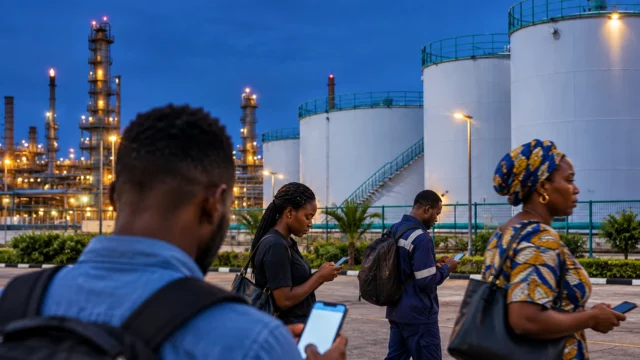
In Lagos, the fight against drugs also has an economic dimension
In Lagos, drug trafficking can no longer be seen simply as a policing issue. It affects the ports, the airport and supply chains, and ultimately Nigeria’s commercial credibility. Nigeria is West Africa’s largest economy, and its capital is Abuja. Recent seizures point to a method that has become standard among criminal networks: hiding illicit products in ordinary cargo and then relying on the sheer volume of traffic to get the goods through.
Nigeria lies at the heart of a West African region where ports and airports often serve as transit points for transnational trafficking. The United Nations Office on Drugs and Crime has for several years described the region as a strategic corridor for flows of cocaine, cannabis and other substances, with criminal groups exploiting maritime routes, containers and gaps in controls.
What Nigerian authorities say they intercepted
Over the course of a week, Nigerian services announced a series of interceptions in Lagos and its port facilities. On 20 July 2026, agents at the port of Apapa discovered 2,388.5 kilos of “Canadian Loud” cannabis concealed in a vehicle container. The same operation then led to further seizures in the Lagos airport area, including cocaine, opioids and cannabis, according to statements released by the National Drug Law Enforcement Agency.
The agency also said that a 3.30-kilo package of cocaine had been hidden in the walls of cartons used to package food products. A businessman was arrested in the case after the cargo was intercepted at Lagos airport. In another case, opioids shipped from India were seized following intelligence-sharing with customs. These details point to fragmented logistics involving small operators, intermediaries and front companies.
The figures cited by the authorities also give a sense of the volume handled in Lagos. In July 2026, the drug enforcement agency said it had seized more than 71,000 kilos of narcotics in the area alone since the start of the year. In another recent report, it announced 29,262 arrests, more than 5.3 million kilos of drugs seized and 5,225 convictions over 18 months nationwide. These figures remain institutional data, but they confirm a visible intensification of enforcement.
Why Lagos is a major pressure point
Lagos concentrates both vulnerabilities and opportunities. The city is home to the country’s main economic centre, its busiest ports and a highly connected international airport. For traffickers, that is an advantage. For the state, it is a constant challenge. Any illicit shipment can blend into a vast flow of legitimate goods, especially when cargo is declared as food, cosmetics or car parts.
The use of vehicles, shipping containers and air freight also points to a broader reality: trafficking does not depend solely on the land border, but on an entire ecosystem in which ports, customs, carriers, freight forwarders and sometimes local accomplices can be drawn in. The operations at Apapa and Lagos airport therefore illustrate an inter-agency effort. This is precisely the kind of coordination recommended by UN mechanisms for controlling passengers and goods at entry and exit points.
These seizures must also be viewed in the broader Nigerian context. Authorities have recently reported more sophisticated, sometimes transnational networks involving both Nigerian and foreign nationals. In May 2026, the drug enforcement agency announced that it had dismantled an industrial-scale clandestine laboratory in the country’s south-west, with Nigerian and Mexican suspects. The case shows that Nigeria is not just a transit route; in some places, it is also becoming a base for organising and processing drugs.
The stakes for the real economy are clear. Every suspicious shipment checked in Lagos can delay deliveries, increase the cost of inspections and fuel investor distrust. But the opposite effect is also possible: repeated seizures, well documented and coordinated with customs, can strengthen the image of a state capable of securing its trade corridors. It all depends on the continuity of inspections and the strength of prosecutions.
A national battle with West African repercussions
At the regional level, the issue goes beyond Nigeria alone. The Economic Community of West African States (ECOWAS), which structures West African cooperation, and the Gulf of Guinea security architecture are directly affected by trafficking that uses the same routes as legitimate goods. When Lagos becomes a regular seizure point, it often means that trafficking networks are adapting, shifting routes or diversifying their concealment methods.
The continental impact is just as clear. Nigeria plays a central role in the movement of goods, capital and people in West Africa. When a country of this importance steps up its fight against drugs, its actions reach beyond its borders: they affect port security and customs cooperation, and influence how criminal networks recalibrate their routes to Europe, Asia or other African ports. The coming months will show whether this pressure has a lasting effect or merely shifts trafficking to other hubs.
In Abuja, the authorities present these seizures as evidence of a more assertive strategy. But the real measure of success will be seen elsewhere: in the courts, in cargo traceability, in cooperation with the countries of origin of the substances, and in the country’s ability to protect its trade without normalising the networks that prey on it. This is where a discreet but decisive part of Nigeria’s economic sovereignty is at stake.