Algeria
 Egypt
 Libya
 Morocco
 Sudan
 Tunisia
 Benin
 Burkina Faso
 Cabo Verde
 Côte d'Ivoire
 Ghana
 Guinea
 Guinea-Bissau
 Liberia
 Mali
 Mauritania
 Niger
 Nigeria
 Senegal
 Sierra Leone
 The Gambia
 Togo
 Cameroon
 Central African Republic
 Chad
 DR Congo
 Equatorial Guinea
 Gabon
 Republic of the Congo
 São Tomé and Príncipe
 Burundi
 Comoros
 Djibouti
 Eritrea
 Ethiopia
 Kenya
 Madagascar
 Mauritius
 Mozambique
 Rwanda
 Seychelles
 Somalia
 South Sudan
 Tanzania
 Uganda
 Angola
 Botswana
 Eswatini
 Lesotho
 Namibia
 South Africa
 Zambia
 Zimbabwe
A more reliable grid: an issue that goes beyond a single project
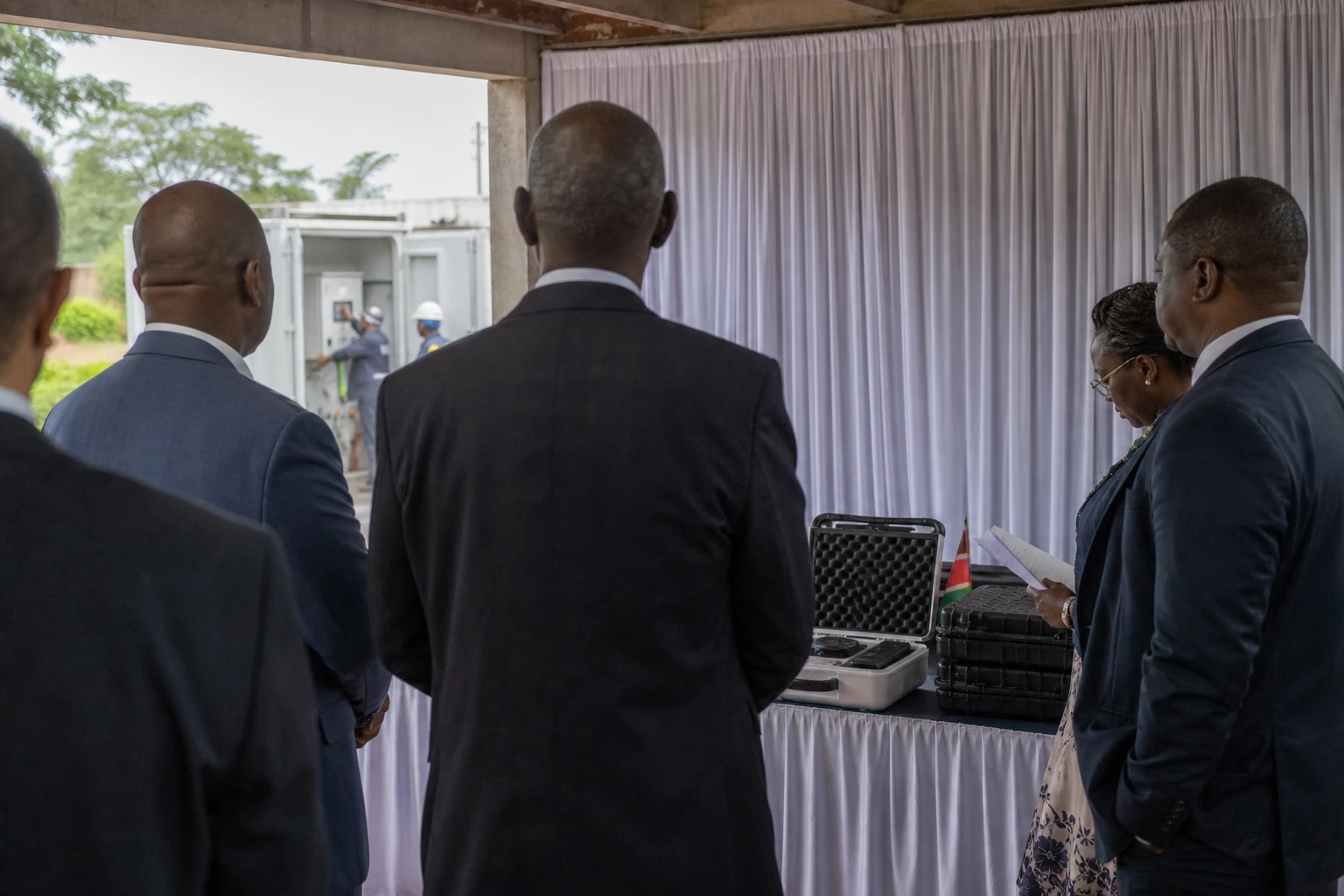
In Malawi, every megawatt counts. When the grid falters, it is not just the lights that go out. Small businesses slow down, public services improvise and renewable energy producers are not always able to feed all their power into the system. It is against this backdrop that the country has commissioned a 20 MW/40 MWh battery storage system at Kanengo, in the capital Lilongwe, presented as the first of its kind on Malawi’s grid.
The project says more than simply something about electricity. It also speaks to how Malawi is trying to secure its economic trajectory. Energy is not an isolated sector: it underpins industry, agro-processing, health services and the expansion of connections in urban and rural areas alike. Across Southern Africa, the issue also concerns the Southern African Power Pool, the region’s electricity trading platform, where grid stability is becoming a matter of competitiveness as well as sovereignty.
What the Kanengo battery changes
Commissioning was announced on Friday 24 July 2026 by national utility ESCOM and the Global Energy Alliance for People and Planet, better known by its acronym GEAPP. The Kanengo facility was funded by a grant of about $20 million from GEAPP, following a process launched publicly in November 2024 and then marked by construction and equipment delivery milestones in 2025 and early 2026.
Its role is easy to understand. The battery stores electricity when the system is under less strain, then releases it when demand rises. In a country where hydropower remains highly exposed to climate shocks and reliance on diesel pushes up the cost of electricity, this kind of tool helps smooth grid fluctuations. GEAPP says the installation is expected to improve reliability for 2.45 million people, cut CO₂ emissions by about 10,000 tonnes a year and enable the integration of 100 MW of renewables already available but long constrained by grid limitations.
ESCOM makes the same point in its own terms: the battery is intended to support frequency and stability on a grid that remains fragile. The state-owned company had already presented the project as a tool to reduce load-shedding and better manage fluctuations caused by solar installations. In other words, the aim is not just to produce more, but to transport and absorb power more effectively. This is often where African electricity systems hit their limits.
Malawi’s real goal: connections, but also a backbone
The Malawian government has set an ambitious target: to achieve 70% electricity access by 2030. The national energy compact, linked to the Mission 300 initiative, sets out this ambition and projects an increase in grid connections from 11.3% in 2025 to 30.1% in 2030, alongside an overall rise in household access to 70% over the same period. The document also highlights the urban-rural gap: rural electrification is projected to reach 24.1% in 2030, compared with 59.5% in urban areas.
The contrast is stark. The Energy Ministry’s official policy remains universal electrification by 2030, through mini-grids, grid extensions and off-grid solutions. The ministry’s public dashboard says several programmes have already supported mini-grids and site studies across the country, while the Ngwee Ngwee Ngwee Fund, created to develop off-grid power, aims to accelerate access in underserved areas. The Kanengo battery is therefore part of a broader effort: it replaces neither transmission lines nor mini-grids, but makes the system’s backbone more robust.
This distinction matters because Malawi’s shortfall is not simply a generation deficit. It is also a deficit in the grid, transformation and resilience. The national compact notes that the country needs line extensions, private investment and a gradual increase in capacity. The Kanengo facility addresses precisely this missing link: a system able to absorb a greater share of renewables already installed, without waiting for new power plants to be built.
Between Lilongwe, SADC and Africa’s energy access agenda
The project’s significance extends beyond Malawi. GEAPP presents it as a demonstration project for sub-Saharan Africa, with a learning centre intended to share lessons from the project across Southern Africa. This is important. Across the region, several countries are seeking to combine solar, hydropower, interconnections and storage to avoid repeated outages and the high costs of thermal backup. Malawi is thus entering a new phase: one in which storage is no longer a technical add-on, but a component of energy strategy.
This shift also resonates with Mission 300, the initiative led by the World Bank and the African Development Bank to connect 300 million Africans by 2030. Malawi’s compact places the country within this continental framework without glossing over its own constraints. Concessional finance, partner support and greater private-sector involvement are all real. But the central challenge remains local: ensuring that power reaches homes, workshops, schools, health centres and businesses reliably, in Lilongwe as well as in rural districts.
The Kanengo project also demonstrates a broader point: Africa is advancing not only by building new power plants, but also through smarter grids. This is a strategic shift. For Malawi, it could help reduce dependence on diesel, integrate solar more effectively and prepare for new connections. For the region, it sends a tangible signal: grid reliability is becoming one of the main levers for achieving universal access to electricity.