Algeria
 Egypt
 Libya
 Morocco
 Sudan
 Tunisia
 Benin
 Burkina Faso
 Cabo Verde
 Côte d'Ivoire
 Ghana
 Guinea
 Guinea-Bissau
 Liberia
 Mali
 Mauritania
 Niger
 Senegal
 Sierra Leone
 The Gambia
 Togo
 Cameroon
 Central African Republic
 Chad
 DR Congo
 Equatorial Guinea
 Gabon
 Republic of the Congo
 São Tomé and Príncipe
 Burundi
 Comoros
 Djibouti
 Eritrea
 Ethiopia
 Kenya
 Madagascar
 Malawi
 Mauritius
 Mozambique
 Rwanda
 Seychelles
 Somalia
 South Sudan
 Tanzania
 Uganda
 Angola
 Botswana
 Eswatini
 Lesotho
 Namibia
 South Africa
 Zambia
 Zimbabwe

Villages emptied, rural economy on the brink
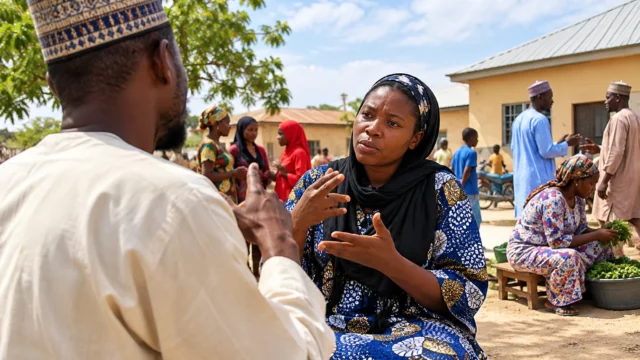
In north-western Nigeria, violence is no longer limited to deaths and injuries. It is emptying villages, disrupting harvests and forcing entire families to abandon their land, livestock and businesses within hours. In Tambuwal, in Sokoto state, women, children and older people are now arriving urgently, on foot or by motorbike, after attacks attributed to armed men.
This displacement is not an isolated episode. It is part of a wider crisis affecting several north-western states, where attacks by armed groups, often locally known as “bandits”, involve kidnappings, extortion, livestock theft and looting. In Sokoto, insecurity is affecting already fragile rural areas, far from the capital, Abuja, and also from the major economic centres of the south.
Tambuwal, a new point of flight in Sokoto state
Accounts from Tambuwal describe a recurring pattern. Communities such as Baguda, Unguwar Lalle, Maradu, Gidan Kaya, Lukkingo, Kalgo, Gozama and Jaaja were reportedly targeted in coordinated attacks. Residents say the assailants fired shots, looted homes, took food supplies and made off with hundreds of head of cattle. In an environment where livestock often represents a family’s savings, this kind of raid destroys far more than a stockpile: it wipes out income, security and sometimes the ability to start again.
Accounts gathered by local media also describe deaths and gunshot injuries. According to these reports, victims were not confined to one village, but were spread across several hamlets hit simultaneously. This multiplication of attack sites makes escape more difficult and hampers the response by security forces, particularly in scattered rural areas where roads remain vulnerable.
The displacement to Tambuwal is a reminder of a longer-running reality. The same state has experienced other waves of violence in recent months. The National Emergency Management Agency (NEMA) confirmed in early July that attacks in the Tureta area had displaced thousands of people, some of whom had taken refuge in public schools and neighbouring communities. It also reported looted businesses and destroyed livelihoods. At the same time, residents of Bodinga protested against fresh incursions and blocked a road linking Sokoto with Kebbi and Niger.
A security shock that is also becoming a food crisis
Insecurity in Sokoto is therefore having a direct effect on agricultural production. The state’s 2026 budget shows that local authorities are counting on agriculture, seeds, fertilisers, tractors and irrigation, including in Tambuwal. The document provides, in particular, for the purchase of 250 tractors for all 23 local government areas and spending on agricultural infrastructure in several areas, including Tambuwal. When villages are emptied, these investments become less effective, as fields go uncultivated and local markets contract.
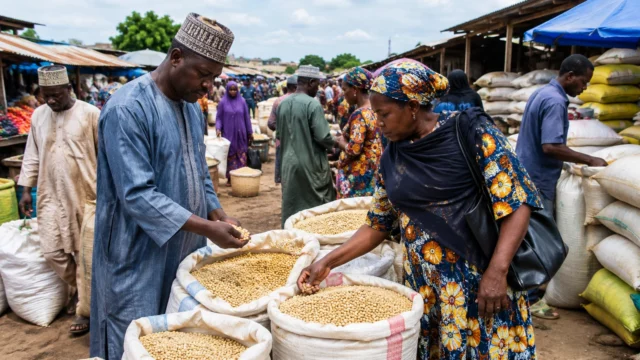
The problem goes beyond security alone. It affects the movement of goods, access to markets and price stability in a region where households often depend on subsistence farming and livestock. When herds are stolen and granaries looted, displaced families must focus first on survival, not rebuilding. For traders, women selling at markets and small-scale farmers, violence means an immediate loss of daily income.
Sokoto’s authorities say they are working with the federal government to contain insecurity. The state government also says it is strengthening cooperation with security services. But the recurrence of attacks shows that the response remains incomplete, particularly in areas along state borders, where armed groups move quickly and retreat before reinforcements arrive. In this kind of crisis, the issue is not only the number of patrols. It also concerns local intelligence, road protection, monitoring livestock markets and support for displaced people.
What Sokoto says about Nigeria and West Africa
The situation in Tambuwal is part of a wider trend across the Sahel and West Africa. When rural communities lose their means of production, pressure shifts towards urban centres, schools, health facilities and social services. Displaced people are not just looking for temporary shelter. They also need access to water, healthcare, education and some minimal source of income. In a state such as Sokoto, this pressure is already visible in deserted villages and contested roads.
For ECOWAS, the Economic Community of West African States, these local crises have regional implications. They weaken trade between states, drive cross-border displacement and complicate security in pastoral areas. Nigeria, the continent’s most populous country and a central regional actor, cannot treat this kind of violence as confined to a single state. What is happening in Sokoto also concerns food stability, trade routes and public trust in protection by the authorities.
The next challenge is clear. It remains to be seen whether the Nigerian authorities can stabilise the most exposed areas, support displaced people and prevent another wave of villagers abandoning their homes. As long as attacks continue to drive rural families away, Sokoto will remain a symbol of a major challenge for Abuja: regaining control of the territory without allowing the countryside to be permanently emptied.