Algeria
 Egypt
 Libya
 Morocco
 Sudan
 Tunisia
 Benin
 Burkina Faso
 Cabo Verde
 Ghana
 Guinea
 Guinea-Bissau
 Liberia
 Mali
 Mauritania
 Niger
 Nigeria
 Senegal
 Sierra Leone
 The Gambia
 Togo
 Cameroon
 Central African Republic
 Chad
 DR Congo
 Equatorial Guinea
 Gabon
 Republic of the Congo
 São Tomé and Príncipe
 Burundi
 Comoros
 Djibouti
 Eritrea
 Ethiopia
 Kenya
 Madagascar
 Malawi
 Mauritius
 Mozambique
 Rwanda
 Seychelles
 Somalia
 South Sudan
 Tanzania
 Uganda
 Angola
 Botswana
 Eswatini
 Lesotho
 Namibia
 South Africa
 Zambia
 Zimbabwe
When the road no longer forgives mistakes
In Côte d’Ivoire, major road disasters are almost never caused by a single fault. They are fuelled by a series of small breaches: overloading, worn tyres, questionable registration, missing roadworthiness checks and impaired vigilance. The crash near Touba, in the north-west, is another brutal illustration.
The country still remembers the terrible toll that often accompanies intercity transport accidents. This time, the authorities say a coach travelling from Odienné to Yamoussoukro, the political and administrative capital, left the road before plunging into the Bafing River on the Touba-Biankouma route. The case highlights above all a still-fragile transport system, in which informality too easily finds its way into vehicles meant to carry lives, not compromises.
What the investigation established
The first details made public on 22 July 2026 confirm a heavy toll: 39 dead, 45 injured and seven survivors, according to Ivorian authorities and accounts from civil protection and local media cross-checked at the scene. The disaster occurred on 13 July 2026, at the Bafing bridge near Touba. The coach, advertised as having 69 seats, was carrying 91 people. Stools had been placed in the aisles and several passengers were travelling standing up, clear evidence of overloading. The vehicle was also carrying too much luggage.
The main technical hypothesis put forward by investigators is that the front right tyre burst, causing the driver to lose control of the coach before it fell into the river. The investigation also found that two different temporary number plates had been used. According to the Transport Ministry, this practice may have been intended to evade video-based enforcement, in which camera-recorded offences are automatically penalised. But the area where the crash occurred is not yet covered by the system, highlighting the gap between the promised modernisation and conditions on secondary roads.
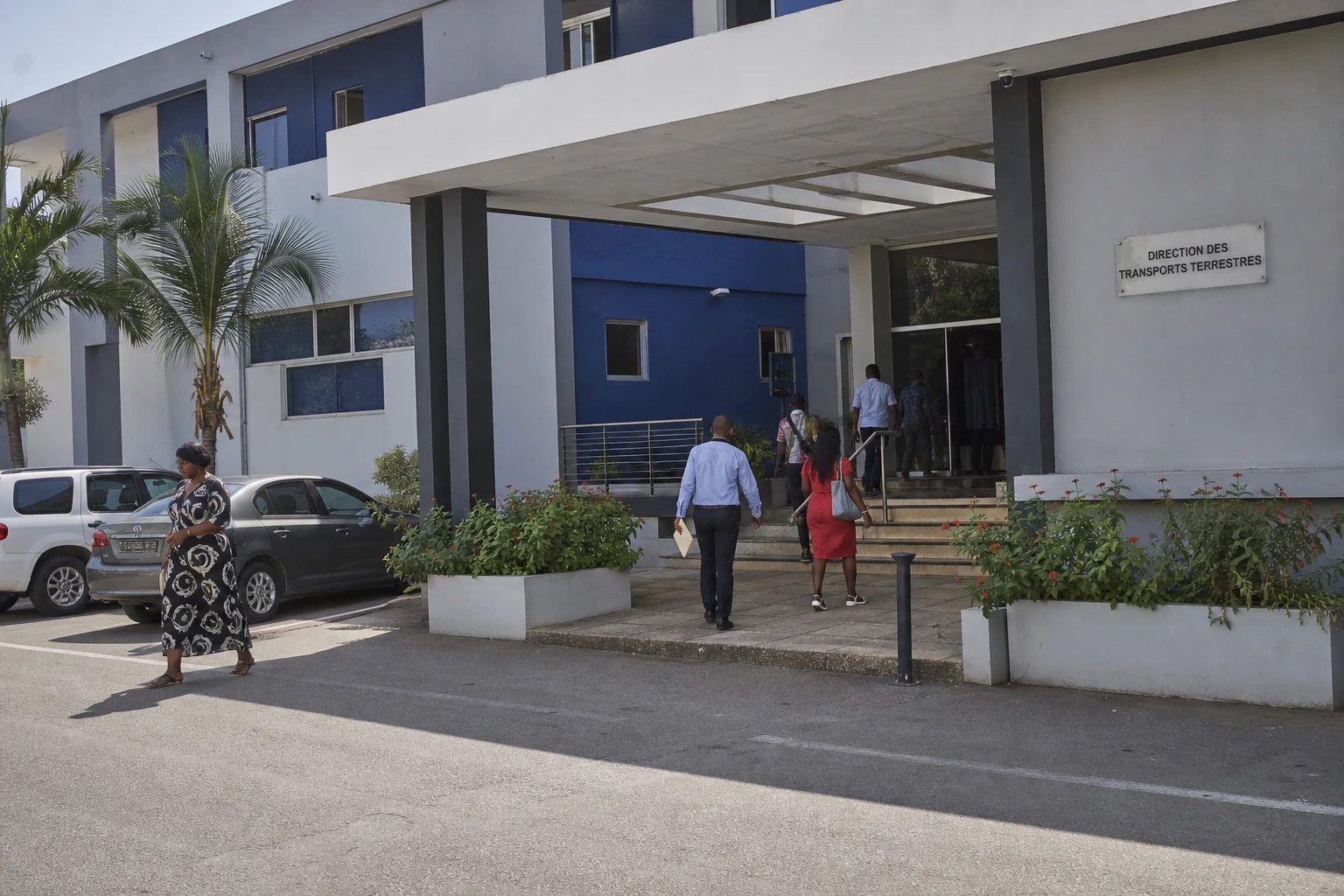
The company concerned was also operating a vehicle without up-to-date documents, according to initial findings reported publicly. Proof of insurance and a roadworthiness certificate could not be produced during checks. These points matter because they indicate more than a simple accident: they reveal a chain of responsibility, from the fleet manager to the driver and the checks that allowed the coach to pass.
An Ivorian problem, but also a West African one
In Abidjan, the authorities have announced several measures: more intensive driver training, electronic monitoring of companies, better checks on insurance and roadworthiness certificates, and discussions on a collective agreement for intercity drivers. The aim is clear: to professionalise a sector where commercial pressure too often encourages operators to carry more, drive faster and check less. This is not just about penalties. It is about organisation.
Since 2023, the Transport Ministry has been progressively rolling out video-based enforcement on several routes, including Abidjan-Yamoussoukro, Yamoussoukro-Bouaké, Yamoussoukro-Daloa and Grand-Bassam-Noé. The system is therefore in place, but remains partial. The Bafing tragedy is a reminder that a digital tool, however useful, cannot protect roads that are not yet covered. Road safety in Côte d’Ivoire is advancing by area, but not yet at the same pace everywhere.
The context extends beyond Côte d’Ivoire. Across ECOWAS, road transport is linked to free movement, trade corridors and vehicle overloading, which damages both roads and lives. The West African Community has adopted a regional road safety policy and is pressing for deaths to be reduced by 2030. It has also stressed the need to enforce axle-load limits and improve the professionalisation of transport. The Ivorian tragedy fits squarely into this regional picture: when a coach crashes, it often exposes weaknesses across the entire corridor.
What this means for passengers and the state
For families, the technical debate matters less than the immediate consequences: lives lost, people injured, searches, and then the wait for identifications and accountability. For transport operators, however, the case could change the landscape. Tighter checks on insurance, roadworthiness certificates, number plates and overloading make fraud more costly. They could also put pressure on the least structured operators, many of whom already survive on narrow margins.
For the Ivorian state, the challenge is twofold. First, it must show that enforcement is not a one-off, but sustained. Second, it must ensure that road safety is not confined to a few high-profile routes around Abidjan and the main corridors, while secondary roads remain less closely monitored. That is where some of the worst disasters occur, far from cameras and urban centres. The Bafing is not only the site of the tragedy; it is also a stark reminder of the blind spots in public policy.
In a country where the Transport Ministry says it wants to clean up the sector and strengthen checks, the crash in the north-west is becoming a political as well as an administrative test. It will show whether reform can reach bus stations, provincial companies and less well-covered routes. It will also show whether Côte d’Ivoire can make road safety a continuous public service, rather than a response to each disaster. Across West Africa, it is a shared warning: regional mobility is worthwhile only if it protects the people it carries.