
 Algeria
 Egypt
 Libya
 Morocco
 Sudan
 Tunisia
 Benin
 Burkina Faso
 Cabo Verde
 Côte d'Ivoire
 Ghana
 Guinea
 Guinea-Bissau
 Liberia
 Mali
 Mauritania
 Niger
 Senegal
 Sierra Leone
 The Gambia
 Togo
 Cameroon
 Central African Republic
 Chad
 DR Congo
 Equatorial Guinea
 Gabon
 Republic of the Congo
 São Tomé and Príncipe
 Burundi
 Comoros
 Djibouti
 Eritrea
 Ethiopia
 Kenya
 Madagascar
 Malawi
 Mauritius
 Mozambique
 Rwanda
 Seychelles
 Somalia
 South Sudan
 Tanzania
 Uganda
 Angola
 Botswana
 Eswatini
 Lesotho
 Namibia
 South Africa
 Zambia
 Zimbabwe
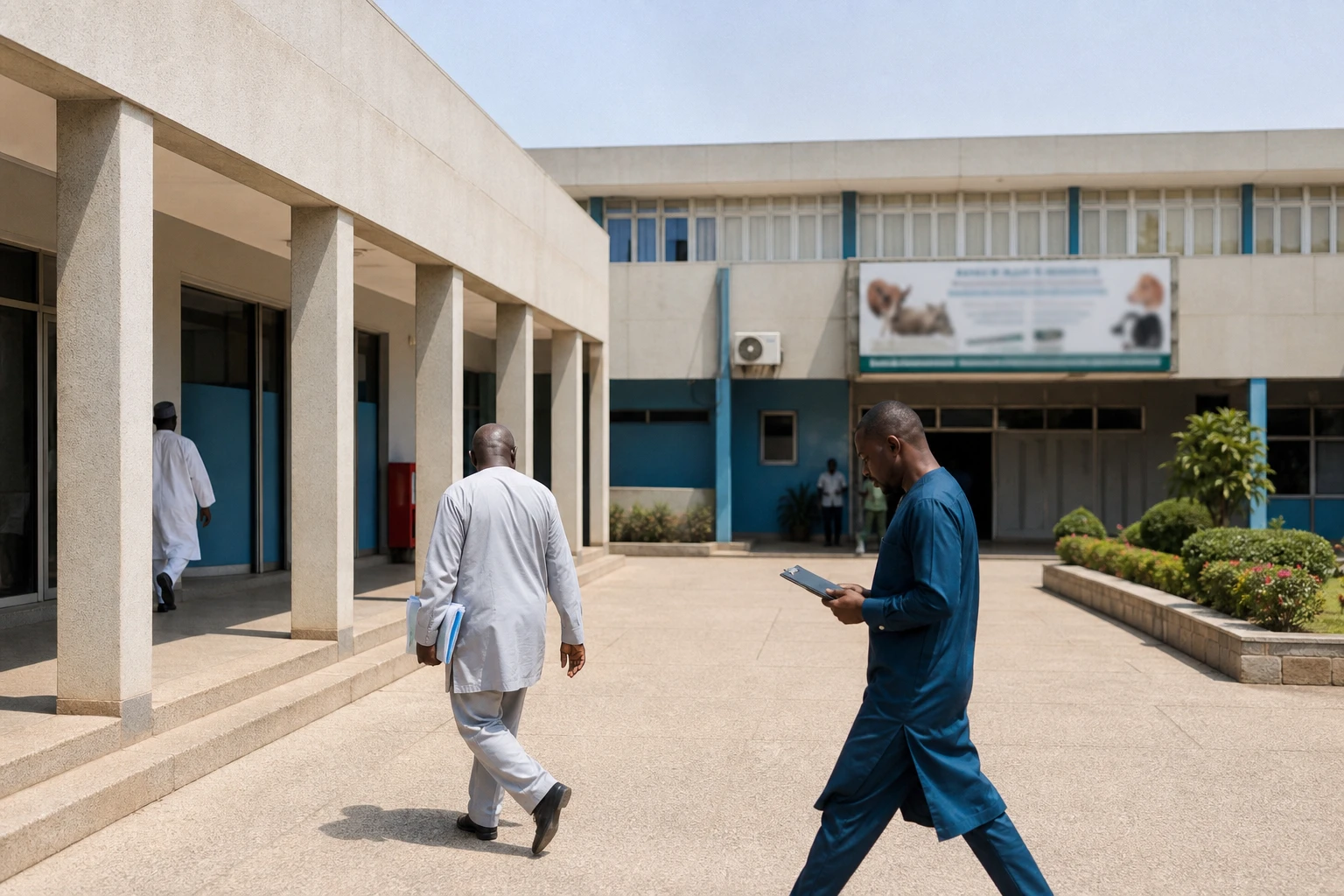
When health sovereignty starts on the farm
In Nigeria, the issue of veterinary vaccines extends beyond the laboratory. It directly affects livestock farmers’ incomes, the availability of meat and milk, and the stability of rural markets. In a country where livestock farming remains a pillar of family economies, every interruption in the supply of veterinary products quickly translates into visible losses on the ground. The announcement of a new veterinary vaccine plant confirms that Abuja wants to treat animal health as an industrial issue, not merely a matter for technical services.
The project also comes amid a broader political shift. Since 2024, Nigeria has established a federal Ministry of Livestock Development to structure a sector long divided among several government departments. In April 2026, the government approved a national roadmap for veterinary services for 2026-2036. The plan aims to modernise laboratories, vaccination systems and public-private partnerships. In other words, the announced plant has not emerged in a vacuum. It forms part of a broader strategy to take back control of a sector considered under-equipped.
A plant announced, a market to rebuild
The project, led by Vacci Afric Biologics Limited, is based on an initial investment of $100 million. The proposed model involves a technology transfer with an as-yet-unidentified Chinese consortium, a 24-month period of joint operations, and then mentoring designed to allow Nigerian teams gradually to take over. At full capacity, the facility is expected to produce 1.2 billion doses a year, with priority given to the domestic market before expanding into West and Central Africa. For now, neither the location nor a detailed timetable has been made public.
The project’s economic rationale is clear. Nigeria already has significant domestic demand, but its production capacity remains insufficient. In early 2026, the Federal Ministry of Livestock itself said that the National Veterinary Research Institute in Vom meets less than 40% of local demand for animal vaccines. It also cited an annual import bill of around $1.5 billion for vaccines. In this context, a private plant capable of large-scale production would meet a real need, provided that quality, the cold chain and regulation keep pace.
The health infrastructure is already in place, but remains uneven. The National Veterinary Research Institute in Vom, in Plateau State, has long produced several veterinary vaccines, including those against Newcastle disease, rabies and peste des petits ruminants. Its official website notes that it manufactures several viral vaccines, and its parent institute describes it as the country’s main public veterinary research and production centre. However, the same public-sector system needs an industrial boost to move from partial coverage towards health sovereignty.
What is at stake for farmers, the state and the region
For Nigerian livestock farmers, the issue is simple: vaccines available more quickly, at a more manageable cost, and closer to where they are needed. In a country where livestock farming supports millions of rural households and animal diseases continue to weigh on productivity, the local availability of doses could reduce livestock losses and safeguard production cycles. This matters for small ruminants, poultry and cattle, as well as for urban markets that depend on these supply chains.
The need is all the more pressing because Nigeria remains exposed to several endemic animal diseases. The country notified the World Organisation for Animal Health of an anthrax outbreak on 2 April 2026 in Zamfara State. Anthrax is a notifiable disease because it can affect animals and, in some cases, humans. More broadly, health and veterinary authorities continue to monitor risks such as peste des petits ruminants, foot-and-mouth disease and African swine fever. In this context, local production is not just an industrial ambition. It is also a tool for responding quickly to outbreaks.
For the federal government, the project carries another promise: reducing dependence on foreign suppliers in a sector where currency volatility makes imports expensive and sometimes irregular. Abuja also wants to link the initiative to its strategy for transforming the livestock sector through the 2026-2036 national plan and the L-PRES programme, backed by the World Bank, which is already funding investment in animal health, infrastructure and value-chain resilience. The political message is clear: Nigeria wants to treat livestock farming as a productive industry, not merely a subsistence sector.
The regional significance is just as great. If the project goes ahead, Nigeria could become a supplier of veterinary vaccines to ECOWAS, the Economic Community of West African States, and to some parts of Central Africa connected to livestock trade routes. The country already occupies a pivotal position in cross-border trade in animals and animal products. Local industrial capacity, if it meets quality standards and is approved by regulators, could reduce several neighbouring countries’ dependence on imports from outside Africa.
One decisive condition remains: credible execution. Nigeria has already set out several major ambitions in biomanufacturing, with roadmaps, investment announcements and technical partnerships. The difference will come down to very practical details: the site, funding, skills transfer, regulation, maintenance, the cold chain and coordination with public veterinary services. The announcement’s real significance will be determined there. If these elements come together, the project could help build a more resilient industry in West Africa’s largest economy. If they do not, it will remain one more promise in a sector that above all lacks sustained execution.



