Algeria
 Egypt
 Libya
 Morocco
 Sudan
 Tunisia
 Benin
 Burkina Faso
 Cabo Verde
 Côte d'Ivoire
 Ghana
 Guinea
 Guinea-Bissau
 Liberia
 Mali
 Mauritania
 Niger
 Nigeria
 Senegal
 Sierra Leone
 The Gambia
 Togo
 Cameroon
 Central African Republic
 Chad
 DR Congo
 Equatorial Guinea
 Gabon
 Republic of the Congo
 São Tomé and Príncipe
 Burundi
 Comoros
 Djibouti
 Eritrea
 Ethiopia
 Kenya
 Madagascar
 Malawi
 Mauritius
 Mozambique
 Rwanda
 Seychelles
 Somalia
 South Sudan
 Tanzania
 Uganda
 Angola
 Botswana
 Eswatini
 Lesotho
 South Africa
 Zambia
 Zimbabwe
A young sector with strategic importance
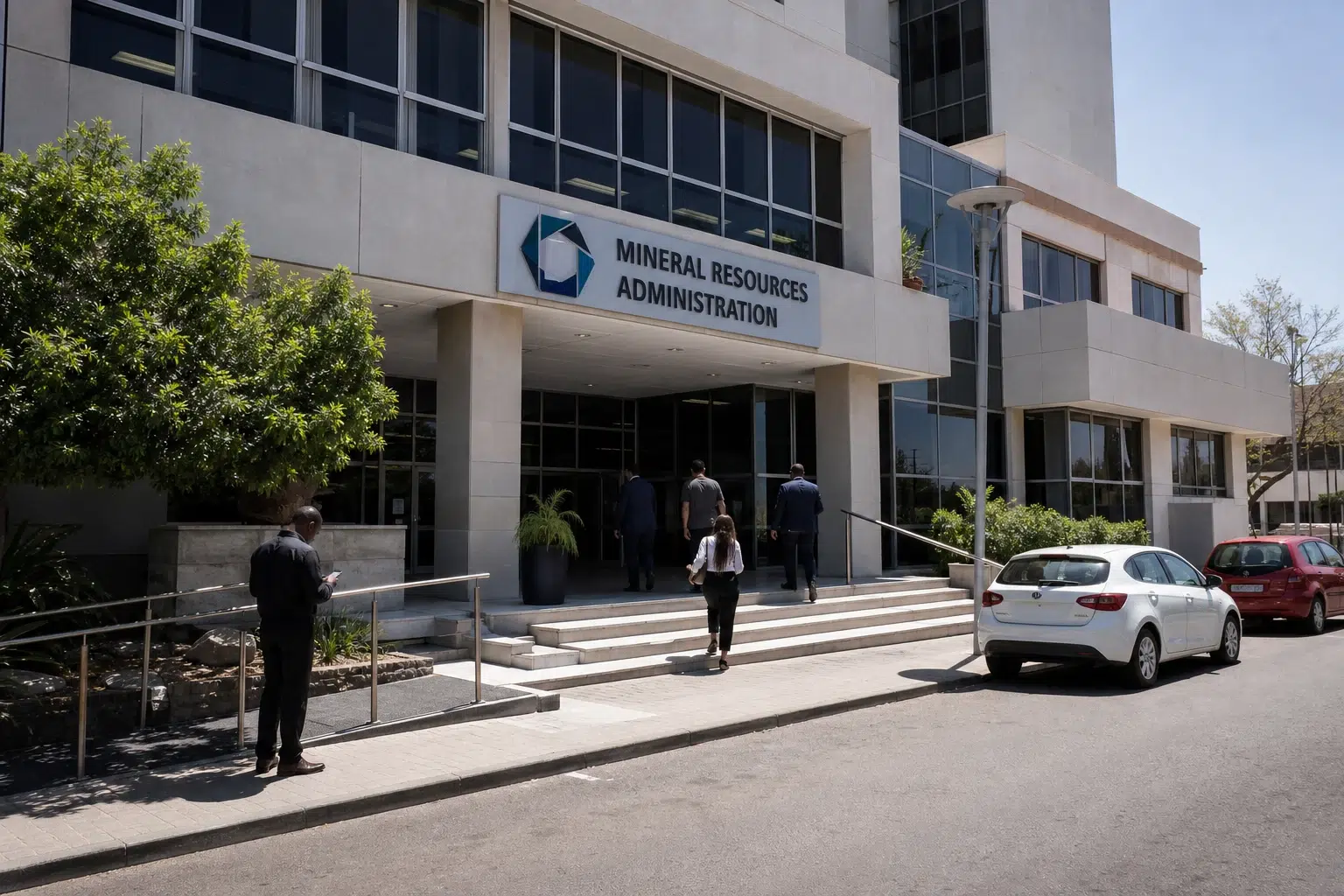
In Namibia, rare earths are no longer merely a promising underground resource. They are becoming a battleground for capital, permits and industrial timelines. In Windhoek, the challenge is clear: to turn geological resources into local benefits without allowing all the value to flow out of the country. The Kameelburg project is part of this race, at a time when critical minerals are increasingly sought after by the battery, magnet and electronics industries, as well as those driving the energy transition.
The regional context matters as much as the geology. Namibia is part of SADC, a region where mining carries significant weight in foreign currency revenues and employment. The Southern African Development Community is now urging its members to make better use of energy transition minerals locally, rather than exporting only raw materials. This approach also aligns with the priorities of Namibia’s Ministry of Mines, which says it wants to promote mineral resources, attract investment and support sustainable development in the sector.
What Aldoro is funding at Kameelburg
Aldoro Resources, an ASX-listed mining company, announced on 20 July 2026 that it had entered into agreements to raise A$4.3 million, or about US$3 million, through the issue of unsecured convertible notes. The stated aim is to fund the next phase of the Kameelburg rare earths project in northern Namibia.
The funds are earmarked for three specific areas: a preliminary economic assessment, the applications for the necessary permits and further drilling. The chosen mechanism allows the company to borrow now while giving investors the option of converting their debt into shares later. In other words, Aldoro is seeking financial breathing room without waiting for a final investment decision.
This is not the project’s first sign of gaining momentum. In an update published in May 2026, Aldoro said Kameelburg’s mineral resource stood at 597 million tonnes, grading 2.49% TREO equivalent. In September 2024, the company had already reported about 520.6 million tonnes at the same average grade, showing growth in the resource base over successive drilling campaigns and technical recalculations.
Why Namibia is attracting attention
Namibia is already known for its uranium, diamonds and base metals. Rare earths add a new strategic dimension. Namibia’s Ministry of Mines has a division dedicated to economic geology and rare metals, specifically to identify deposits, monitor commodity prices and attract investors. This structure reflects a desire to develop a sector that is still emerging but is now being closely watched by international players.
The country already has other rare earths or associated metals projects. Lofdal, developed by Namibia Critical Metals, is described by the company as one of the most advanced heavy rare earth deposits in the world, containing dysprosium, terbium and yttrium, elements essential to permanent magnets and some industrial technologies. The Eisenberg project, developed by Broadmind Mining, also reflects the growing sophistication of Namibian mineral exploration, which is increasingly focused on critical minerals.
This momentum does not involve private companies alone. It also intersects with the country’s environmental and regulatory procedures. Documents available on Namibia’s environmental platform show that Lofdal has been subject to amendments and renewals of environmental clearance certificates, proof that development requires a lengthy and tightly regulated chain of approvals. This is a decisive point: without permits or environmental clearance, no resource promise can become a mine.
What the deal changes in practice
For Aldoro, the fundraising is another step towards industrial feasibility. For Namibia, it raises another question: under what conditions can a mineral resource become a lever for local development? The potential benefits are well known. They include mining revenues, jobs, subcontracting contracts and investment in the areas concerned. But these gains depend on the level of local processing, the terms of agreements and the state’s ability to monitor operators’ commitments.
The contrast between international capital and realities on the ground is stark. Investors look at the size of the resource, its grade and the possibility of converting debt into shares. Local communities, by contrast, are chiefly looking for roads, water, sustainable jobs and clear management of impacts. In Namibia’s mining ecosystem, expectations are all the stronger because several projects are still at the early exploration or preliminary economic assessment stage, before any production begins.
The geopolitics of critical minerals also needs to be considered. Rare earths remain dominated by concentrated value chains, with China at the heart of global refining. Against this backdrop, African projects in Namibia, South Africa, Mozambique, Zambia and the Democratic Republic of the Congo are attracting greater attention. SADC and the UN Economic Commission for Africa also launched a regional initiative on energy transition mineral value chains in June 2026. The message is clear: the contest is no longer only about extraction, but also about Africa’s place in processing and capturing value.
A story to follow beyond Kameelburg
What happens next will depend on several milestones: the preliminary economic assessment, permits, drilling and Aldoro’s ability to expand its financing without diluting shareholders too heavily. For Namibia, the issue goes beyond a single project. It touches on the country’s mining strategy, its place in SADC and its ability to turn global interest in critical minerals into tangible development, from Windhoek to the project areas.
In a market where critical minerals have become an industrial and diplomatic issue, Kameelburg is a test. A test for an Australian junior miner seeking to accelerate its progress. And a test for Namibia, which wants to make its resources a broader engine of growth than extraction alone.