Algeria
 Egypt
 Libya
 Morocco
 Sudan
 Tunisia
 Benin
 Burkina Faso
 Cabo Verde
 Côte d'Ivoire
 Ghana
 Guinea
 Guinea-Bissau
 Liberia
 Mali
 Mauritania
 Niger
 Nigeria
 Senegal
 Sierra Leone
 The Gambia
 Togo
 Cameroon
 Central African Republic
 Chad
 DR Congo
 Equatorial Guinea
 Gabon
 Republic of the Congo
 São Tomé and Príncipe
 Burundi
 Comoros
 Djibouti
 Eritrea
 Ethiopia
 Kenya
 Madagascar
 Malawi
 Mauritius
 Mozambique
 Rwanda
 Seychelles
 Somalia
 South Sudan
 Tanzania
 Uganda
 Angola
 Botswana
 Eswatini
 Lesotho
 Namibia
 South Africa
 Zambia
 Zimbabwe
A giant tournament, but more than just a spectacle
At a World Cup, the scale of the tournament already says something about the balance of power. For the 2026 edition, FIFA has announced 104 matches to be played in Canada, Mexico and the United States from 11 June to 19 July 2026. The increase in scale broadens the sporting stage, but it also raises the bill for supporters, federations and families following their teams closely. Football thus becomes a global event, but also an experience that varies widely depending on a person’s country of origin and income.
The issue is therefore not just what happens on the pitch. We must also consider who can enter the stadium, who can cross a border and who can afford the journey. FIFA has confirmed a new ticket tier, the Supporter Entry Tier, priced at $60 for all 104 matches, including the final. At the same time, the organisation acknowledges that demand for tickets is huge and that sales are handled through strictly defined official channels.
Tickets, visas and borders: the other contest in 2026
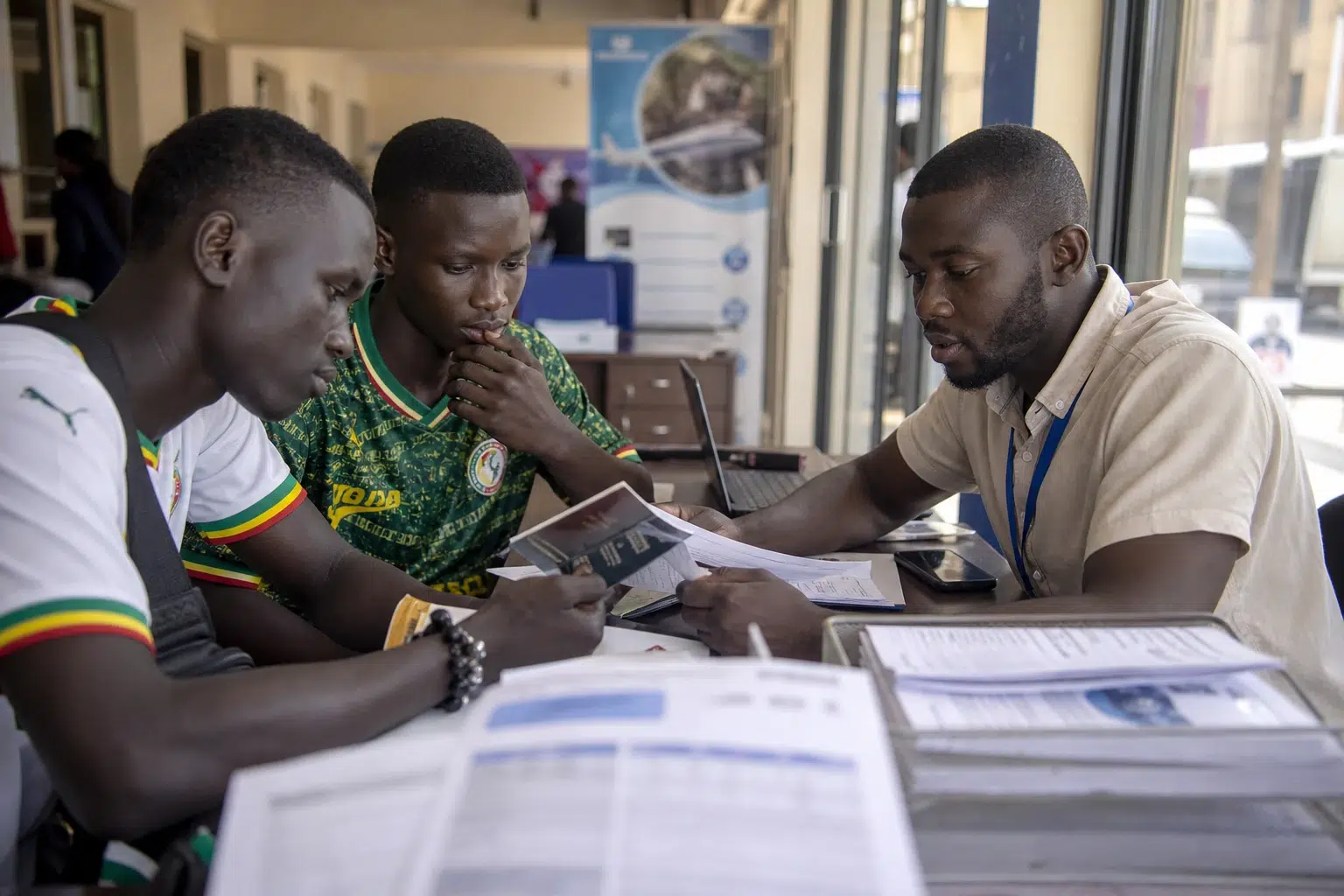
The 2026 World Cup is about more than a fixture list. It also depends on a very demanding administrative process. FIFA points out that a ticket guarantees neither a visa nor admission to Canada, the United States or Mexico. It also says fans must have a valid passport and, depending on the case, a visa, an electronic travel authorisation or an exemption. For the United States, a service called FIFA Pass is due to offer eligible ticket-holders a priority slot for a consular interview.
This reality affects different groups in different ways. For European or North American supporters, preparations remain costly, but are often predictable. For many African fans, the visa process, waiting times and supporting documents can become the first obstacle. This is where the sharpest divide emerges: a World Cup conceived as a universal celebration can, in practice, screen out fans before kick-off. FIFA provides information services, including its official fan information channels, but actual access still depends on national authorities.
Ticket prices further deepen this social divide. FIFA now says it adjusts prices according to market value and demand, a policy that mechanically puts the best seats further out of reach for lower-income groups. The problem is not merely symbolic. It also affects African diasporas, well represented in major cities on the continent and abroad, for whom a World Cup is often a chance to reunite, but rarely an expense to be taken lightly.
Africa in the tournament: real progress, but room remains limited
Africa’s record should be viewed with nuance. For several editions now, the continent has done more than simply take part. It has produced teams capable of challenging the established order. In the story of the 2026 World Cup, several African sides have reached new milestones or come close to the later rounds, while Morocco is consolidating its place among the teams that are establishing Africa in the upper echelons of world football. This momentum is no accident. It reflects the growing strength of training centres, better-integrated sporting diasporas and more structured coaching teams.
But sporting progress does not erase institutional weaknesses. African teams remain vulnerable to governance tensions, late changes of coach, conflicts between federations and coaching staff, and irregular budget decisions. In such a demanding tournament, these details matter as much as talent. A team may have good players but lose ground if its preparations are disrupted, its logistics are poorly managed or the mood within the squad deteriorates after the first setback. Many federations on the continent are already familiar with this lesson, even as recent results show the technical gap with leading nations narrowing.
For African audiences, this progress has significance beyond the standings. It feeds the idea of a more competitive, visible and credible football continent. It also shows that a successful national team depends on more than individual talent. It rests on an entire chain: training, domestic leagues, well-managed moves abroad, preparation, medical support and stable governance. This is where Africa’s long-term ability to turn scattered talent into lasting collective strength will be decided.
Stars, legacies and a generational shift
A major World Cup is also a stage for farewells. In 2026, the competition is taking place amid a highly visible generational transition, with historic figures approaching the end of their cycle and their successors already stepping into the spotlight. FIFA and the organisers have built a tournament designed for a mass audience, but the sporting narrative is still carried by a handful of names capable of attracting global attention. In this landscape, African football occupies a special place: it produces technical leaders, as well as symbols of continuity for millions of supporters on the continent and across the diaspora.
This shift matters greatly for African teams. When one generation moves on, others must step up. As senior figures such as Mohamed Salah or Sadio Mané reach a turning point, the question is no longer simply whether they will play one more tournament. Above all, it is about who will take over in the dressing room, on the pitch and in the collective imagination. The same applies to national teams in the Maghreb, West Africa or southern Africa: without a renewal of their leadership, progress remains fragile.
Ultimately, the 2026 World Cup says two things at once. On the one hand, global football continues to grow, become more commercialised and more bureaucratic. On the other, Africa is asserting itself more strongly, not as a peripheral backdrop, but as a group of teams capable of imposing their own tempo and ambitions. What happens next will be decided less by slogans than by structures. The coming years will show whether this rising strength becomes lasting, or remains dependent on a few exceptional generations.