Algeria
 Egypt
 Libya
 Morocco
 Sudan
 Tunisia
 Benin
 Burkina Faso
 Cabo Verde
 Côte d'Ivoire
 Ghana
 Guinea
 Guinea-Bissau
 Liberia
 Mali
 Mauritania
 Niger
 Senegal
 Sierra Leone
 The Gambia
 Togo
 Cameroon
 Central African Republic
 Chad
 DR Congo
 Equatorial Guinea
 Gabon
 Republic of the Congo
 São Tomé and Príncipe
 Burundi
 Comoros
 Djibouti
 Eritrea
 Ethiopia
 Kenya
 Madagascar
 Malawi
 Mauritius
 Mozambique
 Rwanda
 Seychelles
 Somalia
 South Sudan
 Tanzania
 Uganda
 Angola
 Botswana
 Eswatini
 Lesotho
 Namibia
 South Africa
 Zambia
 Zimbabwe
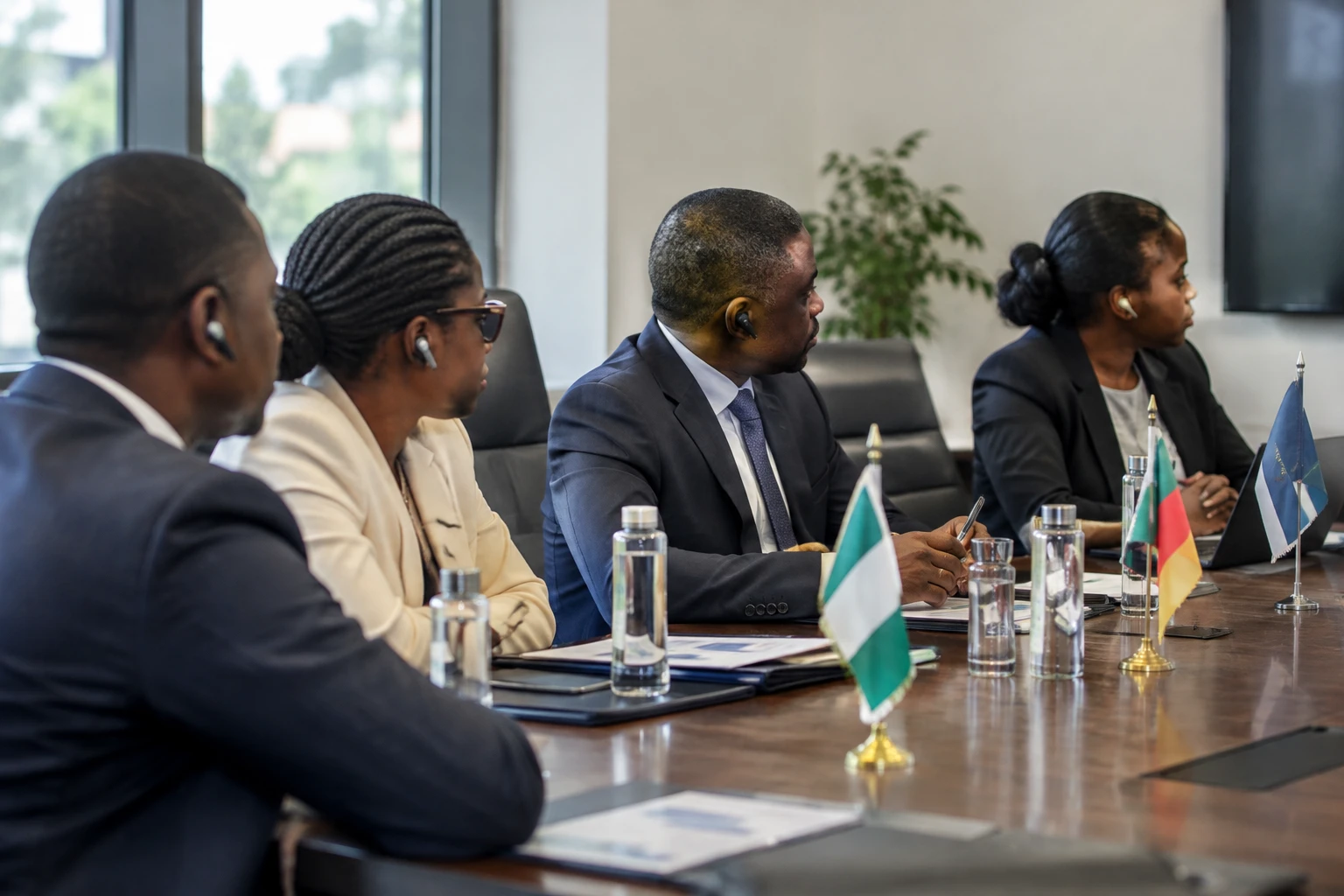
A large company can post record profits and still choose not to open a new market for its shares. For Dangote Cement, the delay to its London plan highlights a central question for African groups: how can they attract international investors without shifting the heart of their financing away from the continent?
A suspended plan, not a halted business
On Tuesday 10 November 2026, Dangote Cement’s board decided not to proceed “at this stage” with the proposed secondary listing and share offer on the London Stock Exchange. In its notice to the Nigerian Exchange (NGX), the company cited market conditions and strategic priorities. It set no new timetable.
The cement maker’s ordinary shares remain listed on the NGX, Nigeria’s stock exchange. The company said its decision would change neither its operations nor its business plans. The delay therefore concerns the planned access to a foreign financial market, not the company’s withdrawal from the Nigerian exchange.
The plan had been in preparation for several months. In May 2026, Dangote Cement said it was considering a second listing to broaden its investor base. Shareholders subsequently authorised management to consider a transaction in London or on another international exchange. In September, the group presented its operations and outlook to investors in the British capital.
A share sale, rather than a direct capital raise
The proposed structure distinguished between two transactions that are often confused. Dangote Industries Limited, the cement maker’s controlling shareholder, was to sell some of its shares. This sale of existing shares would primarily have allowed new investors to buy stakes held by the main shareholder.
It would therefore not, in itself, have brought fresh capital into Dangote Cement. A secondary listing could nevertheless have made the shares more accessible to international funds, raised the company’s profile and provided another benchmark for its valuation. The group has not publicly detailed the number of shares under consideration, the price sought or the costs incurred in preparing the plan.
The stated reason remains general. The announcement does not specify which market conditions influenced the decision. Reports carried by Reuters point to recent market volatility, but that explanation comes from people cited by the agency and does not appear in the board resolution. It should therefore remain attributed, rather than being presented as the reason officially detailed by the company.
Strong results in a challenging Nigerian context
The decision comes as Dangote Cement reports sharply improved results. For the first nine months of 2026, its post-tax profit reached 974.8 billion naira, up 31.2% year on year. Revenue stood at 3,774.2 billion naira, an increase of 19.6%. The group also said it had moved from net debt to net cash of 51.1 billion naira.
These figures, published by the company and filed with the NGX, show a significant ability to generate revenue and cash. They do not, however, guarantee the success of a foreign listing or investor interest at a given price. For a shareholder, returns also depend on valuation, the liquidity of the shares and market conditions at the time of the transaction.
The national context also matters. The cement maker operates in Nigeria, where demand for materials reflects needs for infrastructure, housing and industrial activity. But consolidated results do not tell the whole story of buyers’ circumstances: major construction projects, building companies and households do not have the same purchasing power or access to credit. A London listing would have changed investment opportunities in the group above all, not the price of cement or households’ access to the material directly.
Beyond Nigeria, Dangote Cement operates in several African markets. The group reported a 14% rise in volumes sold across its pan-African operations during the first nine months of 2026, to 9.1 million tonnes. This regional presence links the cement maker’s strategy to trade, infrastructure and construction demand across several economies. It does not, however, mean that the effects of the delay will be the same in every country.
The question of access to capital remains open
For Nigerian investors, the main point of reference is unchanged: Dangote Cement remains traded on the NGX. For the company, however, the suspension leaves its plan to broaden its shareholder base beyond the local market unresolved. And for Dangote Industries, the proposed share sale is not going ahead at this stage.
The decision is also of interest to West African markets. ECOWAS, the economic community bringing together West African states, is seeking to strengthen regional trade; stock exchanges, meanwhile, remain organised mainly at national or sub-regional level. The Dangote Cement case is a reminder that a large African group can have a continental footprint while depending on financial markets whose depth and international access vary.
The delay does not mean the plan has been abandoned permanently. No timetable for its resumption has been announced, and the company has not detailed the conditions that might lead it to reconsider. The next financial reports and company announcements to the NGX will show whether its financing priorities change. For now, the signal is clear: the group says its industrial expansion is continuing, but opening its share capital in London will have to wait.