Algeria
 Egypt
 Libya
 Morocco
 Sudan
 Tunisia
 Benin
 Burkina Faso
 Cabo Verde
 Côte d'Ivoire
 Ghana
 Guinea
 Guinea-Bissau
 Liberia
 Mali
 Mauritania
 Niger
 Senegal
 Sierra Leone
 The Gambia
 Togo
 Cameroon
 Central African Republic
 Chad
 DR Congo
 Equatorial Guinea
 Gabon
 Republic of the Congo
 São Tomé and Príncipe
 Burundi
 Comoros
 Djibouti
 Eritrea
 Ethiopia
 Kenya
 Madagascar
 Malawi
 Mauritius
 Mozambique
 Rwanda
 Seychelles
 Somalia
 South Sudan
 Tanzania
 Uganda
 Angola
 Botswana
 Eswatini
 Lesotho
 Namibia
 South Africa
 Zambia
 Zimbabwe
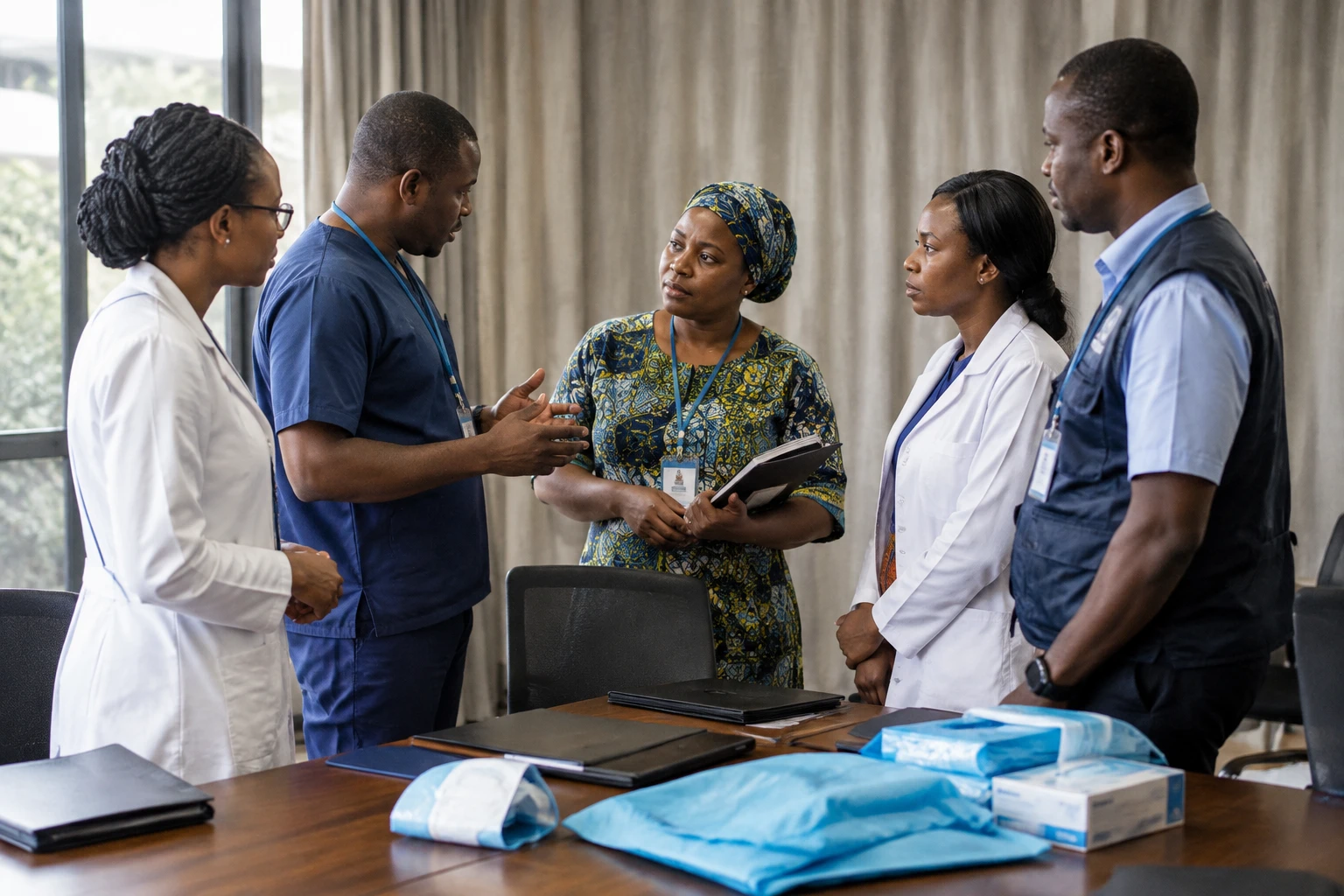
For Nigeria, the immediate challenge is not only to treat a patient with Ebola. It must also quickly identify anyone who may have been exposed, protect healthcare workers and prevent an infection detected in Abuja from becoming a chain of transmission.
The country has experience gained during the 2014 epidemic. But the Bundibugyo strain, which is circulating in several African countries, has no approved vaccine or specific treatment. The speed of surveillance and public trust will therefore be crucial.
A confirmed case in the federal capital
On 20 October 2026, Nigerian authorities confirmed a case of Ebola virus disease in the Federal Capital Territory, where Abuja is located. The World Health Organization (WHO) ranks Nigeria as the fifth country to have detected the Bundibugyo virus since the epidemic was declared in the Democratic Republic of the Congo on 15 May.
The patient is a Nigerian woman. Her travel history remains an important part of the investigation. Initial reports said she had arrived from Uganda. However, Uganda’s health ministry said she had travelled through its territory after a trip to eastern DRC. The precise source of exposure should therefore not be considered established at this stage.
Authorities have announced that they have identified 44 contacts. The search is continuing for other people who may have been exposed, particularly during travel and at healthcare facilities. Medical staff are also strengthening infection prevention measures at the hospital where the patient was treated.
Ebola is transmitted mainly through direct contact with the bodily fluids of a sick or deceased person. Early identification of symptoms, isolation of suspected cases and monitoring of contacts during the period of risk are therefore central tools in the response. They must be accompanied by clear information so that people concerned come forward without fear or stigma.
Useful experience, but no guarantee
In 2014, Nigeria stopped transmission of the virus after an infected traveller arrived in Lagos. Contact tracing, coordination between teams and the mobilisation of health authorities limited its spread. Figures published at the time record 19 confirmed cases and one probable case, as well as seven deaths among confirmed cases. The country was subsequently declared free of transmission on 20 October 2014, after 42 days without a new case.
This experience offers guidance, not an assurance of success. The current response will depend on the ability to act over time, share data rapidly between states and protect medical teams. Abdulsalami Nasidi, the former head of the Nigeria Centre for Disease Control and Prevention, has also stressed the need for adequate funding and a sustained commitment from the federal authorities.
This comes as President Bola Tinubu approved the creation of a presidential task force and an emergency allocation of 10 billion naira in June. The existence of announced funding does not, on its own, show what resources are already available on the ground or how they are distributed. The next practical steps — surveillance, laboratories, protective equipment and contact tracing — will show how the plans are being implemented.
The impact is not being felt equally. In Abuja, healthcare facilities and people who visited the same places as the patient are at the forefront of monitoring. In other states, health services must remain vigilant without unnecessarily diverting resources from routine care. Healthcare workers, often exposed before a diagnosis is made, need equipment, protocols and reliable information.
A response that extends beyond Nigeria’s borders
The current outbreak requires regional coordination. The DRC remains the main centre of the outbreak, while other countries have reported cases linked to the spread of the virus. WHO identifies Nigeria as the fifth country affected. The Nigerian patient’s journey nevertheless shows that a travel itinerary alone is not enough to establish where an infection was contracted: tracing must rely on verified evidence, not assumptions based on a border.
In West Africa, the Economic Community of West African States (ECOWAS) can help coordinate health authorities, even though the epidemic is not confined to the region. Continental mechanisms also matter. Africa CDC has convened a virtual meeting of African health ministers for 28 October to strengthen the collective response and information-sharing.
For Nigeria, a populous country and a regional travel hub, the effectiveness of the response will depend as much on detection in healthcare facilities as on surveillance at points of entry and in communities. Monitoring by the presidential task force, changes in the number of contacts traced and independent confirmation of exposure locations will be more useful indicators than general declarations of confidence.
The priority now is to contain the confirmed case while keeping verifiable facts at the centre of public communication. The experience of 2014 shows what rapid coordination can achieve. The current situation, however, is a reminder that a robust response requires resources actually deployed, support for local services and cooperation that follows movement across borders.