Algeria
 Egypt
 Libya
 Morocco
 Sudan
 Tunisia
 Benin
 Burkina Faso
 Cabo Verde
 Côte d'Ivoire
 Ghana
 Guinea
 Guinea-Bissau
 Liberia
 Mali
 Mauritania
 Niger
 Nigeria
 Senegal
 Sierra Leone
 The Gambia
 Togo
 Cameroon
 Central African Republic
 Chad
 DR Congo
 Equatorial Guinea
 Gabon
 Republic of the Congo
 São Tomé and Príncipe
 Burundi
 Comoros
 Eritrea
 Ethiopia
 Kenya
 Madagascar
 Malawi
 Mauritius
 Mozambique
 Rwanda
 Seychelles
 Somalia
 South Sudan
 Tanzania
 Uganda
 Angola
 Botswana
 Eswatini
 Lesotho
 Namibia
 South Africa
 Zambia
 Zimbabwe
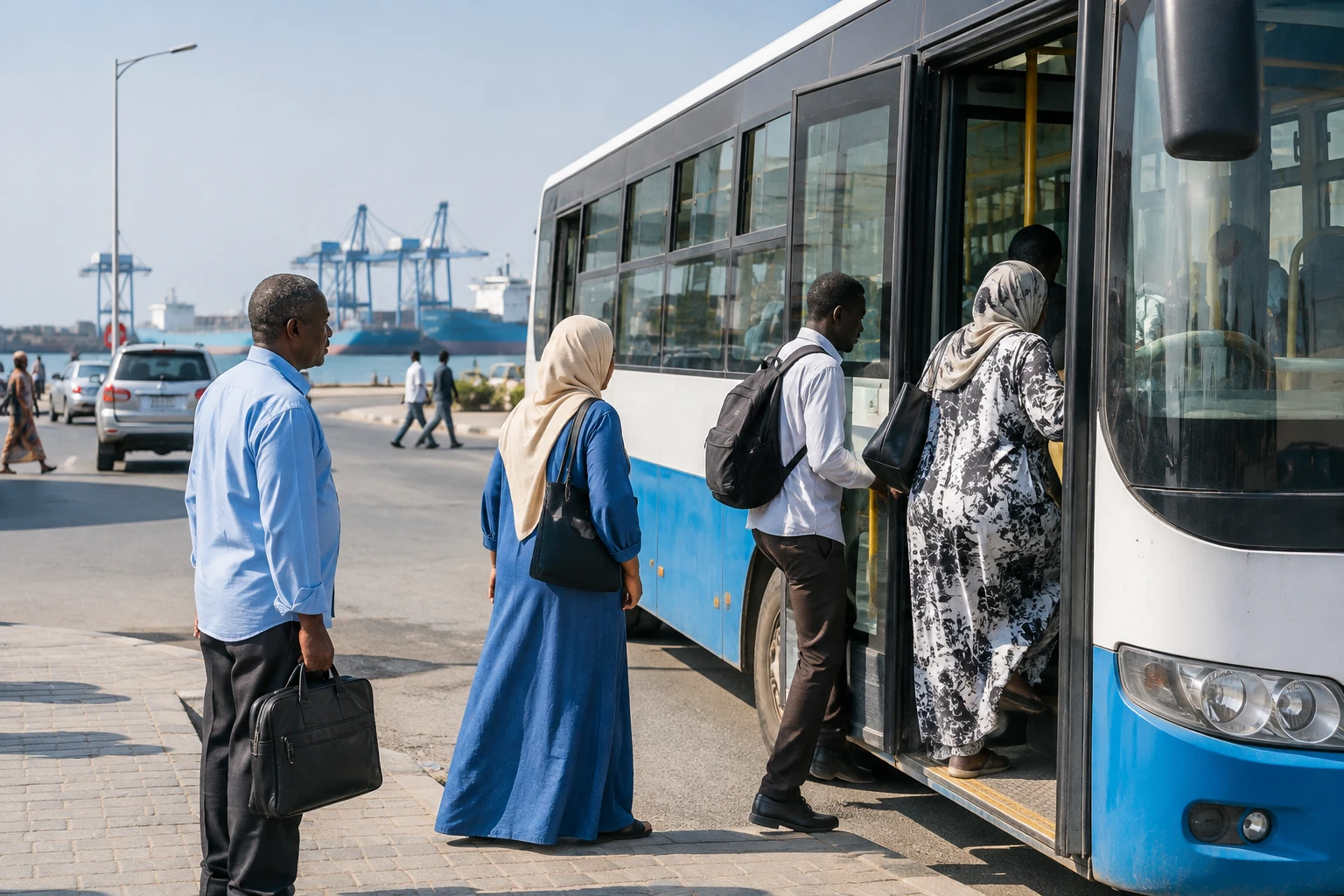
A high average salary can make headlines in a ranking without reflecting the daily lives of most people. In Djibouti, the figure puts the country at the top of the continent, but it must be considered in light of the labour market, the cost of living and the calculation method.
A ranking to read with its limitations
The ranking published by LiveGDP estimates average monthly net salaries in 54 African countries, in US dollars. It measures income after taxes and compulsory deductions, but provides neither a median salary nor a breakdown by sector, nor full details of the people included in the calculation. It is therefore a comparative indicator, not a comprehensive record of the incomes of all workers.
In this estimate, Djibouti ranks first at 2,836 dollars a month, ahead of South Africa at 1,270 dollars. The Seychelles follow at 790 dollars, then Botswana at 780 dollars, Namibia at 630 dollars, Mauritius at 615 dollars and Morocco at 490 dollars. This list differs from some previous rankings: Gabon does not appear among the top seven in the version consulted.
These nominal amounts are not enough to compare purchasing power. Housing, transport, food, healthcare and education prices vary from country to country. Exchange rates, tax rules, working hours and the prevalence of informal employment also complicate comparisons.
In Djibouti, ports drive activity, not all jobs
Djibouti’s position at the entrance to the Red Sea and the Gulf of Aden has shaped its economy. Ports, logistics and trade linked to the corridor to Ethiopia play a central role. In its report published in May 2026, the World Bank estimated real growth at 6.5% in 2025, driven in particular by services linked to trade and port operations.
This strategic activity does not automatically translate into plentiful, well-paid jobs for Djiboutians. Major port and logistics hubs are capital-intensive. They can generate revenue and support specialised services while creating fewer jobs than more labour-intensive sectors.
The World Bank also notes that informal employment remains widespread and that unemployment particularly affects young people and women. In its labour market analysis published in 2026, it says that nearly 46% of young people aged 16 to 24 are not in employment, education or training. The contrast is significant: a high estimated average income can coexist with limited access to stable employment.
Differences also arise between sectors and employment statuses. Formal jobs, particularly in the public sector and large companies, do not account for the whole economy. For self-employed people, small businesses and informal employees, incomes can be more irregular and offer less protection. An average figure does not show how those incomes are distributed among households.
A regional challenge of mobility and training
Djibouti is a member of the Intergovernmental Authority on Development (IGAD), a regional organisation in East Africa. Economic and migration links with neighbouring countries make employment a regional as well as a national issue. A study by IGAD and the International Labour Organization examines, among other things, the participation of migrant workers from the region in Djibouti’s labour market, as well as skills needs and the rules governing their mobility.
For the authorities and businesses, the challenge is to turn growth in services into broader employment opportunities. This involves technical skills, vocational training and diversification beyond port activities. The benefits are not the same for skilled workers, young people entering the labour market or those who depend on informal activities.
Reliance on maritime trade also exposes Djibouti to regional and international disruptions. The World Bank warns that tensions along shipping routes can affect traffic, transport costs and household spending. In this context, the strength of a salary ranking also depends on the economy’s ability to create sustainable jobs and absorb shocks.
Comparing incomes without confusing averages with living standards
The same caution applies to the other countries mentioned. South Africa has a diversified economy, while the Seychelles, Botswana, Namibia and Mauritius have different labour markets and productive structures. Their rankings describe neither internal income disparities nor job security or access to public services.
Kenya, another major East African economy, is estimated at 344 dollars net per month, ranking tenth on the continent in LiveGDP’s data. This comparison with Djibouti does not, however, allow us to conclude that an average worker there necessarily lives better or worse: prices, social protection and the share of undeclared jobs affect the real value of income.
The figure of 2,836 dollars therefore puts Djibouti at the top of this comparison database, but does not sum up living conditions for Djiboutians. To measure progress, indicators to track also include the creation of formal jobs, the participation of young people and women, median incomes and changes in essential expenses. It is at this level that the ability of port and regional activities to benefit the population more broadly will be judged.