Algeria
 Egypt
 Libya
 Morocco
 Sudan
 Tunisia
 Benin
 Burkina Faso
 Cabo Verde
 Côte d'Ivoire
 Ghana
 Guinea
 Guinea-Bissau
 Liberia
 Mali
 Mauritania
 Niger
 Nigeria
 Senegal
 Sierra Leone
 The Gambia
 Togo
 Cameroon
 Central African Republic
 Chad
 DR Congo
 Equatorial Guinea
 Gabon
 Republic of the Congo
 São Tomé and Príncipe
 Burundi
 Comoros
 Eritrea
 Ethiopia
 Kenya
 Madagascar
 Malawi
 Mauritius
 Mozambique
 Rwanda
 Seychelles
 Somalia
 South Sudan
 Tanzania
 Uganda
 Angola
 Botswana
 Eswatini
 Lesotho
 Namibia
 South Africa
 Zambia
 Zimbabwe
Ethiopia’s access to fuel depends largely on a corridor linking Addis Ababa to Djibouti’s ports. Road transport remains vulnerable to delays, high costs and traffic disruptions. The project launched between Damerjog and Dewele aims to change this equation.
An energy corridor between the Red Sea and Ethiopia
On 24 September 2026, Ethiopia, Djibouti and Nigerian conglomerate Dangote Group announced the launch of an oil infrastructure project valued at $660 million. The investment covers a pipeline for refined petroleum products, as well as storage terminals to be built at both ends.
The pipeline is to link Damerjog, in southern Djibouti, with Dewele in Ethiopia, near the border between the two countries. According to information released by the Ethiopian authorities and Dangote Group, it will stretch for about 120 kilometres.
The system will also include combined storage capacity of more than one million cubic metres. Figures announced in public statements vary, but the principle is the same: receive fuel near the Djiboutian coast, store it, then transport it to Ethiopia via a dedicated link.
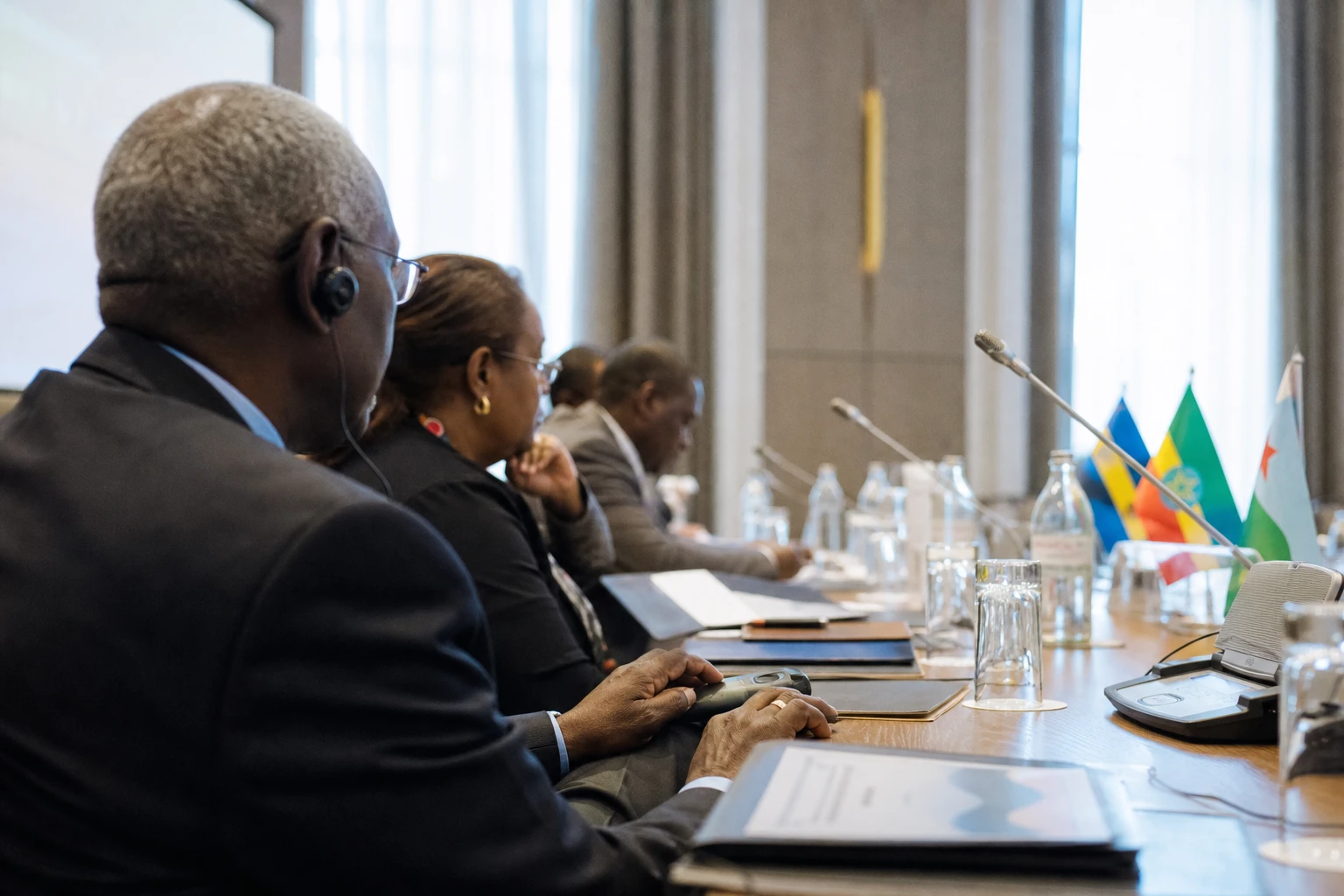
The launch ceremony was held in Djibouti in the presence of Ethiopian Prime Minister Abiy Ahmed, Djiboutian President Ismaïl Omar Guelleh and Dangote Group president Aliko Dangote. The project brings together Ethiopian Investment Holdings, the Ethiopian state entity responsible for managing strategic assets, and the Nigerian company. Djibouti’s state-owned Great Horn Investment Holdings is also presented as a partner in the arrangement.
Reducing reliance on road transport
Ethiopia has been landlocked since Eritrea’s independence in 1993. For its imports, particularly fuel, it relies mainly on Djibouti’s port and logistics infrastructure. The port of Doraleh and the road corridor to Addis Ababa therefore play a central role in its economy.
Until now, much of the imported petroleum products have been transported by lorry. This system requires a large fleet and remains vulnerable to congestion, border checks, breakdowns and fluctuations in transport costs. A dedicated pipeline could shorten delivery times and ease pressure on roads.
The Ethiopian News Agency’s presentation of the project highlights three objectives: reducing logistics costs, strengthening energy security and improving the resilience of the corridor between the two countries. The Ethiopian government also expects more regular supplies to urban and industrial markets.
For households, however, the effect will not be automatic. The price paid at the pump also depends on international purchase costs, the exchange rate, taxes, subsidies and domestic distribution. The pipeline could reduce some logistics costs, but it will not eliminate fluctuations in the global market.
Djibouti strengthens its role as a gateway
For Djibouti, the project reinforces an economic strategy built around ports, industrial zones and transit services. The country controls one of Ethiopia’s main maritime access routes, serving a market of more than 100 million people. The Damerjog site is set to become a major hub for liquid products and industrial activities linked to regional trade.
The new pipeline could increase revenue from storage, handling and transit. It would also give Djibouti’s port infrastructure an additional role, beyond simply handling goods bound for Ethiopia.
This dependence nevertheless creates a balance of power that warrants attention. Djibouti’s economy remains closely tied to port activities and trade with its large neighbour. Any political, security or technical disruption along the corridor could affect both countries, but with different consequences: Djibouti risks losing transit revenue, while Ethiopia could face supply pressures.
An investment that expands Dangote’s footprint
The project marks a new stage in Dangote Group’s industrial expansion in Africa. The Nigerian company is already active in refining, cement, fertilisers and infrastructure. It is now seeking to link its investments to regional corridors capable of transporting and distributing products on a large scale.
In Ethiopia, the group is also involved in a fertiliser plant project in Gode, in the Somali Region. Recent public announcements refer to an investment of several billion dollars and production intended to support Ethiopian agriculture. The exact amount and implementation timetable should, however, be distinguished from commitments that are already operational.
The Nigerian group also plans to expand its refining activities in East Africa. The project announced in Lamu, Kenya, reflects this ambition. It remains necessary, however, to distinguish launch announcements and investment agreements from infrastructure that has actually been built.
This caution is important for Ethiopia. The country needs industrial investment, but also guarantees on financing, governance, maintenance and revenue sharing. Ethiopian Investment Holdings will therefore play a crucial role in overseeing the contract and safeguarding the public interest.
Regional significance for the Horn of Africa
The project is part of the gradual transformation of the Horn of Africa into a network of connected corridors. The Addis Ababa–Djibouti railway, trade routes, ports and industrial zones already form a cross-border economic system. The pipeline would add specialised infrastructure to this network.
This momentum also concerns the Intergovernmental Authority on Development (IGAD), a regional organisation bringing together several countries in the Horn of Africa. Although the project is bilateral, it could influence discussions on energy security, the movement of goods and cooperation between landlocked economies and coastal states.
At African Union level, the project illustrates a trend: African capital is financing infrastructure that connects markets across the continent. The presence of a Nigerian group in a project in East Africa also gives the investment a pan-African dimension.
The next step will be the technical and financial delivery of the project. The construction timetable, financing arrangements, capacity actually installed and terms of access to the network will all need to be monitored. The project’s success will be measured less by its launch ceremony than by its ability to ensure a more regular supply between Djibouti and Ethiopia over the long term.