Algeria
 Egypt
 Libya
 Morocco
 Sudan
 Tunisia
 Benin
 Burkina Faso
 Cabo Verde
 Côte d'Ivoire
 Ghana
 Guinea
 Guinea-Bissau
 Liberia
 Mali
 Mauritania
 Niger
 Nigeria
 Senegal
 Sierra Leone
 The Gambia
 Togo
 Cameroon
 Central African Republic
 Chad
 DR Congo
 Equatorial Guinea
 Gabon
 Republic of the Congo
 São Tomé and Príncipe
 Burundi
 Comoros
 Eritrea
 Ethiopia
 Kenya
 Madagascar
 Malawi
 Mauritius
 Mozambique
 Rwanda
 Seychelles
 Somalia
 South Sudan
 Tanzania
 Uganda
 Angola
 Botswana
 Eswatini
 Lesotho
 Namibia
 South Africa
 Zambia
 Zimbabwe
A short sea, displaced lives
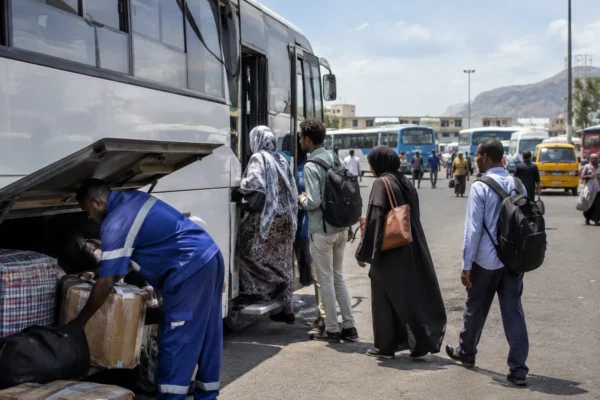
In Djibouti, the Bab el-Mandeb Strait is not a line on a map. It is a maritime neighbourhood, a trade corridor, but also a human frontier where conflicts in Yemen are felt very quickly. When fighting resumes on the opposite shore, the first effects are measured not only in diverted ships or disrupted trade routes. They are also visible in hurried landings, separated families and emergency reception on Djiboutian soil.
This role as a host and transit country is long established. The National Office for Assistance to Refugees and Disaster Victims, ONARS, says Djibouti supports refugees from Yemen, Somalia and Ethiopia, while also managing recurring climate crises. IGAD, the regional organisation for the Horn of Africa, also classifies Djibouti as a sensitive point for mixed movements towards the Arabian Peninsula.
What the figures show
According to the International Organization for Migration, more than 2,000 people have reached Djibouti by boat. The agency adds that more than 85,000 people have been displaced in Yemen since the start of the month cited in its alert, illustrating the scale of a fresh surge in violence. The Associated Press reports the same trend, noting that more than 2,000 people have reached Djibouti, while the recent escalation has broken a truce that had largely frozen the civil war since 2022.
This is not without precedent. As early as 2015, UNHCR was already reporting large numbers of arrivals in Djibouti after the war in Yemen intensified, with more than 2,000 refugees reaching the country in a matter of days and crossings to the Djiboutian coast rising sharply. This history matters because it is a reminder that every resumption of fighting on the Yemeni shore translates, almost mechanically, into fresh pressure on Djibouti’s reception facilities.
On the ground, reception is managed by institutions already accustomed to handling emergencies. ONARS co-ordinates assistance, registration, accommodation and basic needs. Djibouti’s Ministry of the Interior also says civil protection can be mobilised through an operations centre in the event of a major incident. This shows that the arrival of new displaced people is not simply a one-off act of solidarity, but part of an established institutional system.
Djibouti, a host country and a transit zone
Djibouti’s position is shaped as much by its geography as by its politics. The country is small, but it occupies a strategic position at the entrance to the Red Sea. IGAD says the Horn of Africa is crossed by mixed migration flows towards the Gulf, via Djibouti, northern Somalia and Yemen. In this pattern, Djibouti is a point of departure, a stopping point and, at times, a temporary refuge.
This position explains why a crisis in Yemen immediately extends beyond Yemen itself. It affects maritime security, regional transport, ports in the Horn of Africa and the logistics linking East Africa to the Gulf. The AP has already reported that tensions around the Bab el-Mandeb are prompting Somali economic actors to seek alternative maritime routes. For Djibouti, the same instability means greater demands for humanitarian support, as well as heightened vigilance along the coast and at landing sites.
In the past, Djiboutian authorities have accepted external support for these reception efforts. In 2018, the Djiboutian presidency said that housing and food had been provided to Yemeni refugees settled in Obock, with support from a Saudi partner. This illustrates an essential point: assistance to displaced people in Djibouti rests on a combination of national resources, UN organisations and bilateral support.
What this crisis changes beyond Yemen
For displaced people, the emergency is immediate: leave a bombarded area, find a safe landing point, be registered, then gain access to water, healthcare and shelter, even if only temporarily. For Djibouti, the challenge is twofold. It must respond to the emergency without placing further strain on a country that already hosts refugees and is bearing the effects of climate shocks. ONARS says explicitly that its mission also includes strengthening the resilience of communities affected by socio-political and natural crises.
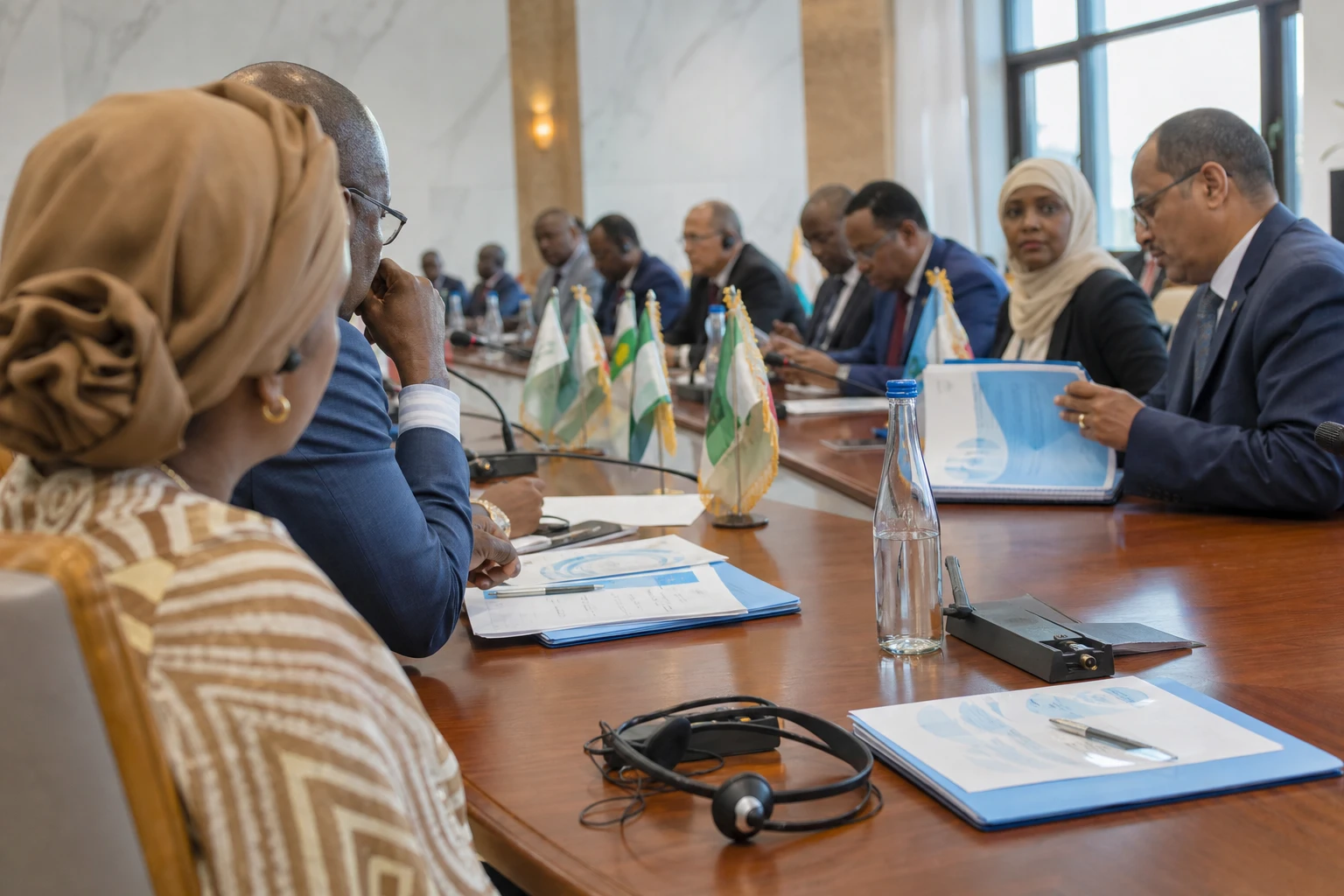
For the region, the warning is broader still. IGAD recently brought regional and international stakeholders together in Tadjourah to discuss the management of irregular migration along the Eastern Route, one of the world’s most dangerous corridors. This is an important reminder: the boundary between a humanitarian crisis and a migration crisis is porous. An outbreak of fighting in Yemen can drive civilian displacement, fuel tensions on maritime routes and increase pressure on protection mechanisms in the Horn of Africa.
The continental significance is also clear in the way African organisations address the issue. IGAD is advancing regional frameworks on refugees, displaced people and migration data. This shows that in East Africa, the strongest response depends on co-operation between states, not improvised, piecemeal solutions. Djibouti is at the heart of this architecture, not because it is merely a transit point, but because it has become a place where maritime security, political hospitality and the practical management of forced movement converge.