Algeria
 Egypt
 Libya
 Morocco
 Sudan
 Tunisia
 Benin
 Burkina Faso
 Cabo Verde
 Côte d'Ivoire
 Ghana
 Guinea
 Guinea-Bissau
 Liberia
 Mali
 Mauritania
 Niger
 Senegal
 Sierra Leone
 The Gambia
 Togo
 Cameroon
 Central African Republic
 Chad
 DR Congo
 Equatorial Guinea
 Gabon
 Republic of the Congo
 São Tomé and Príncipe
 Burundi
 Comoros
 Djibouti
 Eritrea
 Ethiopia
 Kenya
 Madagascar
 Malawi
 Mauritius
 Mozambique
 Rwanda
 Seychelles
 Somalia
 South Sudan
 Tanzania
 Uganda
 Angola
 Botswana
 Eswatini
 Lesotho
 Namibia
 South Africa
 Zambia
 Zimbabwe
An election taking shape amid social anger
In Nigeria, election campaigns are rarely fought solely over party alliances. They are also won on a very practical question: who can still ease households’ daily lives when fuel prices, bills and insecurity are all weighing on them at once? It is against this backdrop that Peter Obi, a leading figure in Nigeria’s opposition, has put the size of the state, corruption and the use of public revenue back at the centre of the debate.
The electoral timetable is now set. Nigeria’s Independent National Electoral Commission, in Abuja, has scheduled the presidential and legislative elections for 16 January 2027, followed by governorship and state assembly elections on 6 February 2027. Meanwhile, the government has already opened discussions on police reform, a sign that security will also be one of the campaign’s major themes.
Peter Obi backs fiscal discipline and basic services
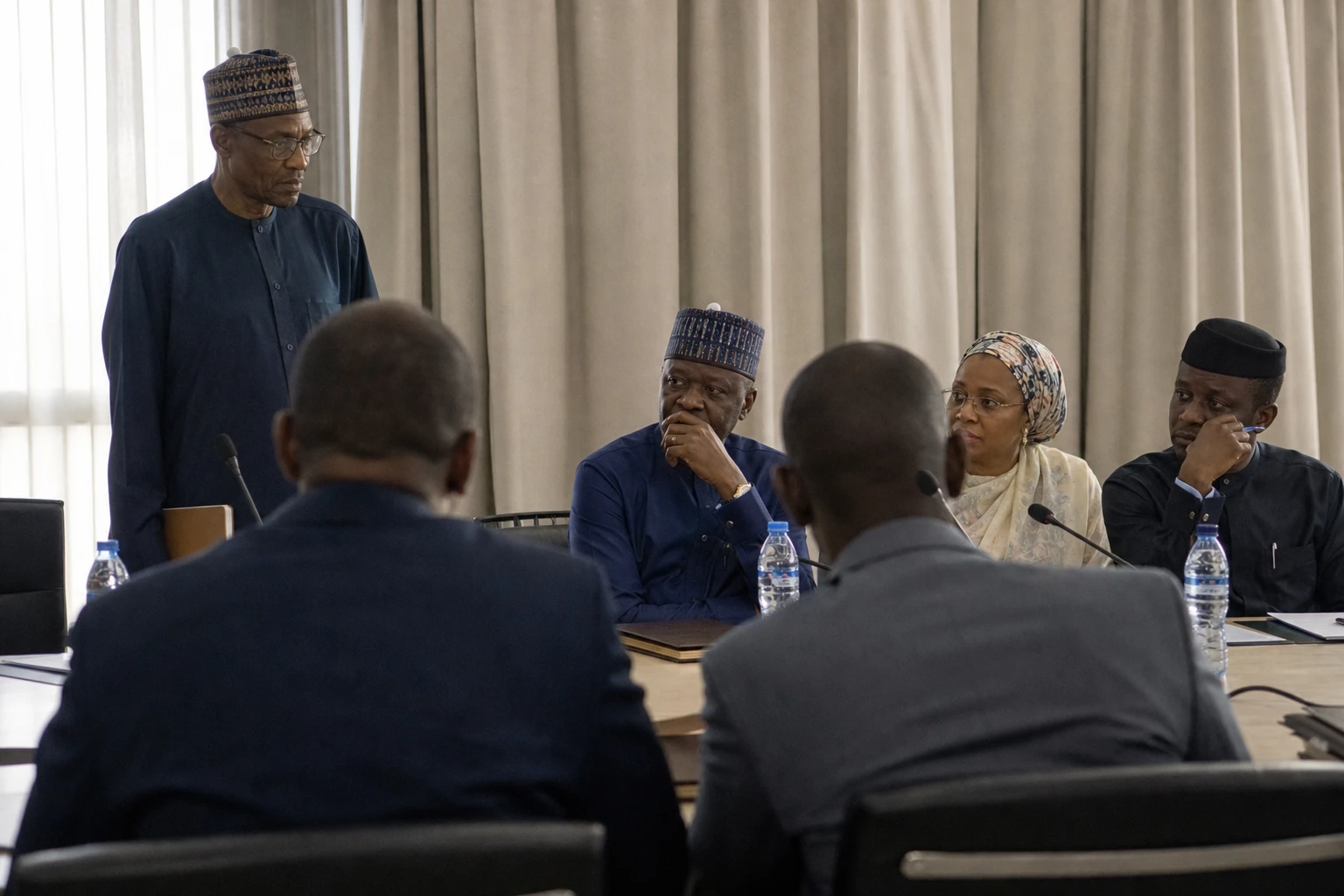
During a discussion in Abuja, Peter Obi argued for a straightforward approach: reduce the cost of governance, tackle waste and redirect public money towards health, education and jobs. His argument is political as well as economic. In his view, a less costly state can free up more resources for essential services.
This position forms part of a broader trajectory. In 2023, Peter Obi had already built his following on a message of fiscal discipline, transparency and a break with practices seen as predatory. He has retained this profile since then, even as the party landscape has evolved and opposition blocs remain fragmented. Bola Tinubu won the 2023 election with 36.6% of the vote, according to the Electoral Commission, while Peter Obi emerged as one of the main contenders in a closely fought election.
The sensitive issue is not merely a moral one. In Nigeria, the institutional cost of public policy remains high, encompassing the administration, security, past subsidies and patronage networks. In this context, talking about “waste” raises a very practical question: which spending can be cut without further weakening the state? This is where Obi’s message seeks to distinguish itself from a mere promise of growth.
A country rich in resources, but still fragile in how wealth is distributed
Nigeria remains the continent’s most populous country and one of its leading oil producers. Yet national wealth does not automatically translate into social protection. The International Monetary Fund estimates that poverty has reached 63% according to the national poverty line, and that 27 million Nigerians faced food insecurity in autumn 2025. In the same analysis, the institution describes a country where institutional and economic fragility continues to fuel social tensions.
The economic diagnosis also extends to industry. The World Bank shows that manufacturing value added as a share of Nigeria’s GDP has fallen sharply over the decades. The latest data available in its global database put this share at around 8% in the mid-2020s, well below the higher levels recorded in the 1990s. For Peter Obi, this decline feeds a simple equation: fewer factories mean fewer stable jobs, which in turn means greater social pressure.
His analysis directly links the economy and security. The more jobs a country creates, he argues, the smaller the pool of recruits for petty crime, armed groups and predatory networks. This idea aligns with a broader assessment shared by several international analyses: violence in Nigeria does not come from a single front, but from an overlap of threats, from jihadism to armed gangs, as well as farmer-herder conflicts and separatist tensions.
The issue of fuel has also changed the picture. The removal of the petrol subsidy, decided by the Tinubu government, has increased pressure on households. The president argues that the previous system was no longer sustainable for public finances. Peter Obi, for his part, prefers to focus on oil-sector governance: he says a tougher fight against corruption in the sector could deliver gains without mechanically reinstating the old subsidy.
Security: debate over local police gathers pace
On insecurity, Peter Obi backs an idea that has now entered the national institutional debate: the creation of state and municipal police forces. The argument is rooted in local knowledge. Local authorities know neighbourhoods, roads, criminal groups and community dynamics better than distant federal commands. In his view, bringing the police closer to communities can improve prevention and responsiveness.
The issue is no longer theoretical. In 2026, President Bola Tinubu himself pushed for reform, and Parliament made progress on a constitutional framework allowing police forces to be created at state level. This narrows the gap between the opposition’s position and that of the government, although the two sides place different emphasis on governance, funding and democratic safeguards.
This development says something important about Nigeria today: the strict centralisation of law enforcement is showing its limits in a vast, populous and unequal country beset by very different centres of violence. In cities, demand centres on ordinary crime and kidnappings. Across large rural areas, the state’s presence remains too weak to prevent attacks or secure routes. Local police could therefore improve proximity, but only if they are protected from partisan use.
A test for Nigeria’s opposition, and for ECOWAS
Peter Obi enters this campaign with both an advantage and a weakness. His advantage is his ability to appeal to some young urban voters, graduates with no job prospects and voters tired of unfulfilled promises. His weakness is a fragmented opposition facing a ruling party firmly established in the states and local political machinery. In 2023, this division had helped Bola Tinubu win a race featuring three main contenders.
The institutional balance of power remains clear. The APC controls a majority of governorships and benefits from a denser political machine than the opposition. Peter Obi therefore cannot rely on an anti-corruption slogan alone. He must also convince voters that leaner government can deliver visible results in a country where social patience is already severely strained.
Across West Africa, Nigeria’s election goes far beyond domestic politics. Nigeria has a bearing on regional security, trade within ECOWAS and the economic balance of the entire Gulf of Guinea. A campaign focused on good governance, local security and productive revival will also say something about the state of democratic debate in West Africa: voters want not so much abstract promises as mechanisms that can bring prices down, create jobs and make the state more accessible.