Algeria
 Egypt
 Libya
 Morocco
 Sudan
 Tunisia
 Benin
 Burkina Faso
 Cabo Verde
 Côte d'Ivoire
 Ghana
 Guinea
 Guinea-Bissau
 Liberia
 Mali
 Mauritania
 Niger
 Senegal
 Sierra Leone
 The Gambia
 Togo
 Cameroon
 Central African Republic
 Chad
 DR Congo
 Equatorial Guinea
 Gabon
 Republic of the Congo
 São Tomé and Príncipe
 Burundi
 Comoros
 Djibouti
 Eritrea
 Ethiopia
 Kenya
 Madagascar
 Malawi
 Mauritius
 Mozambique
 Rwanda
 Seychelles
 Somalia
 South Sudan
 Tanzania
 Uganda
 Angola
 Botswana
 Eswatini
 Lesotho
 Namibia
 South Africa
 Zambia
 Zimbabwe
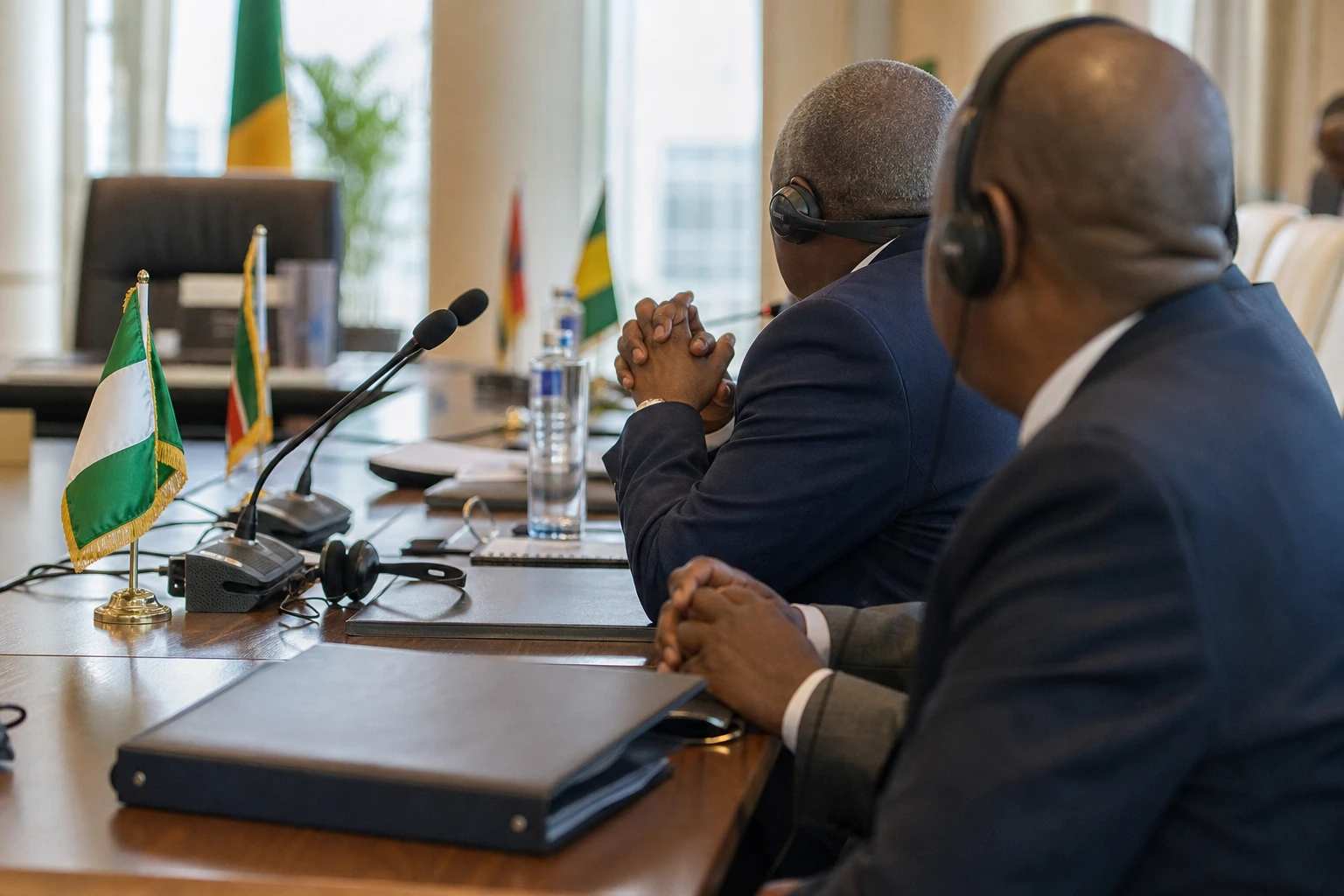
In Abuja, the question is not merely military. It concerns sovereignty, the credibility of alliances and Nigeria’s ability, as West Africa’s largest economy, to take the initiative alone in the face of widespread insecurity stretching from the north-east to the centre of the country. The announced withdrawal of part of the US presence therefore opens a new chapter without closing the previous one.
Nigeria is not facing just one threat. It must contend with a jihadist insurgency in the north-east, attacks by armed groups in the north-west and kidnappings for ransom in the north-central region. In this landscape, foreign cooperation remains useful, but it cannot replace national intelligence, local command, or the police, justice and development responses expected by the population.
A brief presence, but a highly symbolic one
Nigerian authorities have confirmed the planned withdrawal of about 200 US troops, sent in February to support counter-terrorism efforts. At the time, Washington announced the deployment of the contingent for training and technical support missions, while the Nigerian army stressed that the personnel were not deployed as a direct combat force. In February, about 100 of them had already been reported in the country as part of an expanded advisory, training and intelligence-sharing mission.
Nigerian Defence spokesperson Major General Samaila Uba described the departure as a normal development in an operational partnership. He said relations between the two countries remained “strong” and “mutually beneficial”, and that some aspects of security cooperation would continue. That clarification matters. Abuja wants to avoid the withdrawal being seen as a diplomatic rupture or a rebuff to the Nigerian army.
The timing also sheds light on the significance of the issue. The US presence was agreed amid high political tensions, after Donald Trump and Republican officials repeated allegations of “genocide” against Christians. The Nigerian government rejected those claims, pointing out that violence affects communities of all faiths. In a country where religious and communal divisions can be exploited, that clarification is not a trivial matter.
Limited results, but a channel for cooperation remains open
On the ground, cooperation has produced some tangible results. In May, Nigerian and US forces carried out an operation that led to the death of Abu Bilal al-Minuki, described by the Nigerian army as a senior figure in Islamic State and its West African branch, ISWAP. Abuja subsequently announced other coordinated strikes in the north-east, in which more than 20 fighters were killed, according to the same source. These operations have served as an argument for those who favour targeted cooperation over a sustained foreign presence.
But analysts remain cautious. The arrival of foreign troops, even in limited numbers, does not by itself alter the security balance in an immense country beset by crises of different kinds. As recently as last week, dozens of people were kidnapped in central Nigeria, in an episode that underscored the persistence of armed groups and the authorities’ difficulty in protecting rural areas and secondary roads. Figures published in late August by SBM Intelligence also showed that kidnappings remain a violent and profitable business, with billions of naira paid in ransom over the course of a year.
For Abuja, the real challenge lies elsewhere: turning ad hoc cooperation into lasting national capacity. That requires better-equipped personnel, a more effective intelligence chain, credible judicial responses and a stronger state presence in areas where armed groups thrive amid an administrative vacuum. Without that, partnership announcements will remain striking in form but limited in effect.
What the decision says about Nigeria and West Africa
For ECOWAS, the Economic Community of West African States, the issue is not marginal. Nigeria is the region’s demographic and security heavyweight. When Abuja strengthens or redeploys its partnerships, it affects regional balances, particularly in the neighbouring Sahel, where military crises and successive Western withdrawals have already reshuffled the deck. Nigeria-US cooperation is thus part of a wider geography stretching from the Lake Chad basin to the porous borders of the north-west.
The question also extends beyond capital cities. In towns, people are most aware of the daily cost of insecurity: disrupted schools, dangerous roads, slowed trade and constrained investment. In rural areas, the impact is even harsher. Farmers, families and local communities live under the threat of kidnapping, flight or ransom payments. That is where the true measure of a security policy is taken: in everyday life, not just in the rhetoric of alliances.
For the African Union and the coastal states of West Africa, this issue is also a reminder of an often-forgotten truth: the fight against armed groups cannot rely solely on foreign deployments. It depends first on strong national institutions, followed by clear regional cooperation. Nigeria continues to illustrate this tension. It seeks help but rejects tutelage. It wants quick results but must build for the long term. The US withdrawal does not resolve this equation; it simply makes it more visible.