Algeria
 Egypt
 Libya
 Morocco
 Sudan
 Tunisia
 Benin
 Burkina Faso
 Cabo Verde
 Côte d'Ivoire
 Ghana
 Guinea
 Guinea-Bissau
 Liberia
 Mali
 Mauritania
 Niger
 Senegal
 Sierra Leone
 The Gambia
 Togo
 Cameroon
 Central African Republic
 Chad
 DR Congo
 Equatorial Guinea
 Gabon
 Republic of the Congo
 São Tomé and Príncipe
 Burundi
 Comoros
 Djibouti
 Eritrea
 Ethiopia
 Kenya
 Madagascar
 Malawi
 Mauritius
 Mozambique
 Rwanda
 Seychelles
 Somalia
 South Sudan
 Tanzania
 Uganda
 Angola
 Botswana
 Eswatini
 Lesotho
 Namibia
 South Africa
 Zambia
 Zimbabwe
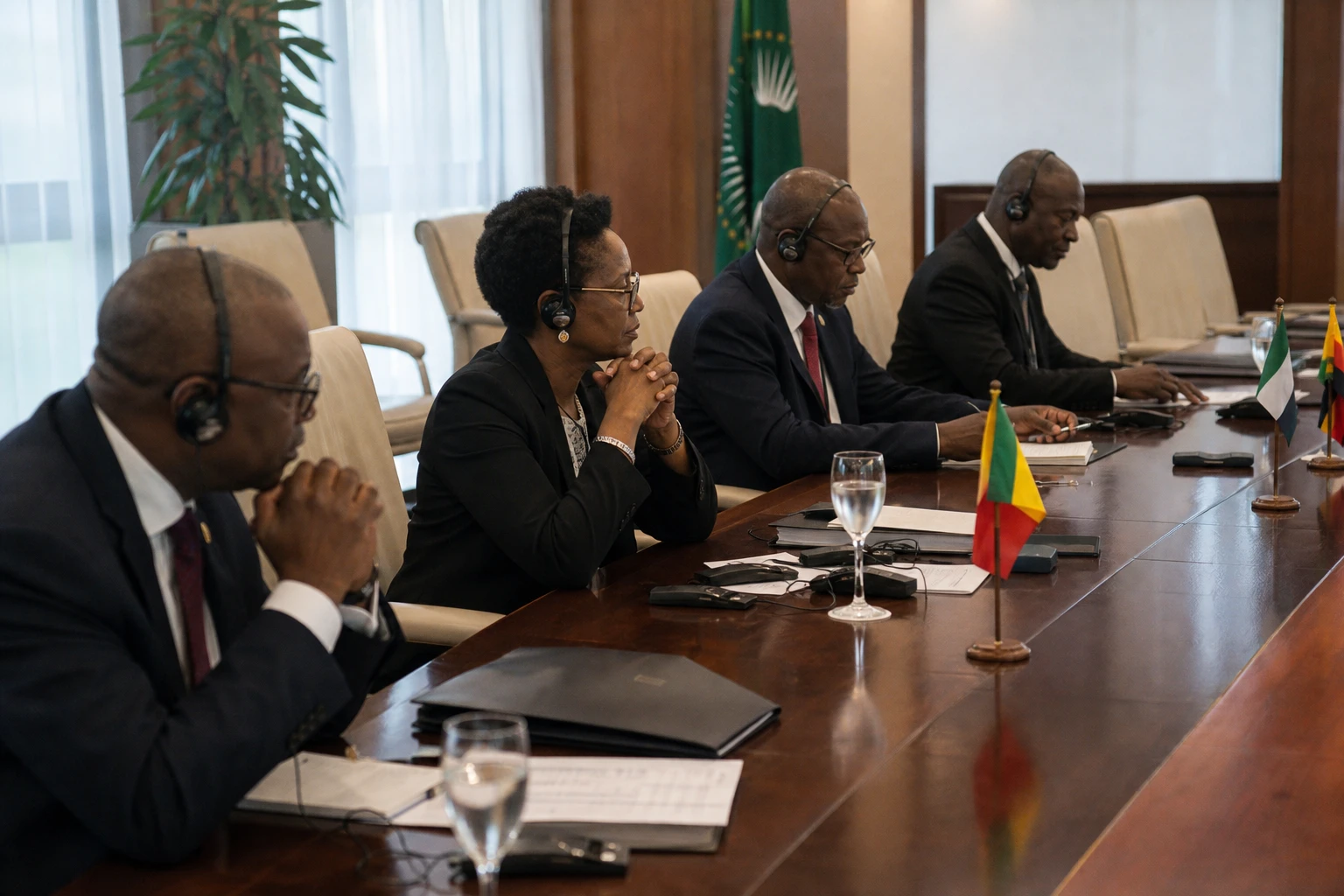
In Abuja, the 2027 presidential race is already taking shape
With less than two years to go before the vote, the debate is no longer just about political parties. It already centres on a simple but decisive question for Nigerians: can the state still protect purchasing power, jobs and security without wasting its resources? In a country where recent economic reforms have pushed up prices, this question goes beyond party headquarters. It affects markets, transport, schools and small businesses.
Nigeria is entering the 2027 election period with a timetable already set by the Independent National Electoral Commission, INEC. The institution published the notice of election and the election timetable in February 2026, setting 16 January 2027 for the presidential and federal legislative elections, followed by 6 February for the governorship elections. INEC also said that parties had access to a nomination portal to submit candidacies, within a framework governed by electoral law.
Against this backdrop, the campaign officially launched on 19 August 2026, at the start of a period in which the opposition aims to turn voter fatigue with the government into a protest vote. Dispatches from Abuja describe a contest dominated by incumbent President Bola Tinubu, facing a fragmented opposition still buoyed by public anger over inflation and insecurity. Reuters and the Associated Press also note that Peter Obi remains one of the main challengers, alongside Atiku Abubakar, in a race analysts consider open but unstable.
Peter Obi backs a productive economy, not one based on rents
The candidate wants to frame his message around a specific agenda: fiscal discipline, local production and investment in human capital. In his campaign speech, Peter Obi said every public naira must serve a defined purpose and deliver measurable results. He also stressed the need to cut spending deemed unnecessary while protecting sectors that create jobs and value. This position is part of a series of recent statements in which he has argued for a break with an economy based on consumption and imports.
His programme puts agriculture at the centre. The idea is to secure rural areas, improve irrigation, roads and storage, then make credit and markets more accessible to producers. The reasoning is familiar, but politically sensitive in Nigeria: reduce dependence on imports, increase local processing and channel more income through producing regions. Channels Television had already reported in late July 2026 that Obi presented agriculture, industry and support for small businesses as the backbone of a shift towards a productive economy.
The candidate extends this logic to manufacturing. He wants the country to export more finished goods instead of relying on raw materials. Here too, the message is aimed as much at entrepreneurs as at young graduates. In a country where formal employment remains limited and the informal sector absorbs a large share of the workforce, creating factories, workshops and local value chains could make the difference between an abstract election campaign and a tangible promise.
Peter Obi also makes young people a central part of his case. He presents young Nigerians as an economic resource, not a social cost. Basic education, universities, technical and vocational training: together, he says, these must prepare the country for the labour market’s real needs. This approach echoes a demand heard in cities and on their outskirts alike: access to useful skills, a viable job and a future that is not solely about migration.
Security, governance and regional significance
The candidate’s programme does not separate the economy from security. Peter Obi believes no lasting recovery is possible without better intelligence coordination, stronger border surveillance and greater use of technology. He also advocates a more decentralised approach to security, giving community-based early-warning mechanisms a clearer role. In a federal country, this is a crucial debate: governors, federal forces and local communities do not always share the same priorities or resources.
This approach speaks directly to rural areas affected by attacks, kidnappings or displacement, but also to urban centres experiencing the indirect effects of insecurity: higher logistics costs, reduced supplies and investment flight. The issue is therefore not just a policing matter. It is also fiscal, social and territorial. When roads become less safe, transport costs rise. When farmers withdraw, markets are less well supplied. When businesses hesitate, employment stagnates.
Health completes this agenda. The candidate promises to strengthen primary care, improve maternal and child health and expand access to essential medicines. This is no token measure. In an economy under pressure, poor households often bear the cost of healthcare alone. Investing in health also means protecting families’ disposable income and preventing illness from turning into debt.
Politically, the 2027 campaign will also reveal something about the state of Nigeria’s system. INEC has approved a provisional list of 19 candidates for the highest office, ahead of final publication scheduled for 12 September 2026. This process shows that the contest is already taking shape, but it also highlights the fragmentation of the party landscape. When several leading opposition figures compete for the same voters, the incumbent often enjoys a structural advantage. This is one of the most important lessons of this period.
Across West Africa, the Nigerian election extends beyond the country’s borders. Nigeria remains a major demographic, economic and diplomatic power in ECOWAS, the Economic Community of West African States. A change of direction in Abuja always affects regional markets, trade corridors, discussions on Sahelian security and the political balance of West Africa. Peter Obi’s campaign is therefore not just a national contest. It is also a test of Nigeria’s ability to reconcile fiscal discipline, internal cohesion and productive recovery.