Algeria
 Egypt
 Libya
 Morocco
 Sudan
 Tunisia
 Benin
 Burkina Faso
 Cabo Verde
 Côte d'Ivoire
 Ghana
 Guinea
 Guinea-Bissau
 Liberia
 Mali
 Mauritania
 Niger
 Senegal
 Sierra Leone
 The Gambia
 Togo
 Cameroon
 Central African Republic
 Chad
 DR Congo
 Equatorial Guinea
 Gabon
 Republic of the Congo
 São Tomé and Príncipe
 Burundi
 Comoros
 Djibouti
 Eritrea
 Ethiopia
 Kenya
 Madagascar
 Malawi
 Mauritius
 Mozambique
 Rwanda
 Seychelles
 Somalia
 South Sudan
 Tanzania
 Uganda
 Angola
 Botswana
 Eswatini
 Lesotho
 Namibia
 South Africa
 Zambia
 Zimbabwe
In north-western Nigeria, night remains a hunting ground
In Zamfara, in north-western Nigeria, insecurity is measured not only in casualty figures. It can be seen in disrupted journeys, markets closing earlier and villages living by the rhythm of alerts. In Kasuwar Daji, in the Kaura Namoda area, armed men struck again, targeting a community already battered by ransom kidnappings and attacks by local criminal groups. The episode is a stark reminder: in parts of Nigeria, violence is not an exceptional event but a risk woven into everyday life.
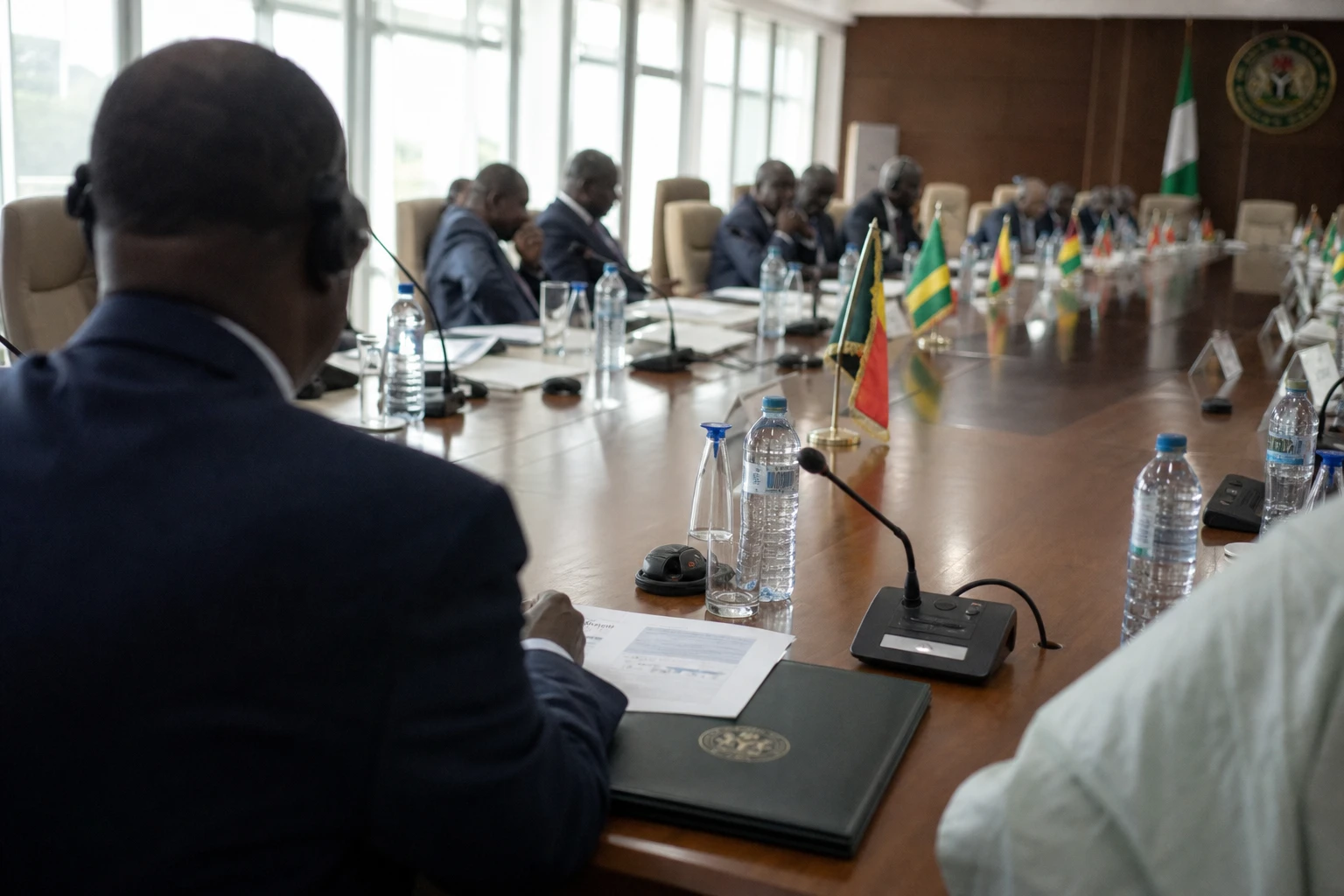
Zamfara’s situation cannot be viewed in isolation from its regional setting. The state borders Sokoto, Katsina and Kaduna, at the heart of a porous border area through which weapons, motorbikes, stolen livestock and kidnappers move. It is also one of the most closely monitored fronts in Operation Fansan Yamma, the military operation deployed by Abuja in the North-West against armed groups described by Nigerian authorities as “bandits”. The area is home to some of the security tensions also causing concern to ECOWAS, the Economic Community of West African States, as criminal networks ignore administrative and national borders.
What happened in Kasuwar Daji
On Saturday night into Sunday, armed men arriving on motorbikes entered Kasuwar Daji and abducted dozens of residents. The figure of 52 people featured in the initial reports, while Zamfara police have in the past confirmed other mass attacks in the same area without always immediately publishing a full count. Nigerian local and security authorities tend to release information in stages, as field checks progress.
The assault did not target civilians alone. The attackers first targeted a military position near the village. The exchange of fire cost the life of one soldier and one police officer, according to information corroborated by several sources, and wounded two military personnel. The army later described the clash as a successful resistance, saying it had dealt the attackers an operational setback. This official account emphasises the response, but does not obscure the essential point: armed groups can still strike communities located near security bases.
The sensitive issue here is the gap between the security infrastructure and the reality on the ground. A military base may be located a few kilometres from a village without preventing a night-time incursion. In Nigeria, this contradiction is fuelling frustration among rural communities. Residents are calling for a more mobile, responsive and intelligence-led presence. The authorities, meanwhile, point to sweep operations, interceptions and the release of victims, but these occasional successes are not enough to erase the frequency of attacks.
A state caught between armed pressure and the ransom economy
Zamfara remains one of the symbols of the criminal economy in northern Nigeria. Kidnappings there are used to fund armed groups, control rural roads and impose a climate of fear. The state has already seen mass abductions, village attacks and local non-aggression pacts that have not lasted. In June 2026, 39 residents of the Maradun area were abducted during a meeting presented as an attempt at reconciliation. A few weeks earlier, seven students had been kidnapped in the Kaura Namoda area. The picture points to the same pattern: violence shifts, adapts and tests the state’s response.
For families, the shock is immediate. For the local economy, the effects last longer. When farmers can no longer reach their fields, traders avoid certain roads and rural transport comes to a halt, the loss affects more than the direct victims. It also hits daily incomes, market supplies and the movement of agricultural produce to Gusau, Abuja or neighbouring states. In a state where many people rely on informal activities, every night of attacks adds to the social cost.
Federal authorities are nevertheless presenting a more structured response than before. Abuja says it has stepped up joint operations in the North-West, while the central government points to rescues and arrests as evidence of a sustained effort. In July 2026, the Defence Ministry said that 1,597 terrorist or insurgent fighters had been killed and 1,516 hostages freed since the start of the year in military, police and intelligence operations. The police, for their part, announced hundreds of arrests and victim releases over the same period. These figures reflect intense security activity, but also the persistence of mass insecurity.
What the attack means for Abuja, West Africa and Africa
For Abuja, the issue goes far beyond a single village. President Bola Ahmed Tinubu has already ordered the prosecution of those responsible for a previous attack in Kasuwan Daji, a sign that the place name has become a recurring marker of the security emergency. From the federal capital, the challenge is twofold: to protect the population without giving the impression of a presence that is purely reactive, and to restore trust between the state and rural communities. It is as much a political test as an operational one.
Across West Africa, the latest episode is a reminder that insecurity is no longer confined to the most high-profile jihadist theatres. In northern Nigeria, armed gangs sometimes overlap with insurgency, trafficking and local reprisal dynamics. This porous environment fuels the movement of weapons and people towards the border areas of Niger, Chad and Cameroon. It requires countries in the sub-region to think jointly about intelligence, rural policing, control of transport routes and community prevention.
The continental implications are clear. Nigeria remains a central player in African security, given its demographic, military and diplomatic weight. When a country of such importance struggles to contain mass abductions in a single region, the issues of rural security, territorial control and civilian protection return to the table at African Union level. The next variable to watch will be Operation Fansan Yamma’s ability to turn announcements of success into lasting stability; otherwise, villages in Zamfara will continue to live by the rhythm of statements issued after the fact.