Algeria
 Egypt
 Libya
 Morocco
 Sudan
 Tunisia
 Benin
 Burkina Faso
 Cabo Verde
 Côte d'Ivoire
 Ghana
 Guinea
 Guinea-Bissau
 Liberia
 Mali
 Mauritania
 Niger
 Senegal
 Sierra Leone
 The Gambia
 Togo
 Cameroon
 Central African Republic
 Chad
 DR Congo
 Equatorial Guinea
 Gabon
 Republic of the Congo
 São Tomé and Príncipe
 Burundi
 Comoros
 Djibouti
 Eritrea
 Ethiopia
 Kenya
 Madagascar
 Malawi
 Mauritius
 Mozambique
 Rwanda
 Seychelles
 Somalia
 South Sudan
 Tanzania
 Uganda
 Angola
 Botswana
 Eswatini
 Lesotho
 Namibia
 South Africa
 Zambia
 Zimbabwe
As Abuja offers blocks, trust remains the real test
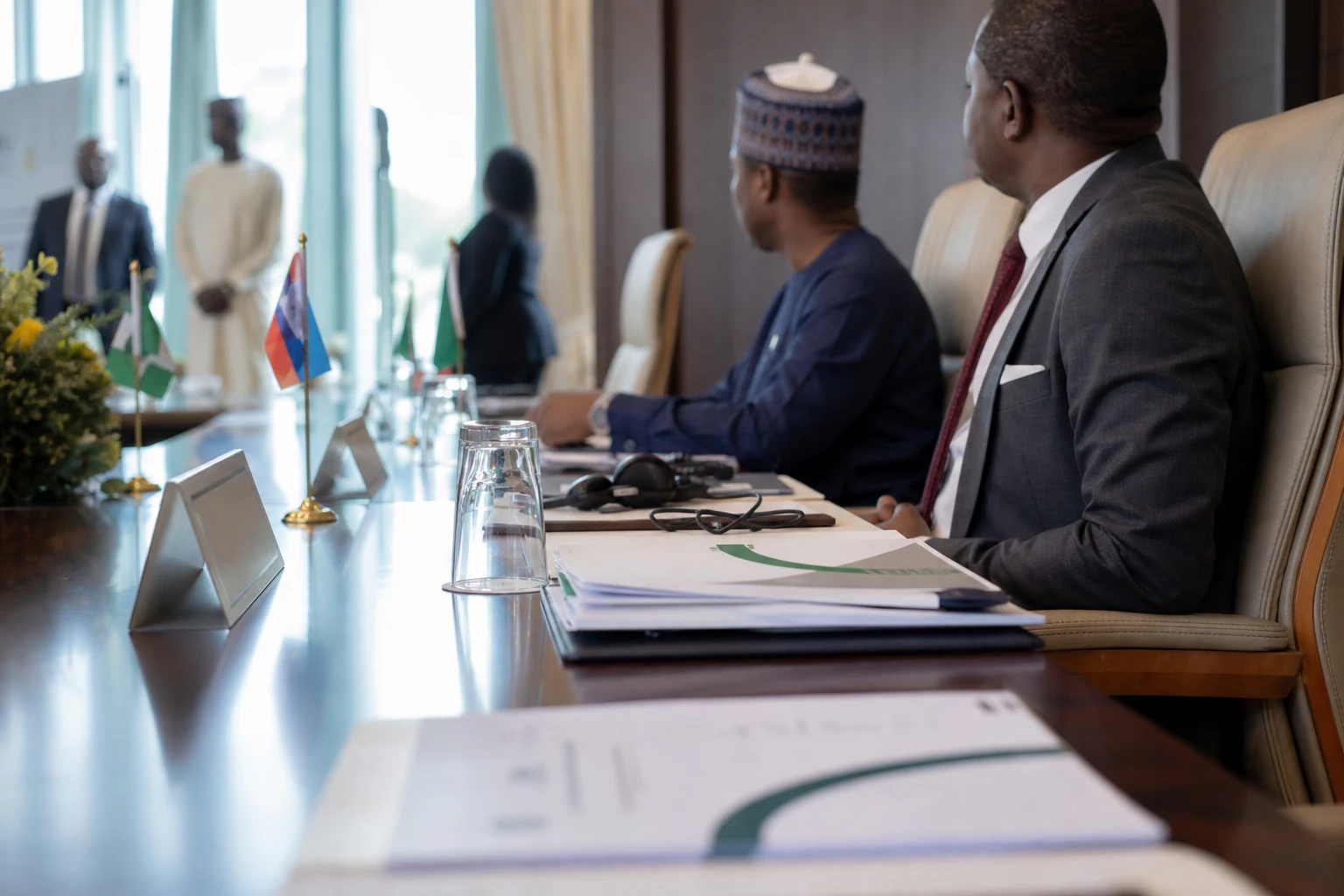
Nigeria wants more barrels, more gas and more investors. But in an oil market, stated appetite is not enough. What matters is the ability to attract capital to areas considered credible, then turn those promises into actual production. That is where the significance of the latest exercise conducted in Abuja, Nigeria’s capital, can be seen.
The country is emerging from a period of cautious recovery. In July 2026, the sector regulator said crude oil production had reached 1.56 million barrels per day in June, its highest level since April 2020 and above the OPEC quota of 1.5 million barrels per day. The message is clear: Nigeria, Africa’s largest producer, is seeking to consolidate a recovery that remains fragile.
A licensing round shaped by oil sector reform
The exercise covers 50 oil and gas blocks put up for competition as part of the 2025 round, launched under the Petroleum Industry Act, the landmark oil law adopted in 2021 to provide clearer rules for sector licensing, taxation and governance. The regulator’s official portal says the blocks span onshore, shallow-water and deep-offshore areas, as part of efforts to diversify exploration locations.
The timetable had already been clearly mapped out. The pre-qualification phase closed in February 2026, then the list of shortlisted candidates was published in March. Sector authorities subsequently held the commercial conference in Abuja in July, where final bids were opened. This sequence reflects a desire to demonstrate a more transparent process than in the past, after years of regulatory instability that long weighed on investor appetite.
The result boils down to three figures. Of the 50 blocks on offer, 37 received bids. Thirteen attracted no bidders. In total, 143 companies submitted about 200 bids. The regulator released these figures in Abuja, and several Nigerian media outlets reported them.
The blocks left untouched say much about the market
The most interesting detail is not just the number of winners. It is the geography of investor appetite. For the first time, basins such as the Benue Trough, the Chad Basin, Anambra and the Benin Basin attracted bidders. These areas are known as frontier basins: basins that have yet to be substantially de-risked, where geological data are less reassuring to investors than in areas with a proven track record.
The 13 blocks with no takers are also located in these areas. The signal is clear: the Niger Delta, the historic heart of Nigerian production, retains its comparative advantage, while less explored basins still require more seismic work, financial guarantees and regulatory certainty. The regulator said the lack of bids for these blocks was no surprise, precisely because they have not yet been sufficiently studied to reassure the market.
Under Nigeria’s system, the highest bidder does not automatically win. Awards are based on a combination of criteria: the financial value offered to the state, the work programme, technical capacity and guarantees. Once blocks have been awarded, successful bidders have 90 days to meet their obligations. The so-called “explore or relinquish” policy also allows the regulator to reclaim inactive blocks. In other words, Abuja no longer wants licences gathering dust in filing cabinets.
The economic implications matter for Nigerians. On the one hand, awarded blocks can lead to drilling, service contracts, jobs and tax revenue. On the other, the areas not taken up are a reminder that oil exploration remains a costly gamble, especially where data are scarce. In a country where the public budget still depends heavily on hydrocarbons, the expected return from each licence matters as much as the number of licences awarded.
Between an oil revival and the task of diversification
The regulator has set two numerical targets: adding about 500 million barrels to reserves and creating an additional 300,000 barrels per day of production over three years. These are official projections, but they describe a trajectory, not a result already achieved. They depend on steady financing, commercially viable discoveries and a sufficiently secure operating environment.
These ambitions are set in a broader context. Nigeria wants to strengthen its position in OPEC, secure its revenues and stabilise its upstream sector. But the debate is not limited to increasing volumes. It also concerns the quality of governance, the speed of administrative decisions, efforts to combat crude oil theft and the state’s ability to enforce the rules of the game. Without this, announcements about reserves and production can quickly lose their force.
At the regional level, the stakes go beyond Nigeria. In West Africa, ECOWAS is closely watching any revival in energy investment in the sub-region’s largest economy. A sustained rise in Nigerian production could affect public revenue, trade flows and foreign currency availability. It could also test the credibility of the regulatory framework on a continent where several countries are seeking to attract exploration capital while calling for greater recognition of local value added.
That is where the continent-wide significance lies. If Abuja can turn this licensing round into actual production, the message to other African producers will be powerful: clear reform, transparent procedures and more predictable administration can still attract operators, including to lesser-known basins. If, on the other hand, the awarded blocks are slow to produce, the market will take away one main lesson: in the oil upstream sector, trust is measured in wells drilled, not announcements.